

Table of Contents
Case Study: Oil in Vacuum Pump; Mercedes GLC X253 With OM654 Engine
Oil contamination inside the vacuum pump is a serious condition that can affect braking performance, turbocharger control, and overall engine efficiency. If you want to explore all possible oil related failures, internal leaks, and lubrication issues across Mercedes engines, visit the Mercedes Engine Leaks: Full Troubleshooting Guide your main hub for diagnosing and fixing every type of engine leak.
This case study focuses on a Mercedes GLC X253 with the OM654 engine, where the customer reported lack of power. Through professional diagnostics, the technician discovered oil contamination inside the vacuum system pump an issue that required deep inspection and corrective action.
Vehicle & Problem Overview
- Model: Mercedes-Benz GLC X253
- Engine: OM654
- Customer Complaint: Noticeable lack of engine power during acceleration
Loss of power on the OM654 can be caused by boost pressure issues, vacuum leaks, EGR valve faults, or internal lubrication-related failures.
Initial Diagnostics
The technician carried out a structured diagnostic process to identify the cause behind the loss of power:
1. Boost Pressure Regulation Check
Using diagnostic tools, boost pressure was measured.
The reading was below manufacturer specifications, indicating a turbocharger control or vacuum issue.
2. EGR Solenoid Valve Check
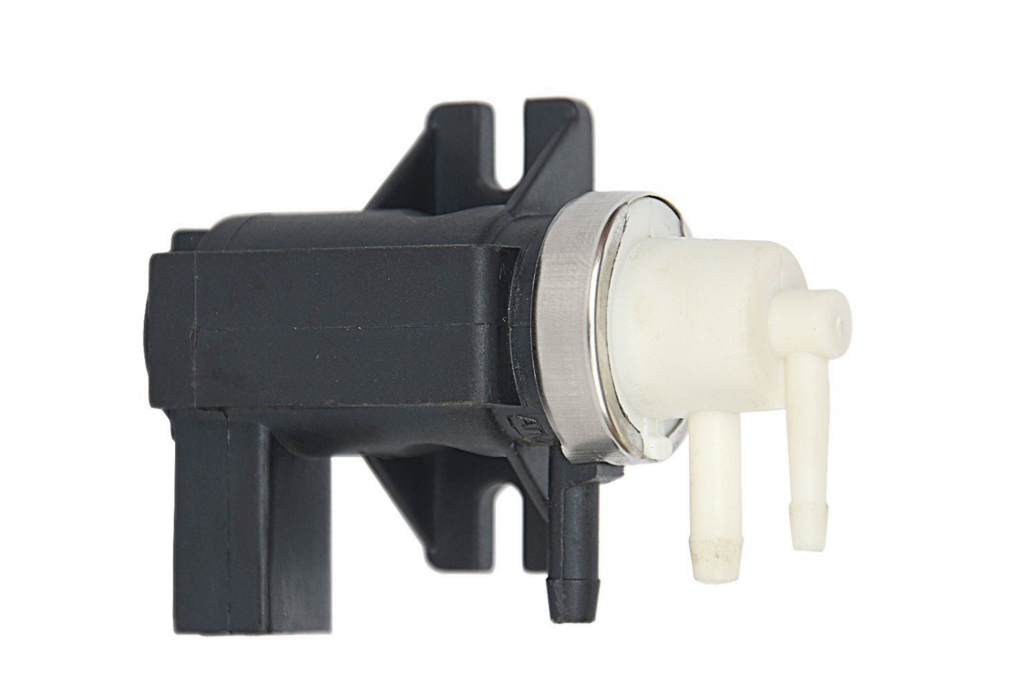
Irregular operation was found in the EGR solenoid valves.
A failing vacuum system can cause incorrect EGR flow, directly impacting performance.
Key Findings: Oil Found in Vacuum Pump Area
During the inspection, traces of oil were discovered around the solenoid valves, indicating contamination entering the vacuum system.
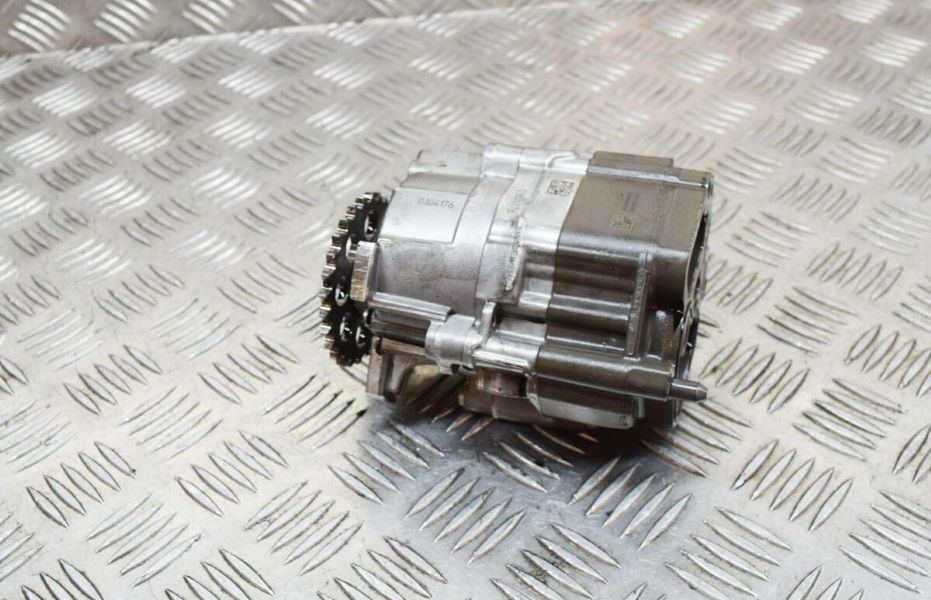
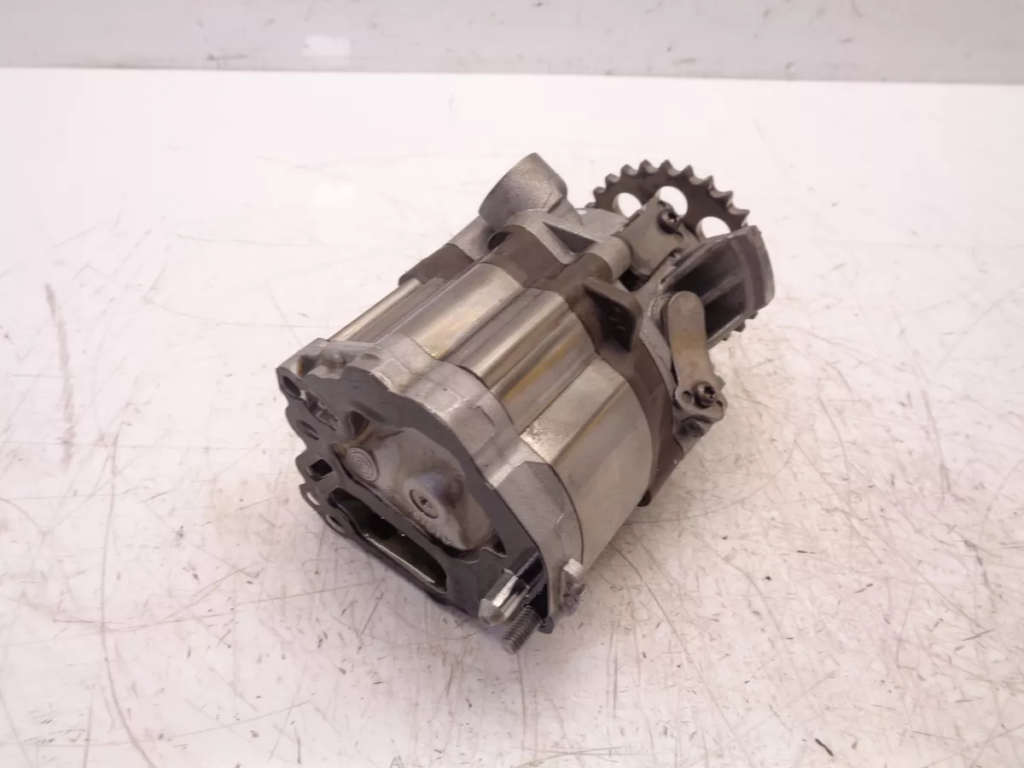
This was a critical discovery: the OM654 engine integrates the vacuum pump with the engine oil pump, meaning a leak or internal seal failure can allow oil to enter the vacuum circuit.
Oil inside the vacuum system disrupts:
- – Boost control
- – EGR regulation
- – Brake booster vacuum
- – Overall engine management
This contamination aligned with the vehicle’s symptoms.
Expert Analysis
The technician concluded that:
- – Oil was migrating into the vacuum system
- – The vacuum pump’s internal sealing had failed
- – The integrated design of the OM654 oil pump + vacuum pump meant that failure in one area compromises the entire system
This explained the loss of power and irregular EGR/boost behavior.
Decision to Remove the Engine
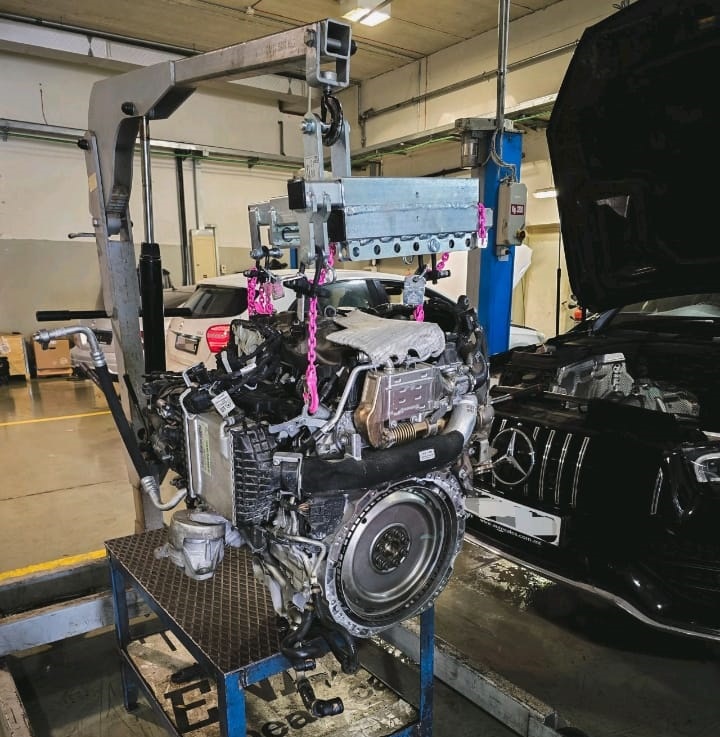
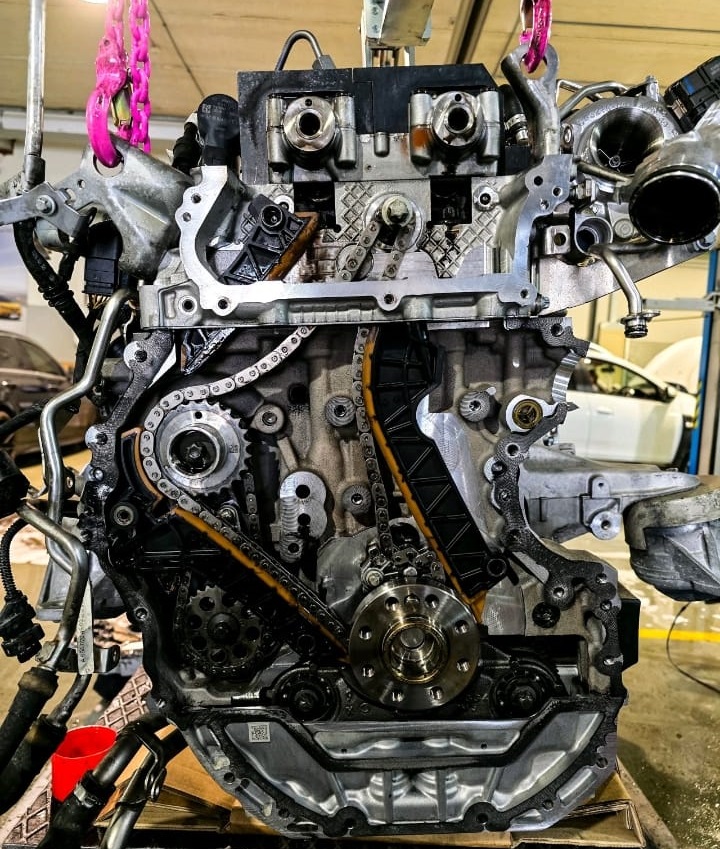
Due to the pump’s placement on the OM654, engine removal was required.
1. Engine Removal
The technician disconnected:
- – Fuel system
- – Electrical harnesses
- – Turbocharger piping
- – Exhaust components
- – Drivetrain and mounts
Careful removal ensured no additional damage occurred.
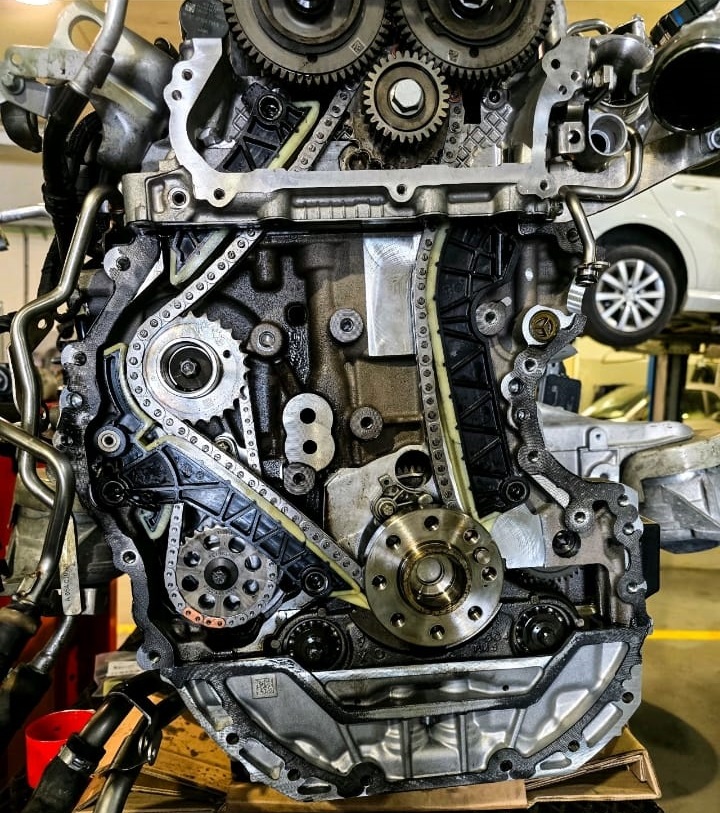
2. Component Inspection
Once accessible, the vacuum pump area was inspected for:
- – Oil contamination
- – Internal seal damage
- – Component wear
- – Cracks or internal leaks
The inspection confirmed the vacuum pump was the failure point.
Repair Process
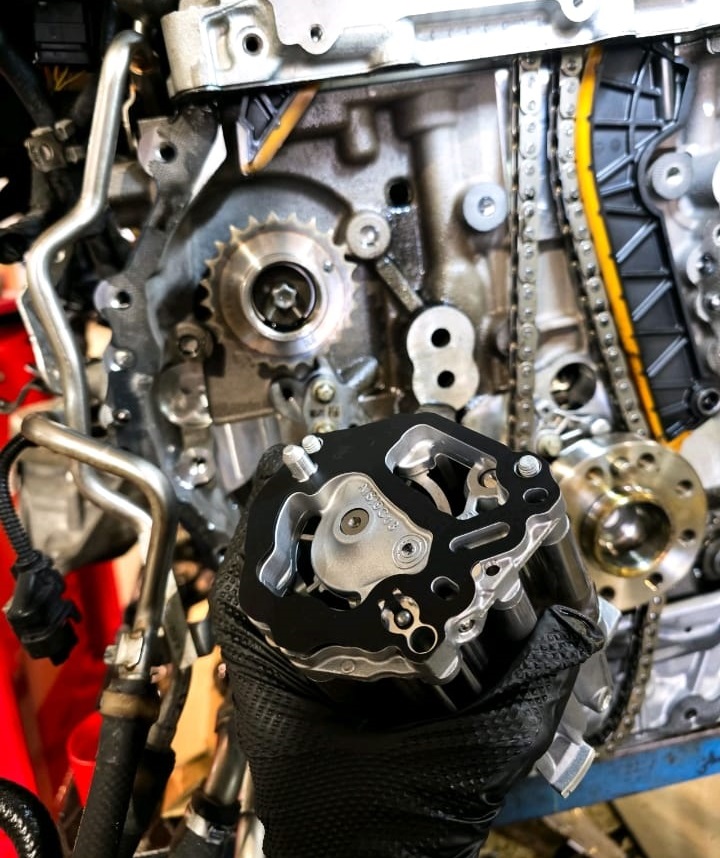
1. Vacuum Pump Replacement
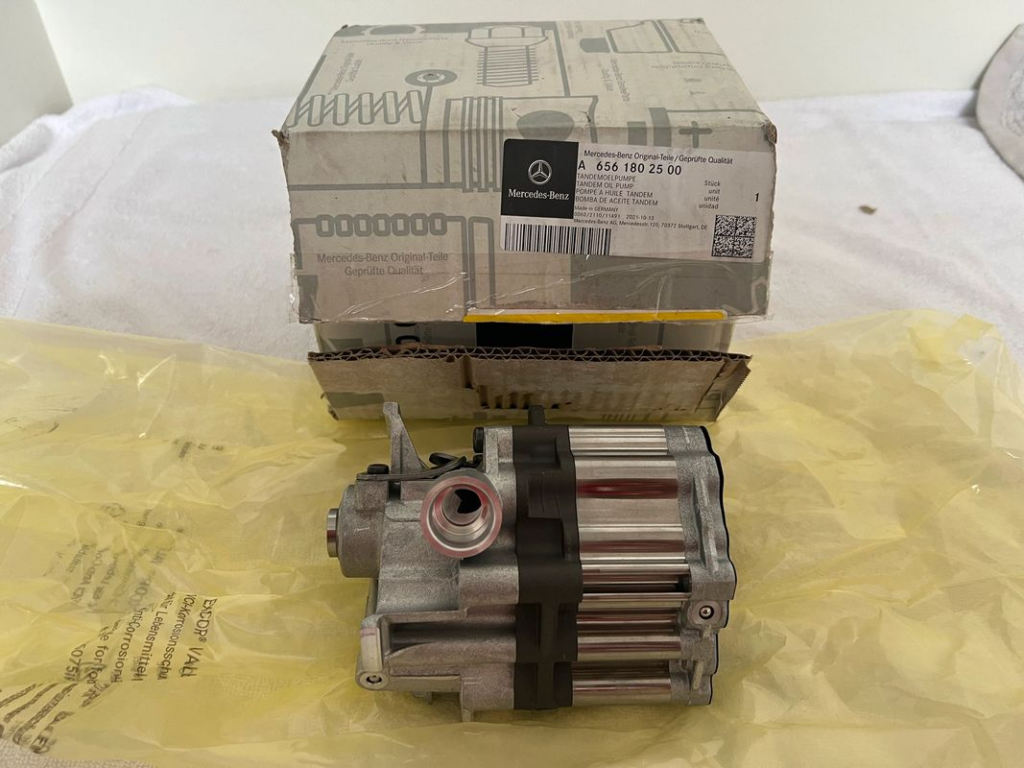
The vacuum system pump was replaced with an OEM Mercedes unit to ensure proper sealing, pressure generation, and long-term reliability.
2. Engine Reassembly
The engine was reinstalled, ensuring:
- – Proper alignment
- – Correct torque specs
- – Secure vacuum and boost piping
- – Correct reconnection of sensors and solenoids
This step is crucial for OM654 engines with integrated systems.
Post-Repair Testing
After reassembly, two tests were performed:
1. Road Test
The technician verified:
- – Power restoration
- – Smooth turbo operation
- – Stable acceleration
- – No warning messages
2. Vacuum System Check
Measurements confirmed:
- – Correct vacuum pressure
- – No oil contamination
- – Proper solenoid operation (EGR, boost actuator, etc.)
What Happens When a Vacuum Pump Fails?
A failing vacuum pump can cause multiple performance and safety issues.
1. Loss of Brake Assistance
Most Mercedes engines use vacuum-assisted brakes.
Symptoms:
- – Hard brake pedal
- – Reduced stopping power
- – Increased braking distance
This becomes a safety hazard.
2. Poor Engine Performance
A vacuum pump influences:
- – Turbocharger wastegate/actuator
- – EGR valves
- – Intake flaps
Failure leads to:
- – Misfires
- – Hesitation
- – Reduced power
- – Stalling

3. Turbocharger Control Issues
Turbo engines rely heavily on vacuum regulation.
Effects:
- – Low boost
- – Slow acceleration
- – Turbo lag
- – Check Engine Light
Discover more details about Check Engine Light on the next hub; Mercedes Check Engine Light: Complete Troubleshooting Hub
4. Higher Emissions
A failed vacuum pump affects emissions systems.
Symptoms:
- – EGR malfunction
- – Increased NOx emissions
- – Emission test failure
- – Stored fault codes
5. Potential Oil Contamination
On engines like the OM654 with combined oil/vacuum pump architecture:
- – Oil leaks may enter vacuum lines
- – Solenoids can clog
- – Boost/EGR controls fail
- – Engine components may suffer long-term damage
Is It Safe to Drive With a Bad Vacuum Pump?
No.
Driving with a failing vacuum pump is unsafe and can cause:
- – Extremely hard braking
- – Turbo boost loss
- – Sudden power reduction
- – Increased emissions
- – Internal engine damage (if oil is involved)
Immediate diagnosis is essential.
Conclusion
This case study demonstrates how oil contamination inside the vacuum pump can severely affect performance in the Mercedes GLC X253 OM654 engine.
Thanks to precise diagnostics and proper repair, the technician restored the vehicle’s performance and prevented further system damage.
If you’re dealing with oil contamination, leaks, or lubrication failures, explore the Mercedes Engine Leaks: Full Troubleshooting Guide for an in-depth understanding of common leak points, symptoms, and repair steps across all Mercedes-Benz engines.
— Salim, Mercedes Expert
Independent specialist in Mercedes-Benz diagnostics, CAN Bus analysis, troubleshooting case studies, and EV systems.