

Table of Contents
SOS Inoperative Mercedes: Meaning, Causes & Case Study Solution
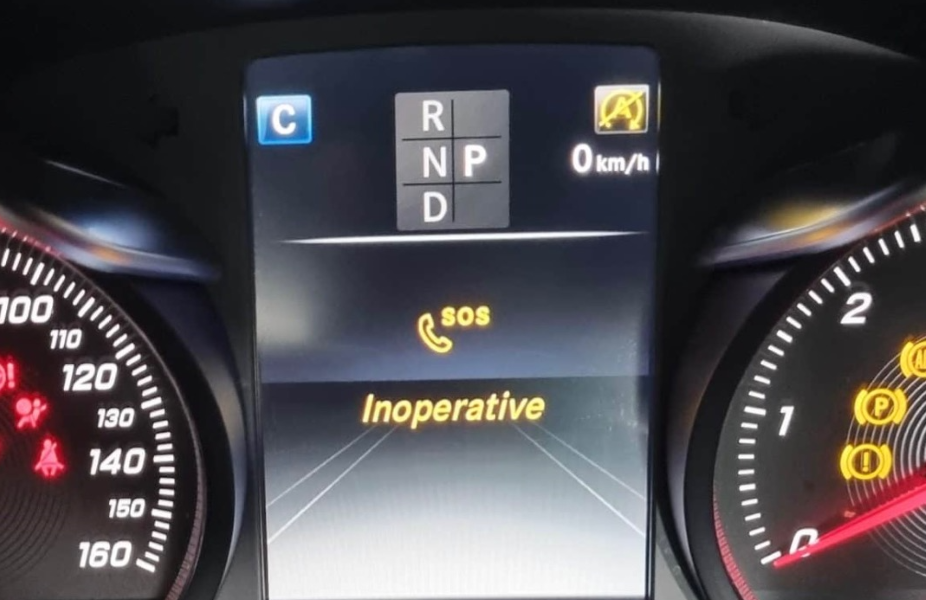
When your Mercedes displays the “SOS Inoperative” or “SOS Not Ready” message, it means there’s a fault within the vehicle’s emergency call system (eCall) the built-in feature that automatically connects with emergency services in the event of a serious accident.
This system, managed through the HERMES (N112/9) Telematics Control Unit, uses mobile network connectivity and GPS positioning to send your exact location to emergency responders. When the system becomes inactive, you lose that instant link to help, reducing an important layer of safety.
For a complete overview of Mercedes driver-assistance and safety system issues including radar, blind spot, and Parktronic faults visit our expert guide:
Mercedes Driver Assistance System Faults: Radar, Blind Spot & Parktronic Fixes
Why Does the SOS Inoperative Warning Appear?
Several components are involved in the emergency call system, and a problem with any of them can trigger the warning. Here are the most common causes:
| Cause | Typical Symptoms | Diagnostic / Fix Action |
|---|---|---|
| Low 12V Battery or Parasitic Drain | SOS error after long parking or slow cranking | Test battery voltage (must exceed 12.4 V); replace or charge |
| Faulty SOS (HERMES/TeleAid) Module | Persistent SOS error and DTCs | Scan with XENTRY; reflash or replace the HERMES unit |
| Wiring or Antenna Damage | No response despite good battery | Inspect roof and trunk wiring; check connector corrosion |
| Software Corruption in Telematics Control Unit | SOS works only after restart | Perform firmware update via XENTRY |
| Weak or No Cellular Signal | SOS error in remote/rural areas | Move vehicle to better coverage area; test eSIM registration |
| Faulty Occupant Classification or SRS Sensor | SOS and Airbag errors together | Scan both systems; repair SRS fault first |
Case Study: SOS Not Ready , Mercedes E-Class W213
Customer Complaint
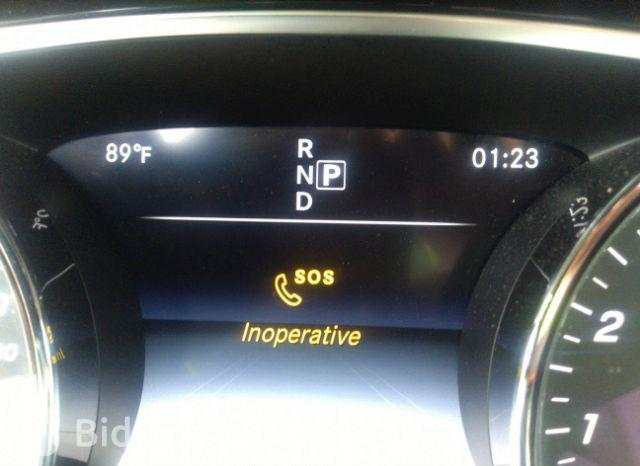
A Mercedes-Benz E-Class (W213) owner reported that a warning message “SOS Not Ready” occasionally appeared on the instrument cluster especially after the vehicle remained parked for several days. The alert would disappear by itself after a few minutes, but the owner was concerned about the reliability of the emergency system.
Although the warning didn’t affect normal driving, the customer wanted assurance that the eCall function would operate correctly in case of an emergency.
Initial Inspection
The vehicle was brought to an authorized Mercedes-Benz workshop, where a STAR XENTRY diagnostic scan was performed. The technician checked all related control units and found the following fault stored in the Telematics Services Control Unit (HERMES):
- – B129C00 : Control unit internal fault
This fault indicated a malfunction within the telematics services module itself specifically in the software layer managing cellular and GPS communication.
Technical Note:
The HERMES control unit (N112/9) manages the SOS call system, vehicle location transmission, and remote assistance features. A software fault in this unit can temporarily disable the SOS function, even if power and communication are intact.
Diagnostic Procedure
- 1. Voltage & Power Supply Check
The 12 V battery was tested and found to be slightly weak (12.1 V). After a slow charge to 12.7 V, the fault persisted, confirming the issue was not voltage-related. - 2. Wiring and Antenna Inspection
The roof-mounted SOS antenna and rear trunk wiring were visually inspected for corrosion and loose connections. No physical damage was found. - 3. Control Unit Software Update
The technician determined the issue originated from outdated firmware in the HERMES module. Using XENTRY, the latest software update was downloaded and installed on the control unit. - 4. System Reset and Re-Test
After programming, the system was reset, fault memory cleared, and the SOS test function initiated to verify proper call connectivity.
Repair Result
The SOS system successfully connected to the Mercedes-Benz emergency response center, confirming full operational recovery. The “SOS Not Ready” message no longer appeared on the cluster, even after extended periods of vehicle inactivity.
Key Insight:
This case demonstrates how a simple software update to the HERMES control unit can resolve persistent telematics and emergency communication faults without needing expensive module replacement.
DIY vs Professional Help
| Task | DIY Possible? | Specialist Required? |
|---|---|---|
| Test & replace 12 V battery | OK | Optional (dealer test for accuracy) |
| Clear SOS warning with soft reset | OK | Only if no fault persists |
| Inspect wiring & antenna connectors | Partial | Recommended with care |
| Update or reflash HERMES module | NO | Mercedes dealer/XENTRY required |
| Replace HERMES/TeleAid control unit | NO | Dealer installation & coding essential |
Quick Fix Workflow
- 1. Fully charge or replace a weak 12 V battery.
- 2. Restart the vehicle and check if the message clears.
- 3. If the warning persists, perform a diagnostic scan with XENTRY or a compatible OBD-II tool.
- 4. Move to an area with strong mobile reception and retest the SOS system.
- 5. If still unresolved, have the HERMES module reflashed or replaced by a certified Mercedes technician.
Preventive Maintenance Tips
- – Test and maintain battery voltage above 12.4 V, especially before long parking periods.
- – Keep fuse boxes and ground terminals clean to prevent voltage drops.
- – Ensure your telematics subscription or Mercedes me Connect account is active.
- – Perform annual diagnostics to verify HERMES firmware is up to date.
- – After any airbag (SRS) or antenna service, verify SOS functionality via XENTRY.
Understanding the Mercedes SOS System
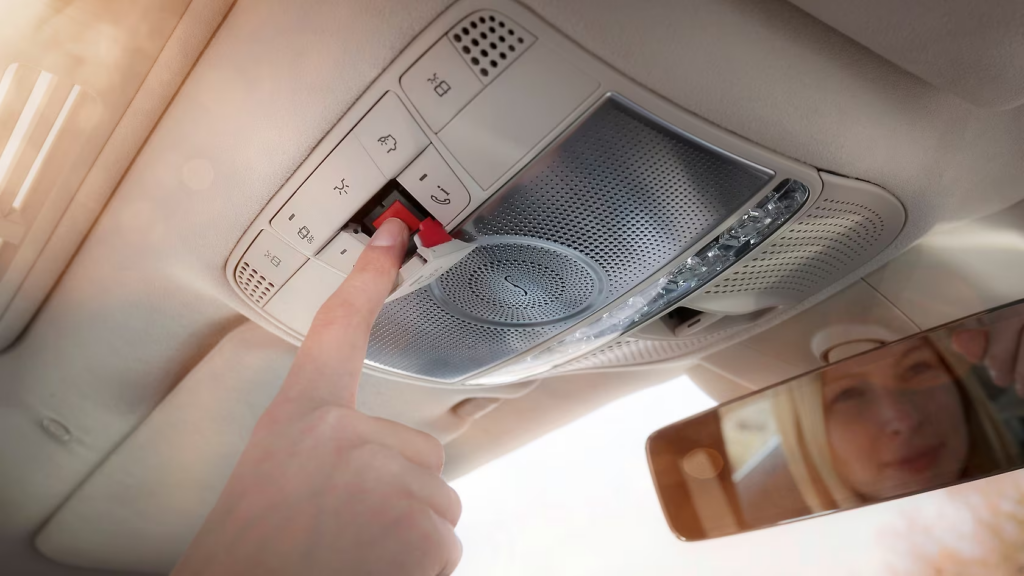
The Mercedes SOS system (also known as eCall) is designed to automatically contact emergency services after a serious collision or manually when the driver presses the SOS button on the roof console.
Once activated, the system connects to a Mercedes-Benz Emergency Response Center, sharing the vehicle’s GPS coordinates and allowing live voice communication with an operator. This ensures rapid emergency dispatch, even if the driver is unable to make a manual call.
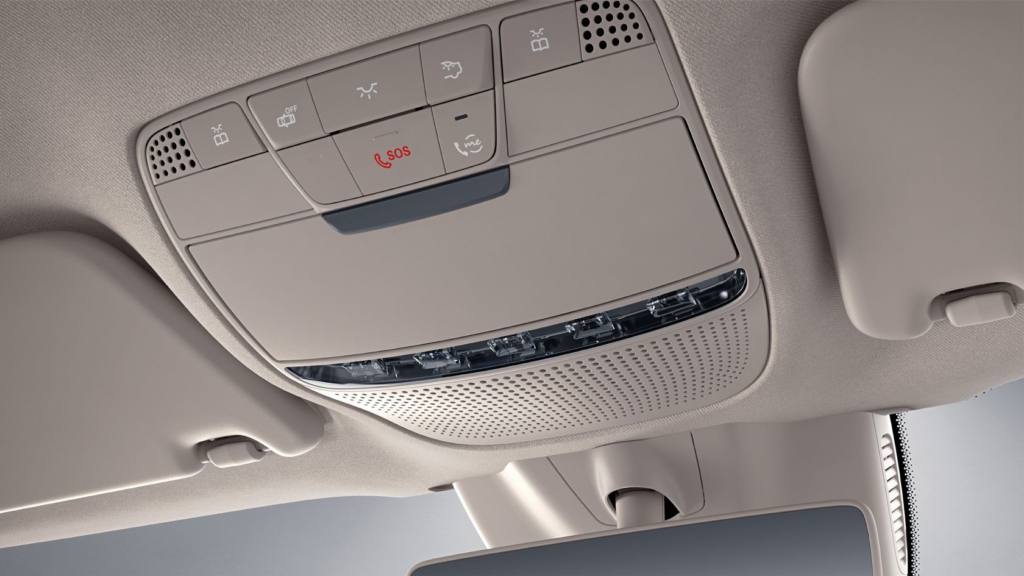
Proper SOS function depends on a healthy 12 V power supply, cellular signal, and active telematics module (HERMES/TeleAid). Any issue with these components can disable the system and trigger the “SOS Inoperative” warning.
When Should You Press the SOS Button?
You should use the SOS button only in genuine emergency situations, such as:
- – Severe accidents or collisions
- – Medical emergencies inside the vehicle
- – Breakdowns or mechanical failures in unsafe locations
- – Personal safety threats (carjacking, feeling unsafe)
- – Other critical events like fire, flooding, or road hazards
Misusing the SOS button can result in false emergency alerts or legal penalties always use it responsibly.
Technician Insight
“In modern Mercedes vehicles, the SOS module is deeply integrated into the vehicle’s electrical and telematics networks. Even a minor voltage drop or outdated firmware can cause the system to go offline. Regular battery testing and software updates are the best preventive solutions.”
Conclusion
The “SOS Inoperative” warning in Mercedes-Benz vehicles typically points to a communication, power, or software fault within the telematics (HERMES) system.
As shown in the case study above, most issues can be resolved through a firmware update, battery maintenance, or reprogramming rather than part replacement.
By following a structured diagnostic flow and keeping your telematics system up to date, you ensure that your vehicle’s emergency call feature remains reliable offering peace of mind and safety whenever you drive.
For more Mercedes ADAS troubleshooting and radar-based system repairs, explore our full guide: Mercedes Driver Assistance System Faults: Radar, Blind Spot & Parktronic Fixes
— Salim, Mercedes Expert
Independent specialist in Mercedes-Benz diagnostics, CAN Bus analysis, troubleshooting case studies, and EV systems.