
Mercedes M270 Engine: Workshop Guide, Problems & Reliability

M270 Mercedes Engine
Quick summary The Mercedes M270 is a 1.6L and 2.0L transverse-mounted 4-cylinder turbocharged petrol engine (2012–2018). It powers the A-Class W176, CLA W117, GLA X156, and B-Class W246. Generally reliable — 200,000 km examples are common — but has predictable weak points: timing chain stretch from ~80,000 km, carbon buildup on intake valves, camshaft actuator wear (Y49/1, Y49/2), and thermostat housing leaks. All manageable with the right schedule.
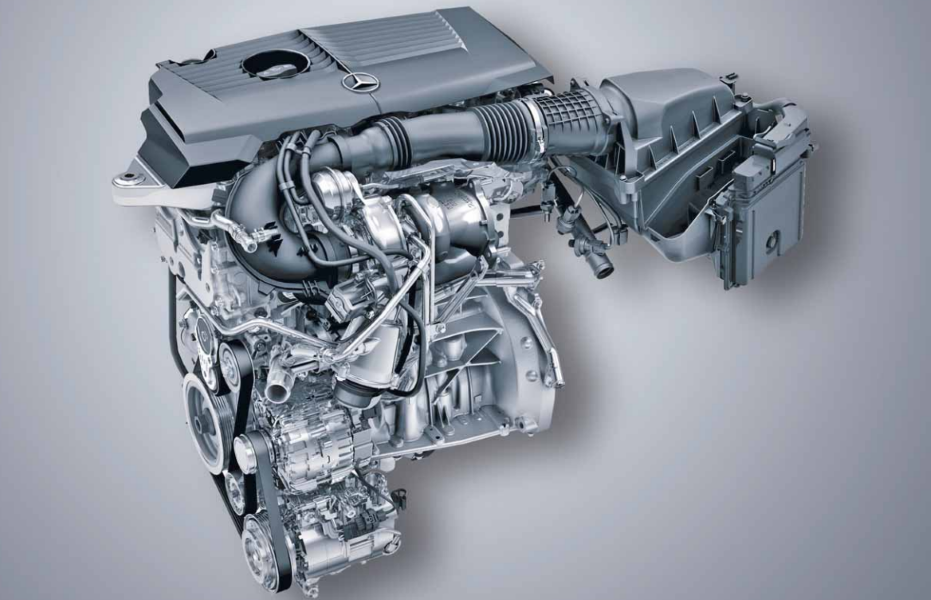
Mercedes M270 2.0L turbocharged petrol engine complete assembly — transverse mounted inline-4 direct injection twin-scroll turbo
Mercedes M270 engine overview — 2.0L inline-4 DOHC turbocharged petrol (DE20 LA variant). Transverse mounting for FWD compact models. The twin-scroll turbocharger is on the exhaust side; the intercooler charge pipe is visible at right.

M270 Specifications & Variants

The M270 covers two displacements — 1.6L (DE16 LA) and 2.0L (DE20 LA) — sharing the same block architecture but with different bore, stroke, and turbo calibrations. Both use direct injection, twin-scroll turbocharging, and dual variable valve timing.

Engine code
M270
Configuration
Inline-4 DOHC
Displacements
1.6L / 2.0L
Injection
Direct injection
Turbo
Twin-scroll
Output range
101–215 hp
Torque
180–350 Nm
Layout
Transverse (FWD)
Production
2012–2018
Oil capacity
5.8–6.0 L
VariantDisplacementPowerTorqueApplications
M270 DE16 LA1.6L75–90 kW (101–121 hp)180–200 NmA180, B180, CLA180, GLA180
M270 DE20 LA2.0L115–160 kW (154–215 hp)270–350 NmA200/250, CLA200/250, GLA200/250
Mercedes M270 engine power and torque curves 90kW and 115kW variants — torque plateau from 1200 rpm peak power at 5000 rpm
M270 power and torque curves — solid lines: 115 kW (2.0L DE20 LA); dashed: 90 kW (1.6L DE16 LA). The 2.0L torque plateau of 250 Nm begins from 1,200 rpm. Both variants share the same block; output difference comes from bore size, turbo calibration, and ECU mapping.

M270 Reliability — Honest Assessment

The M270 is a fundamentally sound engine. 200,000 km examples are common across all platforms. However, it has specific failure patterns that are entirely predictable — and entirely preventable with the right maintenance approach.

✓ Workshop verdict: The M270 does not fail randomly. Every common fault appears at a predictable mileage and has a known fix. Owners who reach 250,000+ km without major expense are those who addressed the timing chain, camshaft actuator, and carbon buildup proactively.

Strengths: Smooth power delivery, genuine fuel efficiency (particularly the 1.6L), compact transverse packaging, strong low-end torque from the twin-scroll turbo, and all-aluminium block for low weight.

Weaknesses: The dual-stage timing chain system requires more attention than a single-chain setup. Carbon buildup is an inherent trait of all direct-injection petrol engines — the intake valves are not washed by fuel, so deposits accumulate over time regardless of oil quality.

Common M270 Engine Problems — Workshop Reality

Mercedes M270 engine front view labeled components — Y94 throttle Y101 turbo wastegate R39 heating element G2 alternator N3/10 ME control unit
M270 engine front view: R39/2: intake heating element, Y94: throttle actuator, M16/6: electric coolant pump, Y101: turbo wastegate actuator, G2: alternator, G3/1 & G3/2: crankshaft position sensors, A9: AC compressor, N3/10: ME control unit (ECU). The camshaft actuator solenoids (Y49/1 and Y49/2) are located at the top of the engine behind the cam cover.
High PriorityTiming Chain Stretch & Guide WearFrom ~80,000 km

The M270’s most critical failure point. It uses a two-stage chain system: an upper chain connecting crankshaft to both camshafts (with variable cam phasers Y49/1 and Y49/2), and a lower chain driving the oil pump and balance shaft. Both chains, guides, and tensioners must be assessed together.

Workshop observation: The cold-start rattle is the definitive early warning — metallic clatter for 5–15 seconds after start-up that disappears as oil pressure builds. Ignored, the guide plastic degrades and the chain can skip a tooth — causing camshaft timing errors, misfires, and in worst cases valve contact.

Why it happens earlier on short-trip vehicles: The chain tensioner relies on oil pressure. Cold starts with insufficient warm-up leave the tensioner under-pressurised repeatedly, accelerating guide wear. Urban short-trip drivers see issues from 70,000–80,000 km; motorway drivers often reach 120,000–140,000 km without problems.

Fix: Full kit — upper chain, lower chain, all guides, both tensioners, cam phaser sprockets if worn. Never replace chains without guides or vice versa.

→ Real case study: Why Does Engine Light Come On
Mercedes M270 dual timing chain system diagram — upper camshaft chain Y49/1 Y49/2 cam phasers lower oil pump chain tensioners and guides
M270 dual timing chain system: 1 = exhaust cam sprocket, 2 = intake cam sprocket, Y49/1 = exhaust cam phaser, Y49/2 = intake cam phaser, 3 = upper chain guide (most common wear point), 4 = upper chain, 5 = lower guide, 6 = hydraulic tensioner, 7 = intermediate sprocket, 8 = crankshaft sprocket, 9 = oil pump drive, 10 = lower guide, 11 = lower chain. Both chains must be assessed simultaneously — worn lower chain affects camshaft timing accuracy even if upper chain is within spec.
High PriorityCamshaft Actuator Wear (Y49/1, Y49/2)From ~60,000–80,000 km

The cam phasers are hydraulically controlled by solenoid valves Y49/1 (exhaust cam) and Y49/2 (intake cam). Wear in the phaser mechanism causes a characteristic ticking on cold start — lighter and higher-pitched than timing chain rattle, disappearing faster as oil pressure builds.

Updated part: Mercedes issued updated camshaft actuator A2700501147 with improved wear resistance. Always fit the updated version. A sticking solenoid valve (Y49/1 or Y49/2) is sometimes the root cause — clean or replace the solenoid before condemning the full actuator.

→ Real case study: Car Jerks and Loses Power While Driving
Mercedes M270 engine side view showing cam phasers A16/1 A16/2 camshaft solenoids Y58/2 oil pump valve Y130 oil level sensor S43
M270 engine side view: Y58/2: intake cam timing solenoid, A16/1 & A16/2: cam phaser actuators (intake and exhaust — replace with updated part A2700501147), B70: knock sensor, Y130: oil pump control valve (same system as M274 P06DA00 fault), S43: oil level/temperature sensor.
High PriorityCarbon Buildup on Intake ValvesFrom ~60,000–80,000 km

An inherent characteristic of all direct-injection petrol engines. Fuel is injected directly into the combustion chamber — intake valves are never washed by fuel spray. Oil vapour from crankcase ventilation coats the valve stems and accumulates as hard carbon deposits over time.

Symptoms: Misfires at specific cylinders, rough cold idle, hesitation on acceleration, slight power loss. Noticeable from 60,000–80,000 km, significant from 100,000 km onwards.

Fix: Walnut blasting — intake manifold removed, walnut shell media blasted at intake valves through intake ports. Physical removal of deposits. 2–4 hours workshop time. Fuel additives do not work — fuel never contacts the intake valves on direct injection engines.

Medium PriorityThermostat Housing LeaksFrom ~80,000–100,000 km

The M270 thermostat uses a map-controlled (electronically actuated) housing — component Y133 — rather than a traditional wax-element thermostat. The housing is prone to coolant seepage as the plastic ages. First symptom is often a sweet smell from the engine bay or slow coolant level drop with no puddle visible (coolant evaporates on hot surfaces).

Workshop observation: Temperature gauge fluctuation — swinging between normal and slightly cool — indicates the thermostat is beginning to stick open as the housing degrades. Replace the complete assembly with OEM part. Aftermarket housing replicas have a high failure rate on M270.

→ Real case study: Thermostat Housing Leak
→ Real case study: Is It Normal for Coolant Level to Drop?
Mercedes M270 cooling system diagram thermostat housing R48 coolant temperature sensor B17/9 map thermostat Y133 water pump location
M270 cooling system: B11/4: air temperature sensor, Y77/1: manifold pressure solenoid, Y133: map-controlled thermostat (electronically actuated — unique to M270), B17/9: coolant temperature sensor, R48 (inset): the thermostat housing assembly — prone to coolant seepage from 80,000 km. The electronic thermostat Y133 means faults can also stem from the solenoid, not just the housing.
Medium PriorityOil Leaks — Valve Cover Gasket & Oil PanFrom ~100,000 km

Valve cover gasket leaks are common from ~100,000 km. On the M270’s transverse layout, oil drips onto the hot exhaust — first symptom is a burning oil smell, not a visible puddle. The M270 oil pan also houses the Y130 oil pump control valve and S43 oil level sensor — the same Y130 system that causes the P06DA00 fault on M274 engines.

→ Real case study: Oil Mixing With Coolant
Mercedes M270 engine oil pan diagram Y130 oil pump control valve S43 oil level sensor oil dipstick and oil capacity — M270 Engine Oil Capacity
M270 oil pan: 1 = pan body, 2 = oil pump assembly, 3 = dipstick (yellow handle), Y130 = oil pump control valve (same solenoid type as M274 — susceptible to wiring harness deterioration on high-mileage engines), S43 = oil level and temperature sensor. Oil capacity: 5.8–6.0 litres including filter.
Mercedes M270 engine rear view showing coolant temperature sensor B17/7 and crankshaft position sensor B28/6
M270 engine rear view: B17/7 = coolant temperature sensor (secondary), B28/6 = crankshaft position sensor (Hall effect — primary timing input). Failed B28/6 typically causes no-start or intermittent stalling. Common failure from 100,000 km on M270 engines.
⚠ The two make-or-break items on the M270: Timing chain and carbon buildup. Everything else is manageable. Address both proactively — not reactively.

Failure Timeline: What Breaks & When

0 – 60,000 km
Generally trouble-free
Normal consumables. Keep oil changes on schedule — long intervals set up future timing chain problems. First carbon deposits accumulate but not yet symptomatic.
60,000 – 80,000 km
Camshaft actuator, early carbon, thermostat signs
Cold-start ticking from cam phasers may appear. Carbon deposits cause mild rough idle. Thermostat housing may show early seepage. On short-trip urban vehicles, timing chain inspection recommended from this mileage.
80,000 – 120,000 km
⚠ Timing chain inspection critical — walnut blast due
Cold-start chain rattle must not be ignored. Camshaft actuator replacement if not already done. Walnut blasting recommended. Thermostat housing replacement if coolant loss noted. Valve cover gasket inspection.
120,000 – 180,000 km
Second-round items — turbo, oil leaks, sensors
Engines with timing chain and carbon addressed enter stable phase. Watch for turbo actuator wear, valve cover gasket leaks, crankshaft sensor (B28/6) failure, serpentine belt replacement.
180,000 km+
High mileage — assess holistically
Well-maintained M270 engines reach this routinely. Full service history with known timing chain replacement and walnut blast history is the most important factor when evaluating a used M270.

Real Workshop Case Studies — M270 Faults

M270 Maintenance Schedule & Oil Specification

TaskIntervalWorkshop Notes
Engine oil & filter10,000 km max (8,000 km recommended)MB 229.5 or 229.51 only. Shorter intervals protect timing chain tensioner.
Air filter20,000–30,000 kmClogged filter starves turbo and accelerates carbon buildup from rich running.
Spark plugs30,000–40,000 kmOEM Bosch or NGK. Worn plugs accelerate carbon from incomplete combustion.
Timing chain inspectionFrom 80,000 km or at first cold-start rattleInspect both upper and lower chain systems together. Do not wait for symptoms over 100,000 km.
Walnut blast (intake valves)Every 60,000–80,000 kmNon-negotiable on direct injection. Fuel additives not effective — physical cleaning only.
Camshaft actuatorAt 60,000 km if tickingFit updated A2700501147. Clean solenoids Y49/1 and Y49/2 before replacing mechanical actuator.
Thermostat housingEvery service from 80,000 kmCheck for coolant residue. Replace complete OEM assembly — not just the element.
Serpentine belt & tensioner80,000–100,000 kmOr at any sign of cracking, glazing, or chirping.
Coolant flushEvery 4–5 yearsMB-approved only. Never mix coolant types.

Oil Specification

  • Specification: MB 229.5 or MB 229.51 fully synthetic
  • Viscosity: 0W-40 or 5W-30 depending on climate — check your handbook
  • Capacity: 5.8–6.0 litres including filter
  • Interval: Maximum 10,000 km — 8,000 km for urban/short-trip use
  • Never use: Non-MB-approved oil — reduces timing chain tensioner longevity

All Models Using the M270 Engine

A180 · A200 · A250 (2012–2018)
B-Class (W246)
B180 · B200 · B250 (2012–2018)
CLA180 · CLA200 · CLA250 (2013–2019)
GLA180 · GLA200 · GLA250 (2013–2019)
✓ Buying tip: Always ask about timing chain history and walnut blasting when buying a used M270. A car without these records at over 100,000 km should be priced to reflect both upcoming jobs.

M270 vs M274 — Key Differences

The M270 and M274 share the same engine family — same architecture, same injection system, same known weak points. The key difference is layout and application.

FeatureM270M274
LayoutTransverse (FWD)Longitudinal (RWD/4MATIC)
ApplicationsA-Class, B-Class, CLA, GLAC-Class, E-Class, GLC, GLE
Displacement1.6L and 2.0L2.0L only
Output range101–215 hp154–241 hp
Timing chainDual-stage — upper + lowerDual-stage — same design
Carbon buildupSame — direct injection traitSame — direct injection trait
Oil pump valveY130 — same as M274Y130 — P06DA00 fault code
Interchangeable?No — different mounts, gearbox interface, and cooling layout

Frequently Asked Questions — Mercedes M270 Engine

Is the Mercedes M270 engine reliable?
Yes — when serviced correctly. Known issues include timing chain stretch from ~80,000 km, carbon buildup, camshaft actuator wear, and thermostat housing leaks. All are predictable and preventable. Engines with regular oil changes and proactive maintenance routinely reach 200,000+ km without major failures.
What are the most common M270 engine problems?
In workshop frequency order: (1) Timing chain stretch from ~80,000 km; (2) Carbon buildup on intake valves from ~60,000–80,000 km; (3) Camshaft actuator wear — cold-start ticking; (4) Thermostat housing leaks from ~80,000–100,000 km; (5) Valve cover gasket oil leaks from ~100,000 km.
How long does the M270 timing chain last?
Typically 80,000–120,000 km. Short-trip urban driving accelerates wear — some urban vehicles show rattle from 70,000 km. The M270 uses a dual-stage chain system — both upper and lower chains must be inspected and replaced together. Cold-start rattle is the key warning sign.
What oil does the M270 engine take?
MB 229.5 or MB 229.51 fully synthetic. Capacity 5.8–6.0 litres with filter. Viscosity 0W-40 or 5W-30 depending on climate. Maximum interval 10,000 km — 8,000 km recommended for city use.
What is the difference between M270 and M274?
The M270 is transversely mounted for FWD compact models (A-Class, CLA, GLA, B-Class). The M274 is longitudinally mounted for RWD/4MATIC models (C-Class, E-Class, GLC). Both share the same engine family architecture and known weak points but are not interchangeable.
What cars have the M270 engine?
A-Class W176 (A180, A200, A250), B-Class W246, CLA W117, and GLA X156. Production 2012–2018/2019.
How do I fix carbon buildup on the M270?
Walnut blasting — walnut shell media blasted at intake valves through the intake ports with the manifold removed. Required every 60,000–80,000 km. Fuel additives do not work on direct injection engines. Workshop-only work requiring specialist equipment.
✓ Explore further: For a complete overview of all Mercedes petrol and diesel engines — specs, problems, and reliability comparisons — see our Mercedes Engine Types Hub.

— Salim, Mercedes Expert
Independent specialist in Mercedes-Benz diagnostics, CAN Bus analysis, troubleshooting case studies, and EV systems.