

Table of Contents
Thermostat Housing Leak in Mercedes-Benz CLA W117 (M270 Engine): A Diagnostic Case Study
Coolant leaks in Mercedes engines rarely announce themselves loudly they often start as silent, slow drips that hide behind plastic housings, heat shields, or internal seals. Many owners only notice a gradual drop in coolant level, a warning message on the cluster, or an unexplained puddle days later. This is exactly what happened in this real-world case involving a Mercedes-Benz CLA W117 equipped with the M270 Engine.
What began as a simple “coolant top-up” quickly revealed something far more significant: a thermostat housing leak that only showed itself under pressure and a secondary coolant pump leak contributing to the problem.
For anyone troubleshooting coolant loss, internal leaks, or engine sealing issues, the Mercedes Engine Leaks: Full Troubleshooting Guide offers a complete overview of the most common leak points in modern Mercedes engines and how they are diagnosed professionally.
In this case study, we walk through the full process from the first customer complaint to the step-by-step diagnostic work and the final repair showing exactly how a hidden thermostat housing leak is found and resolved.
Vehicle Information
- Model: Mercedes-Benz CLA W117
- Engine: M270 Turbocharged Inline-4
- Primary Complaint: Persistent coolant loss with no visible leak
Customer Complaint: Coolant Level Decrease
The driver noticed the coolant level dropping gradually over multiple days. Even after topping up the coolant, the level continued to fall, suggesting a hidden leak somewhere in the cooling system. With no obvious signs of coolant puddles or steam, the customer sought professional diagnosis.
Diagnostic Process: Identifying the Thermostat Housing Leak
1. Initial Visual Inspection
The technician inspected:
- – Coolant reservoir
- – Radiator area
- – Lower engine block
- – Hose connections
No immediate external leaks were visible.
2. Cooling System Pressure Test
To detect hidden leaks, the cooling system was pressurized to simulate normal operating conditions.
Result:
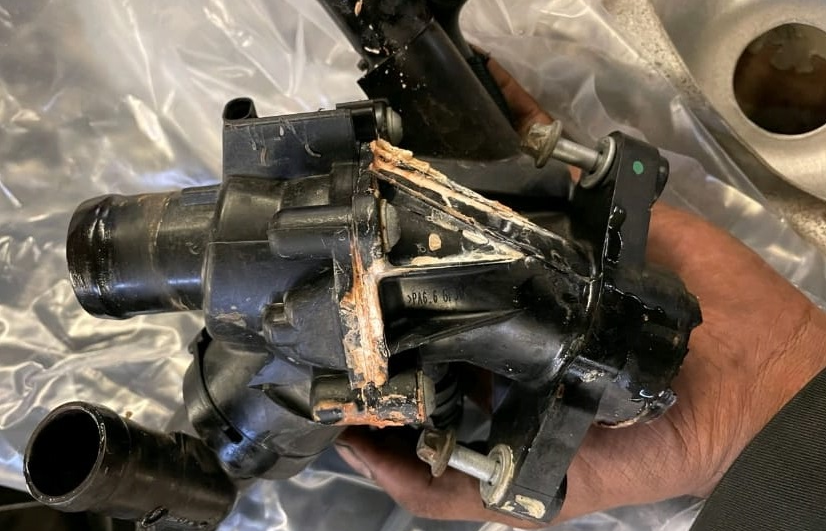
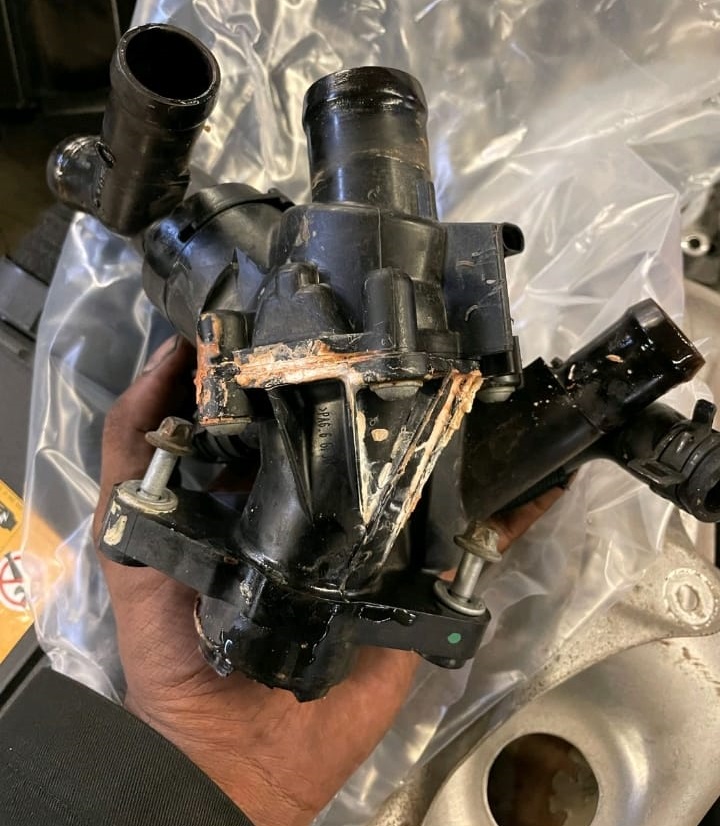
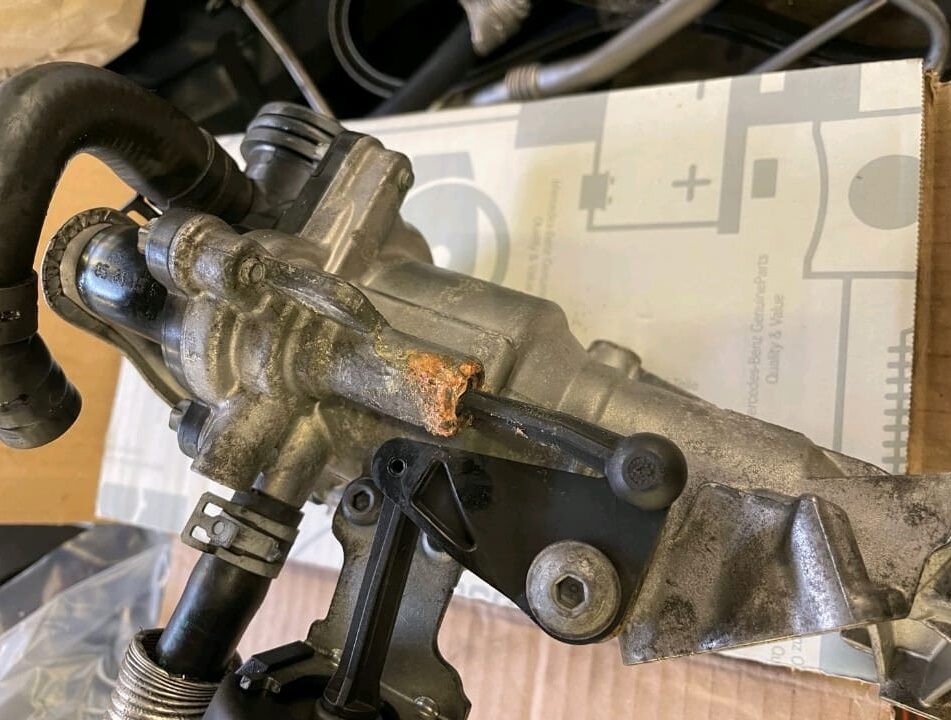
A slow drip was detected near the thermostat housing, confirming a leak that was only visible under pressure.
The thermostat housing on M270/M274 engines is made of plastic and is known to crack or warp with age and heat cycles making it a common leak point.
Additional Findings: Coolant Pump Leak
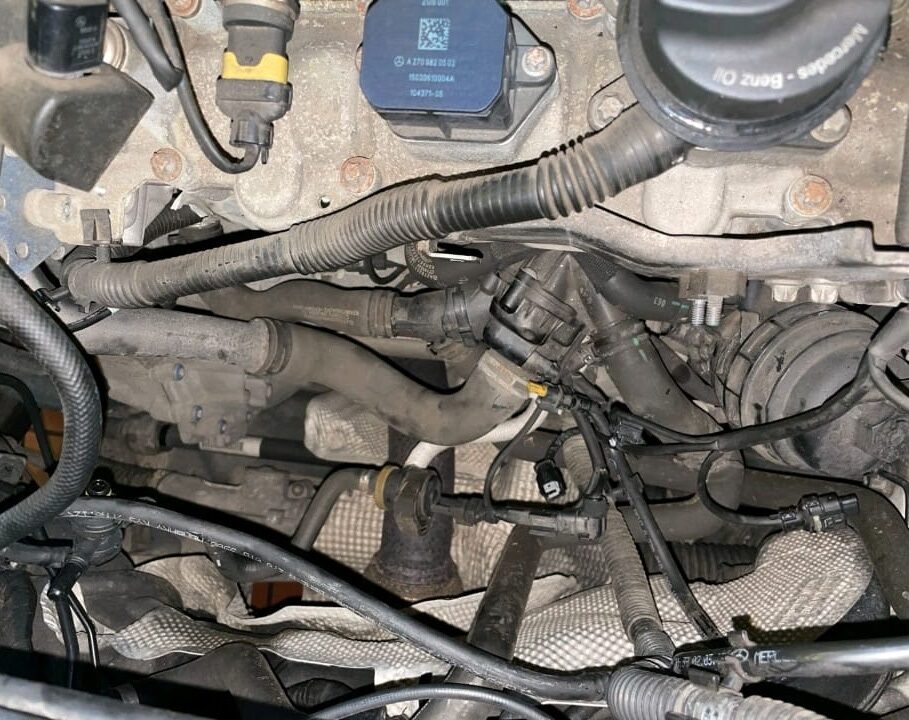
While continuing the inspection, the technician identified a second leak coming from the coolant pump area.
Coolant seepage around the water pump gasket confirmed improper sealing.
This meant the coolant loss was caused by two separate issues:
- – Thermostat housing leak
- – Coolant pump leak
Both required repair to restore proper cooling system integrity.
Repair Process
1. Thermostat Housing Replacement
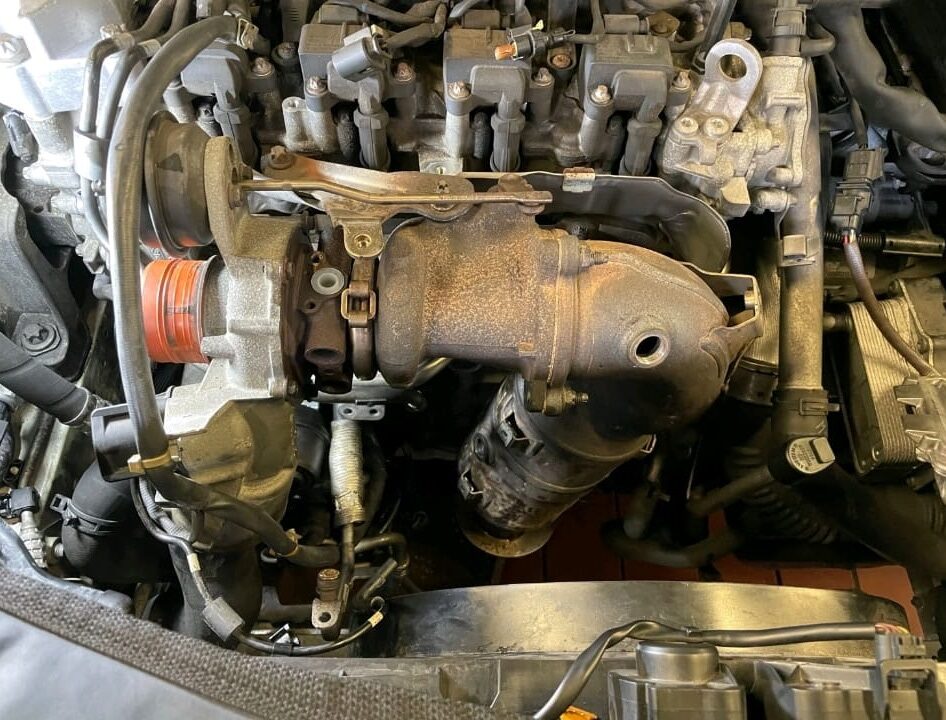
The cooling system was drained and the damaged thermostat housing was removed.
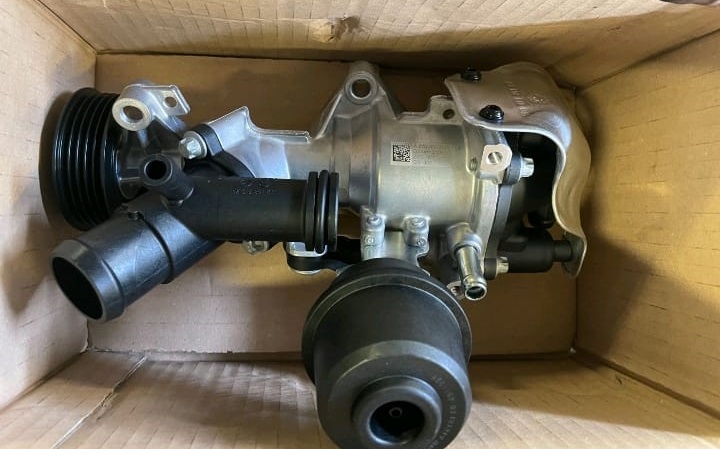
New OEM housing + seal were installed to ensure proper sealing and durability.
2. Coolant Pump Replacement
Due to coolant seepage and gasket deterioration, the coolant pump was replaced.
All mating surfaces were cleaned and re-sealed to prevent future leaks.
3. Final Pressure Test
After reassembling the system:
- – Cooling system was pressurized again
- – No further leaks were detected
- – Coolant was refilled and bled properly
This confirmed the repair was successful.
Conclusion
This case study demonstrates how a small, hidden thermostat housing leak on the Mercedes-Benz CLA W117 can lead to persistent coolant loss. In this case, the diagnostic process also uncovered a secondary leak at the coolant pump, which contributed to the issue.
By replacing both components, the vehicle’s cooling system was fully restored.
If you notice coolant loss in your Mercedes, a pressure test is essential—many leaks are invisible until the system is pressurized.
For a complete breakdown of all engine oil and coolant leak issues across Mercedes-Benz models, visit the Mercedes Engine Leaks: Full Troubleshooting Guide.
Understanding the Thermostat Housing
The thermostat housing protects and secures the thermostat, which regulates coolant flow based on engine temperature.
Key Functions
- – Holds the thermostat in place
- – Connects coolant hoses between engine and radiator
- – Maintains a leakproof seal
- – Ensures coolant circulation at the correct temperature
Common Thermostat Housing Issues
- – Cracked housing (common with plastic units)
- – Worn or brittle gasket
- – Warping due to heat cycles
- – Corrosion or material degradation
Symptoms of a Failing Thermostat Housing
- – Coolant level drops over time
- – Visible coolant around housing area
- – Engine overheating
- – Sweet smell inside engine bay
- – Warning message: Check Coolant Level
Maintenance Tips
- – Inspect the thermostat housing at every service
- – Use only genuine or high-quality OEM housings
- – Replace gaskets whenever removing the housing
- – Address coolant drops immediately small leaks become major failures
A healthy thermostat housing is essential for stable engine temperature and long-term engine protection.
— Salim, Mercedes Expert
Independent specialist in Mercedes-Benz diagnostics, CAN Bus analysis, troubleshooting case studies, and EV systems.