

Table of Contents
Case Study: Check Emergency Fresh Air System Warning in a Mercedes-Benz S-Class W222
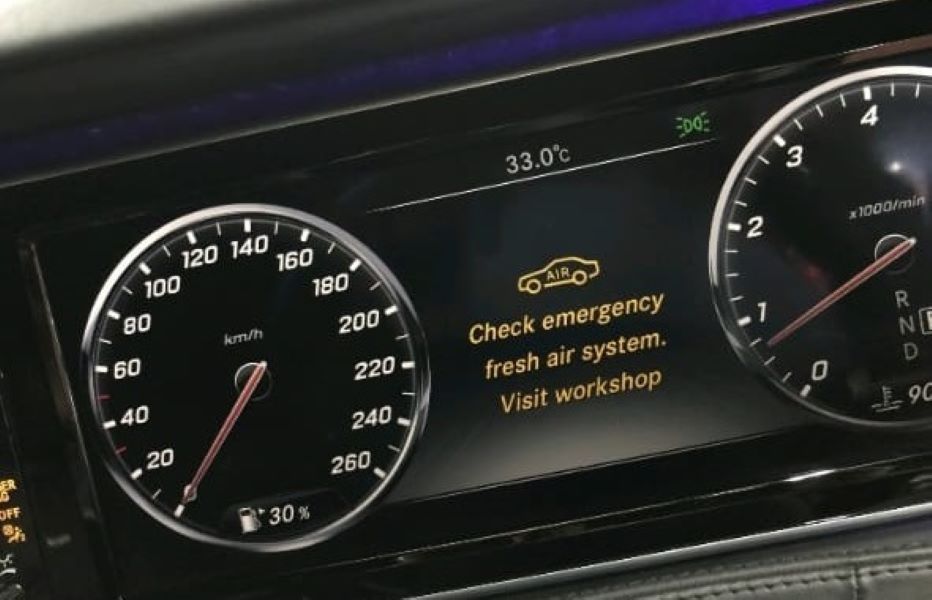
When a “Check Emergency Fresh Air System” warning appears on the instrument cluster of a Mercedes-Benz S Class 222, it can puzzle even seasoned technicians. This system isn’t part of the regular HVAC circuit it’s a special safety feature designed to supply clean, compressed air to the cabin in case of smoke or fire.
In this case study, we’ll walk through how our workshop diagnosed and resolved a critical malfunction in the emergency fresh air supply of a 2016 S-Class, restoring full system functionality and clearing the warning message.
Customer Complaint
The owner of a Mercedes-Benz S-Class W222 reported a persistent dashboard alert:
“Emergency Fresh Air Function Malfunction.”
While the vehicle drove normally, the warning caused concern especially because this system is tied to occupant protection and fire safety.

Step 1: Initial Diagnosis Using STAR Diagnostic System
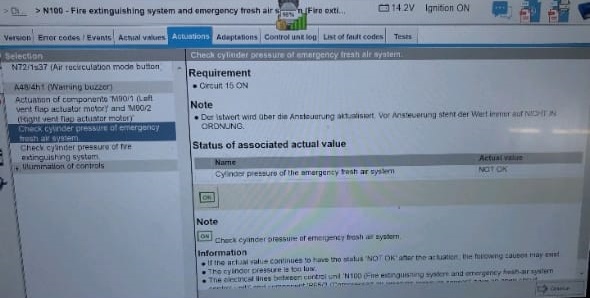
A quick test with Mercedes-Benz STAR Diagnosis (XENTRY) revealed a fault code in the Fire Extinguishing System Control Unit, specifically pointing to the emergency fresh air reservoir pressure condition being “not met.”
This suggested that the system wasn’t ready to operate, either due to low tank pressure or a sensor fault.
Step 2: Guided Test , Sensor Actuation & Actual Value Check
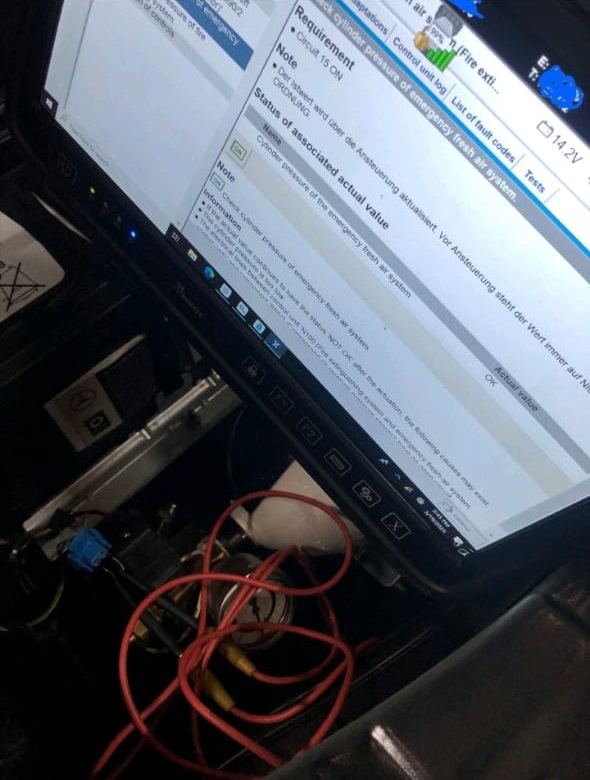
Following the guided test sequence, the technician actuated the pressure sensor on the fresh air reservoir tank and monitored the actual values live.
- – The result was “Not OK”, confirming an abnormal reading.
- – This indicated a pressure problem within the system rather than a wiring or control unit failure.
Step 3: Physical Inspection ; Reservoir Pressure Verification
A visual inspection of the fresh air cylinder revealed an analog gauge reading 230 bar.
According to the Mercedes specification, the minimum operational pressure must exceed 250 bar for the system to function correctly.
Diagnosis: The reservoir was under-pressurized, which directly triggered the warning.
Step 4: Electrical Testing , Verifying Power & Signal Integrity
To confirm the electrical integrity of the sensor circuit:
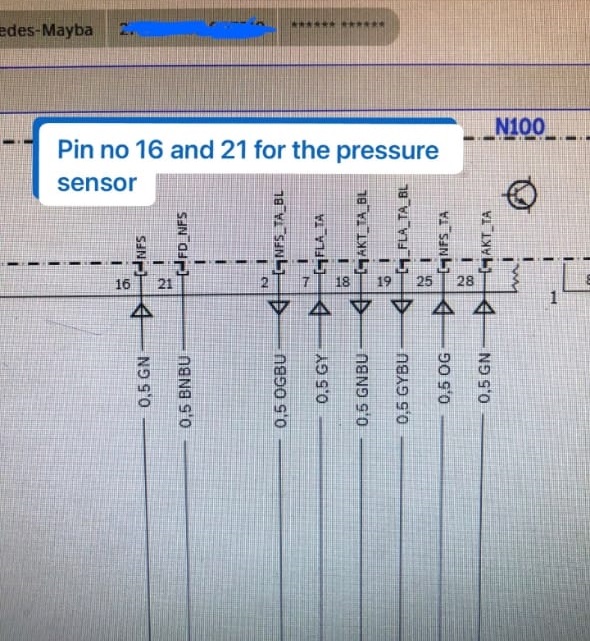
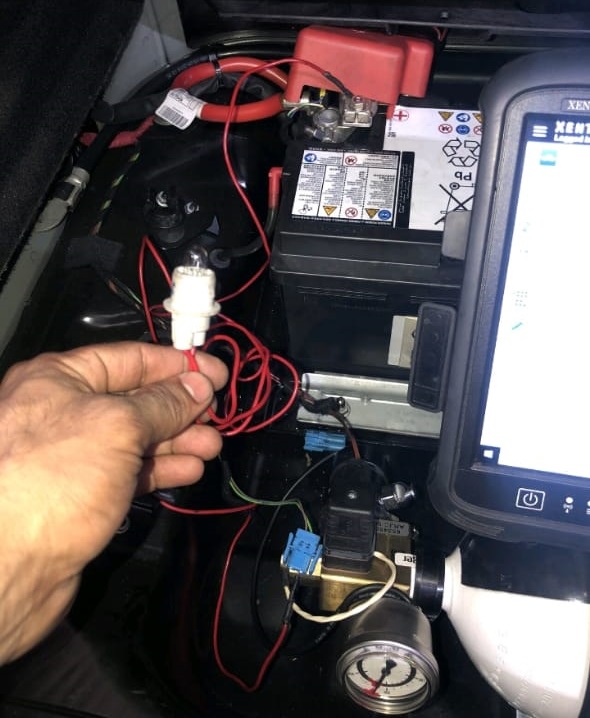
- – A test lamp was connected across the two sensor wires no illumination occurred.
- – Grounding one pin showed ignition-positive voltage, confirming a valid power feed.
- – When the other pin was supplied directly with 12V, the sensor’s actual value changed, and a new fault was stored.
This verified that:
=> The wiring harness and power supply were functional.
=> The sensor itself was not maintaining proper signal output under load.
Step 5: Resistance Check & Bridging Verification
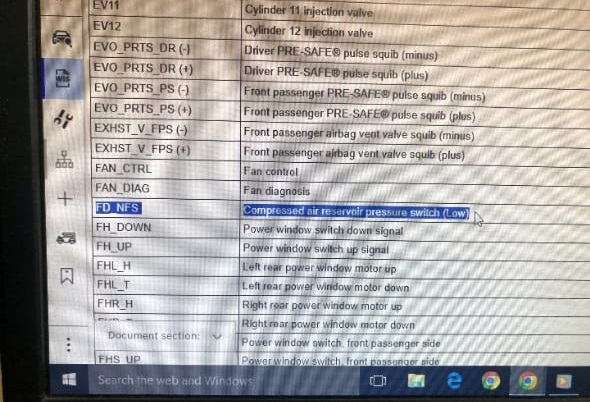
A resistance test across a substitute load (lamp filament) measured 4 ohms, which matched Mercedes’ expected circuit load value.
To validate the diagnosis, the technician bridged the sensor wires after rerunning diagnostics, the fault code disappeared.
This confirmed that the sensor switch inside the reservoir was indeed defective and not providing the correct pressure feedback to the control unit.
Step 6: The Repair ; Replacing the Fresh Air Reservoir
With the diagnosis confirmed, a new fresh air reservoir tank was ordered and installed.
After replacement:
- – The system was rechecked via STAR Diagnosis.
- – The fault memory was cleared.
- – The “Check Emergency Fresh Air System” warning disappeared completely.
A final verification ensured that system pressure remained stable above 250 bar and that all related functions were ready for emergency activation.

Key Takeaways for Technicians
- – The Emergency Fresh Air System operates under the Fire Extinguishing System Control Unit, not the HVAC module.
- – The most common fault cause is low reservoir pressure (below 250 bar).
- – Always perform a guided diagnostic test before replacing components.
- – Use resistance, voltage, and continuity tests to verify sensor circuit integrity.
- – Bridging the sensor circuit can help confirm the issue before ordering expensive parts.
Final Thoughts
This case illustrates how a specialized electrical system fault in the Mercedes S-Class W222 can mimic a mechanical issue but ultimately stem from electronic signal or sensor integrity problems.
Diagnosing this warning requires not only STAR diagnostic access but also a solid understanding of Mercedes electrical systems, CAN communication, and SAM module signal routing.
If you’re troubleshooting advanced electrical systems from SAM module faults to ECU and CAN communication issues explore our in-depth guide:
Mercedes Electrical Problems: Fix SAM, ECU & CAN Bus Faults
FAQs: Check Emergency Fresh Air System
What does “Check Emergency Fresh Air System” mean on a Mercedes?
The “Check Emergency Fresh Air System” warning in a Mercedes indicates a malfunction in the emergency cabin air supply system. This system activates during fire or smoke incidents to release clean, compressed air into the cabin, protecting occupants from toxic fumes.
The warning typically appears when the system’s air reservoir pressure drops below the required threshold (around 250 bar) or if a pressure sensor or wiring fault prevents proper system readiness.
Is it safe to drive with the emergency fresh air system warning on?
Yes, the vehicle will continue to drive normally, but the safety system won’t be operational in case of an emergency. The warning means the cabin air protection feature may not activate if smoke or fire occurs.
While it doesn’t affect normal driving performance, Mercedes recommends diagnosing and repairing the issue promptly to maintain full safety functionality especially in luxury or armored models equipped with this feature.
How do you fix the emergency fresh air system malfunction in a Mercedes S-Class?
To fix the “Check Emergency Fresh Air System” warning in a Mercedes S-Class (W222):
- 1. Run STAR Diagnosis (XENTRY) to read fault codes.
- 2. Check the pressure sensor and verify actual pressure in the air reservoir (must exceed 250 bar).
- 3. Inspect wiring and sensor voltage to rule out electrical faults.
- 4. Replace the air reservoir tank if the pressure is too low or the sensor fails internal testing.
- 5. Clear fault codes and perform a final system readiness check.
After replacement, the warning should disappear once the correct pressure and signals are restored.
What causes the emergency fresh air system fault in Mercedes vehicles?
Common causes of the emergency fresh air system fault include:
- – Low pressure in the compressed air reservoir tank (below 250 bar).
- – Defective pressure sensor sending incorrect readings to the control unit.
- – Wiring damage or corrosion in the sensor circuit.
- – Fault in the Fire Extinguishing System Control Unit.
Less commonly, software calibration errors or improper installation of replacement components can also trigger the warning.
Where is the emergency fresh air reservoir tank located in the S-Class?
In most Mercedes-Benz S-Class W222 models, the emergency fresh air reservoir tank is located in the engine bay or under the front fender area, depending on the vehicle’s variant and equipment level.
It’s a high-pressure cylinder that stores compressed air for emergency use and connects directly to the fire extinguishing system via pressure sensor wiring. Always handle this component carefully it maintains internal pressure above 250 bar and should be serviced only by trained technicians.
— Salim, Mercedes Expert
Independent specialist in Mercedes-Benz diagnostics, CAN Bus analysis, troubleshooting case studies, and EV systems.