

Table of Contents
Power Loss & Check Engine Light From Air Intake Manifold Failure Mercedes E Class W212 (M272) Case Study
When a Mercedes loses power and triggers the Check Engine Light, the intake system is one of the first places technicians look. On engines like the M272, a failing Air Intake Manifold can instantly disrupt airflow, cause incorrect air-fuel ratios, trigger fault codes, and push the vehicle into a reduced-power state.
This case study shows how a faulty intake manifold caused power loss, rough performance, and a persistent CEL in a Mercedes-Benz E Class W212, and how the issue was diagnosed and repaired.
For more cases, diagnostics, and expert repair workflows, see the hub:
Mercedes Power Loss and Limp Mode: Full Troubleshooting Guide
Vehicle Overview
Model: Mercedes-Benz E Class W212
Engine: M272 Engine
Customer Complaint: Loss of power + Check Engine Light (CEL)
The driver noticed that the engine lacked power during acceleration and the vehicle felt sluggish under load classic signs of intake-air flow disruption.
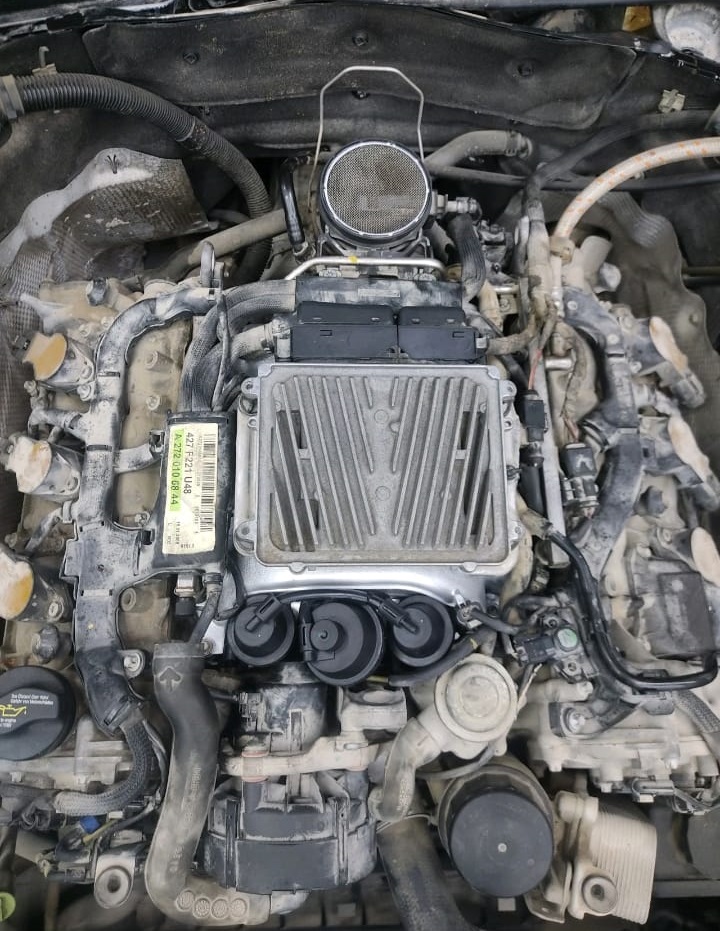
Symptoms of a Mercedes Intake Manifold Failure
A failing or leaking intake manifold can produce:
- – Noticeable loss of engine power
- – Check Engine Light activation
- – Poor throttle response
- – Rough idle or hesitation
- – Increased fuel consumption
- – Possible limp-mode activation in severe cases
These symptoms align perfectly with what the W212 owner reported.
Diagnostic Process
1. Xentry Diagnostic Scan
The technician connected Xentry, Mercedes’ official diagnostic system. Several stored faults were found each pointing toward an issue in the Air Intake Manifold system, including:
- – Tumble flap malfunction
- – Airflow irregularities
- – Intake manifold leakage
These fault codes indicated that the manifold could not properly regulate or distribute air, directly resulting in power loss.
2. Visual Inspection of the Intake Manifold
After removing the engine cover, two critical issues were confirmed:
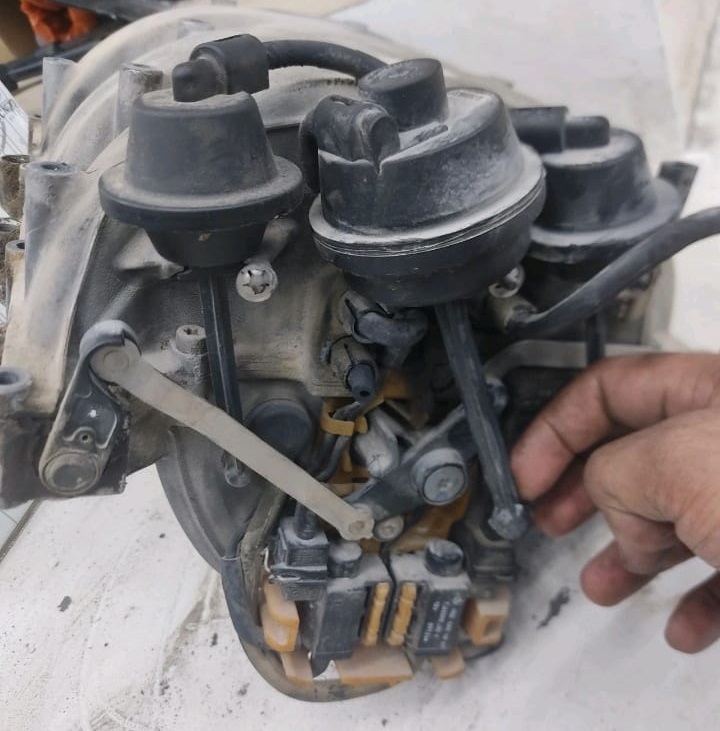
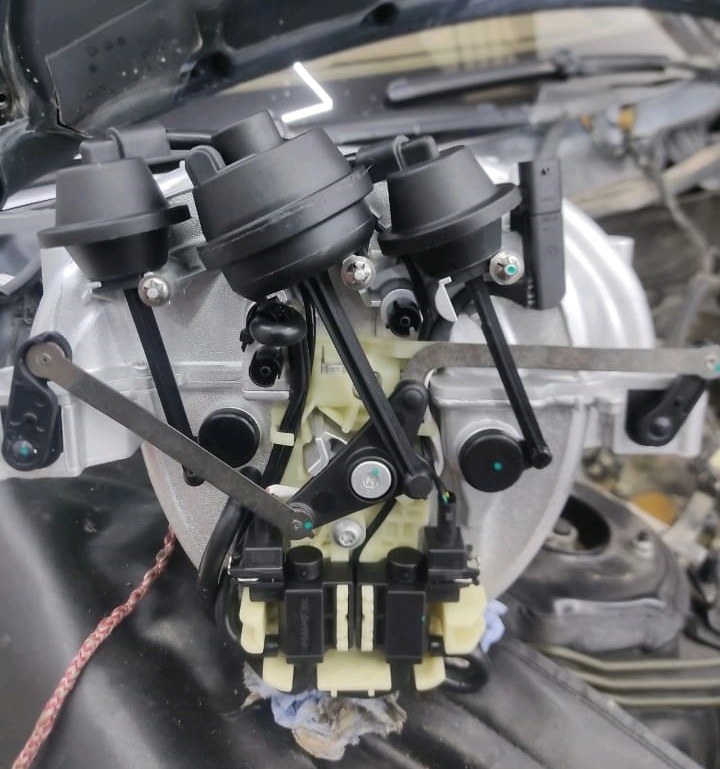
Faulty Tumble Flaps
The tumble flaps inside the manifold were stuck or broken. These flaps optimize air swirl at low RPM. When they fail:
- – Airflow becomes unstable
- – Combustion efficiency drops
- – Power and throttle response suffer
Intake Manifold Air Leak
A physical leak was also discovered along the manifold body.
This leak caused unmetered air to enter the system, triggering the Check Engine Light and confusing the ECU’s air-fuel calculations.
Both failures required replacement of the entire assembly.
Repair Process
1. Removing the Old Intake Manifold
The technician removed connected components including:
- – Vacuum lines
- – Sensors
- – Throttle body connections
- – Bolts securing the manifold to the cylinder head
Because the M272 manifold integrates internal mechanisms (tumble flaps, linkage, and actuators), partial repair is rarely reliable.
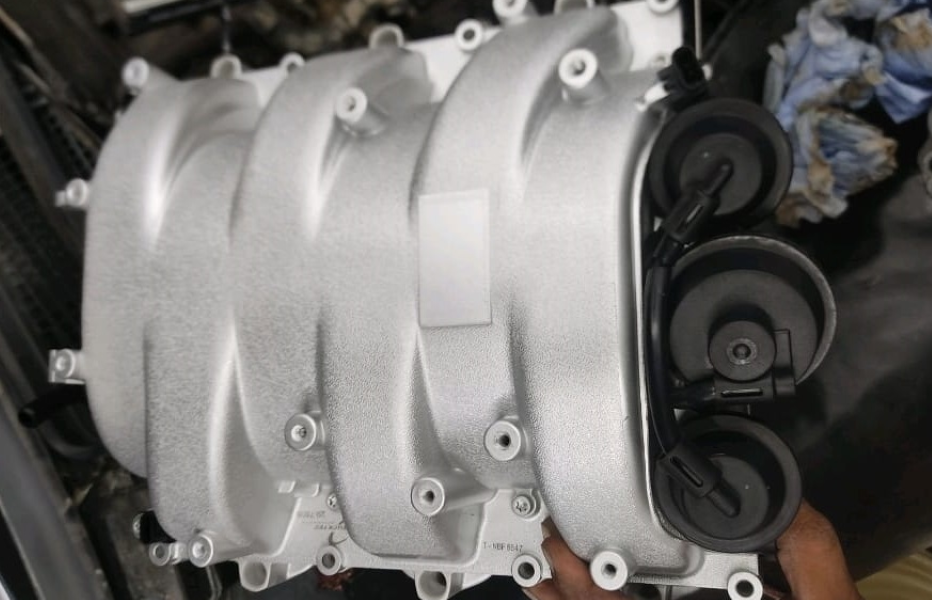
2. Installing the New Intake Manifold
A new, genuine Mercedes intake manifold was installed.
Key steps included:
- – Proper alignment to the cylinder head
- – New gaskets to prevent future air leaks
- – Reconnecting all vacuum and electrical components
- – Resetting learned values in Xentry
- – Clearing stored fault codes
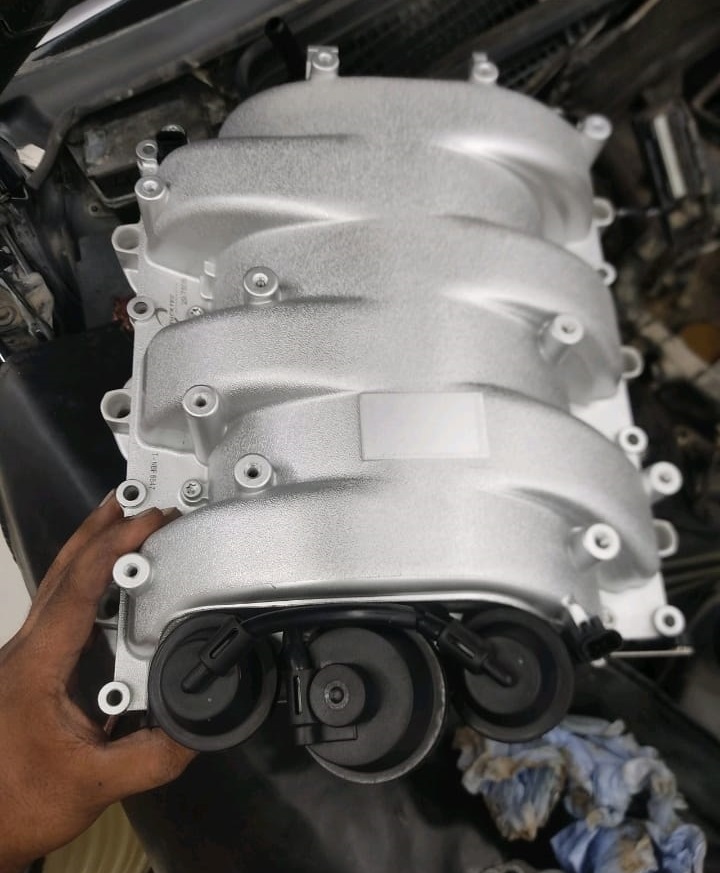
Post-Repair Verification
Fault Codes Cleared
Xentry confirmed that all intake-related faults were resolved.
Test Drive
During the test drive:
- – Power was fully restored
- – No hesitation or surging
- – No Check Engine Light warnings
- – Vehicle accelerated normally under load
The problem was fully solved.
What Does an Intake Manifold Do on a Mercedes?
The intake manifold plays a central role in engine performance:
1. Even Air Distribution
Feeds each cylinder with equal airflow for smooth combustion.
2. Supports Fuel Efficiency
Maintains stable air-fuel ratio → better mileage.
3. Integrates Tumble Flaps
On M272 engines, tumble flaps optimize air motion at low RPM.
4. Regulates Engine Temperature
Many manifolds include coolant passages to help stabilize temps.
When any of these functions fail, power loss and CELs quickly follow.
Can You Drive With a Bad Intake Manifold?
Not recommended.
Driving with a faulty intake manifold can cause:
- – Severe power loss
- – Overheating risk (if coolant paths leak)
- – Excess fuel consumption
- – Higher emissions
- – Potential internal engine damage
- – Risk of entering limp mode
Always address manifold issues early to avoid costly repairs.
Key Takeaways
-> Intake manifold faults directly affect power delivery.
->M272 engines are known for tumble flap mechanism failures.
-> Air leaks or stuck flaps can instantly trigger Check Engine Light.
-> Xentry diagnostics + visual inspection are essential for accurate diagnosis.
-> Replacing the entire manifold is often the most reliable long-term fix.
-> Learn more similar cases in the
Mercedes Power Loss and Limp Mode: Full Troubleshooting Guide
— Salim, Mercedes Expert
Independent specialist in Mercedes-Benz diagnostics, CAN Bus analysis, troubleshooting case studies, and EV systems.