

Table of Contents
Car Won’t Accelerate in Mercedes-Benz G Class W463 (M273 Engine): Full Diagnostic Case Study
When a powerful SUV like the Mercedes-Benz G Class suddenly refuses to accelerate, the issue can feel both alarming and confusing especially when the vehicle enters a safety “reduced power” state. If your Mercedes feels sluggish, unresponsive, or unable to accelerate properly, make sure to explore the Mercedes Power Loss and Limp Mode: Full Troubleshooting Guide, the main hub where you’ll find every possible cause of low power, limp mode activation, throttle faults, and acceleration loss.
In this real workshop case study, a Mercedes-Benz G Class W463 equipped with the M273 Engine arrived with a serious performance issue:
The car wouldn’t accelerate and struggled to respond to throttle input.
Below is the full step-by-step diagnostic process and the exact solution that restored the vehicle’s performance.
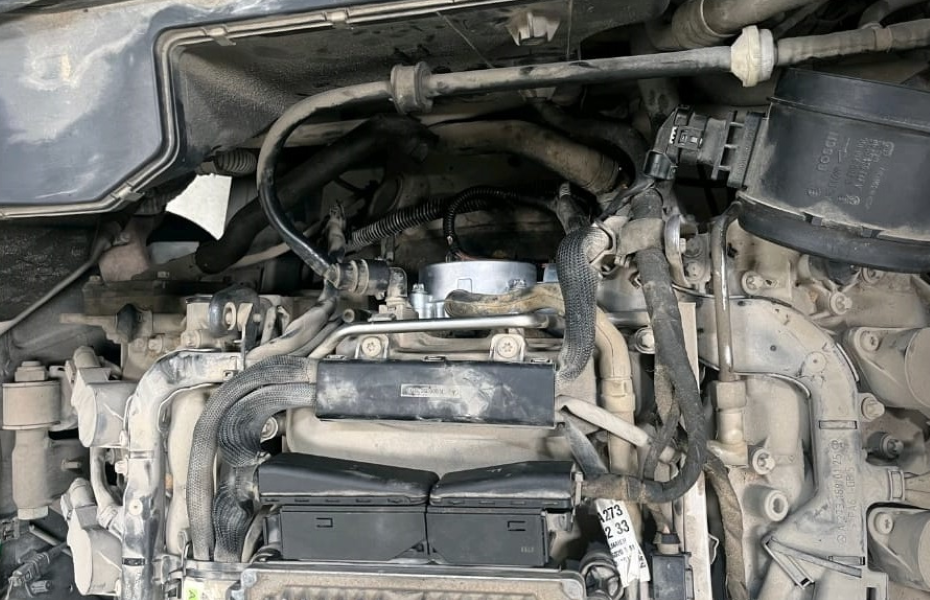
Customer Complaint: Car Won’t Accelerate
The owner of the G Class W463 reported:
- – Extremely sluggish acceleration
- – Poor throttle response
- – The vehicle struggling to move when pressing the gas pedal
No abnormal noises were reported, but the engine clearly lacked power.
Step 1 : Initial Diagnosis Using Xentry
The vehicle was connected to the Mercedes-Benz Xentry diagnostic system.
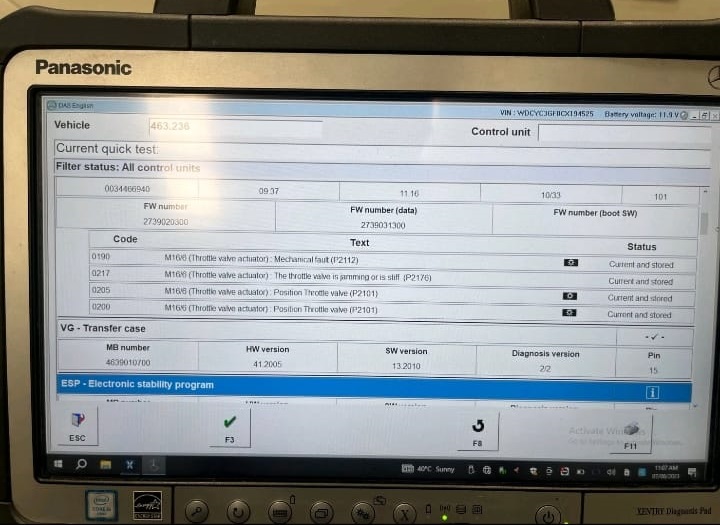
Xentry revealed multiple fault codes in the throttle valve actuator system:
- 0190 : M16/6 Throttle Valve Actuator: Mechanical Fault (P2112)
- 0217 : M16/6 Throttle Valve Actuator: Throttle Valve Stuck/Jammed (P2176)
- 0205 : Throttle Valve Position Error
- 0200 : Throttle Valve Position Fault (P2101)
These codes all pointed toward one component:
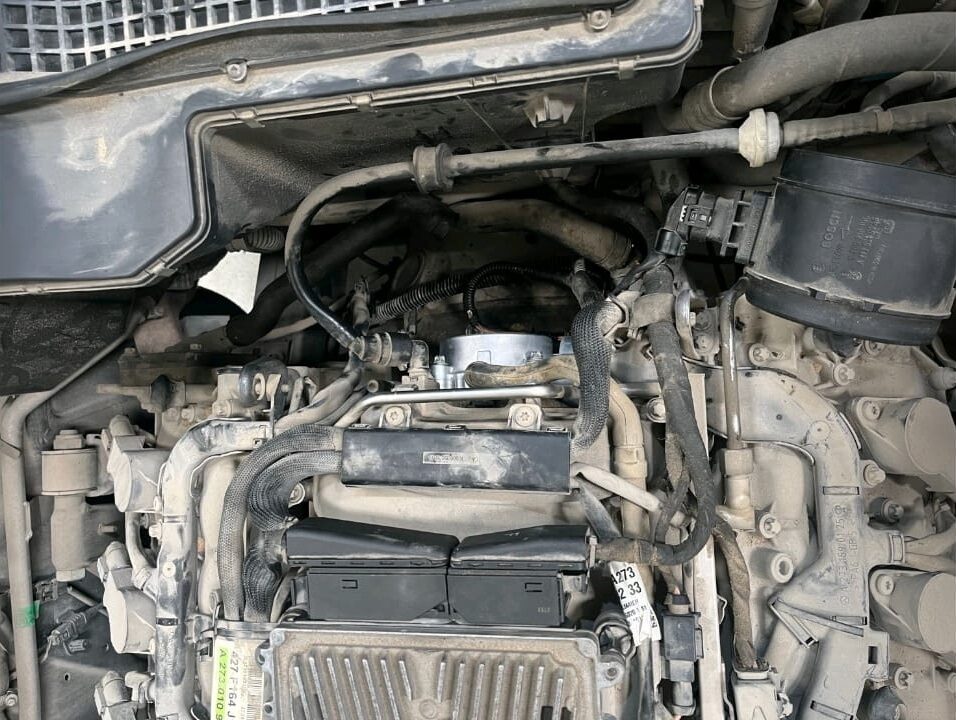
The throttle valve actuator (throttle body).
When the throttle body fails, the vehicle cannot properly regulate airflow causing poor acceleration or complete power loss.
Step 2 : Physical & Electrical Verification
To avoid misdiagnosis, the technician followed the wiring diagram of the M273 engine and performed the following checks:
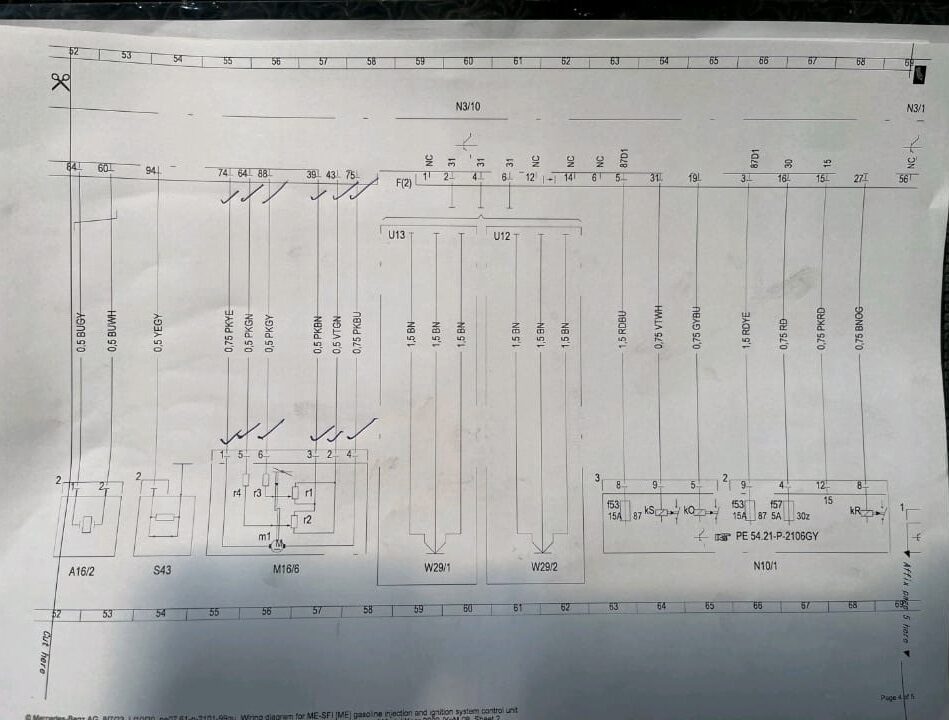
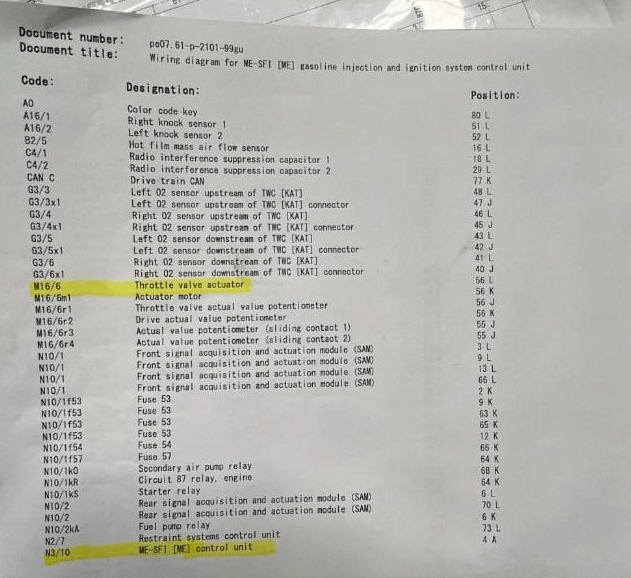
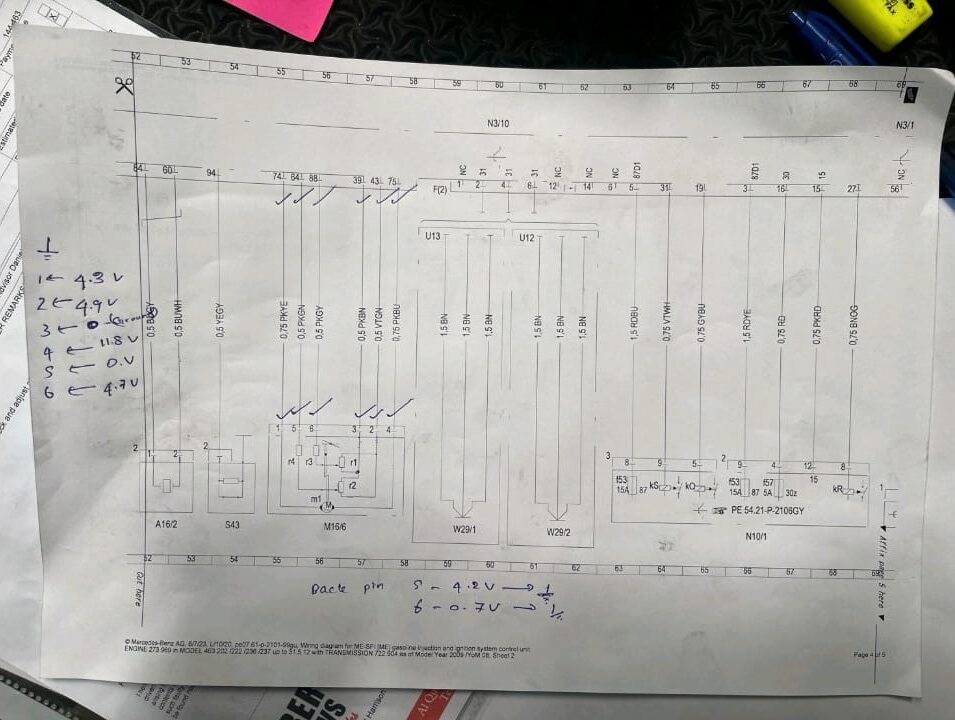
=> Power Supply Check
The throttle body was receiving proper voltage.
=> Resistance Test
Wiring continuity was checked from the ECU to the throttle actuator no issues detected.
=> Connector Condition
No corrosion, oil contamination, or loose pins.
Since the electrical system tested healthy, the failure was confirmed to be mechanical inside the throttle actuator.
Step 3 : Throttle Body Actuation Test
Using Xentry, the technician performed an actuator test to command the throttle body to open and close.
Result:
=> No movement.
=> No response to commands.
This confirmed that the throttle body was internally jammed exactly why the car wouldn’t accelerate.
Step 4 : Throttle Body Replacement
Since the actuator had completely failed, the only permanent solution was replacing the throttle body assembly.
Replacement Procedure:
- 1. Disconnect battery
- 2. Remove intake components for access
- 3. Unplug electrical connectors
- 4. Remove the defective throttle body
- 5. Install new OEM throttle body
- 6. Reconnect hoses & sensors
- 7. Reset throttle adaptations using Xentry
- 8. Clear fault codes
After installation, the system responded immediately.
Step 5 : Final Test Drive
After clearing the fault codes:
- – The G Class accelerated smoothly
- – No hesitation
- – No throttle delay
- – No return of fault codes
The customer confirmed the vehicle regained full power.
Why a Failed Throttle Body Causes No Acceleration
The throttle body controls how much air enters the engine.
If it fails:
- – Airflow becomes restricted
- – ECU limits power to protect the engine
- – Acceleration becomes weak or nonexistent
- – Limp mode may be triggered
This is why a stuck or jammed throttle plate instantly causes severe loss of power.
What Happens When a Throttle Body Fails?
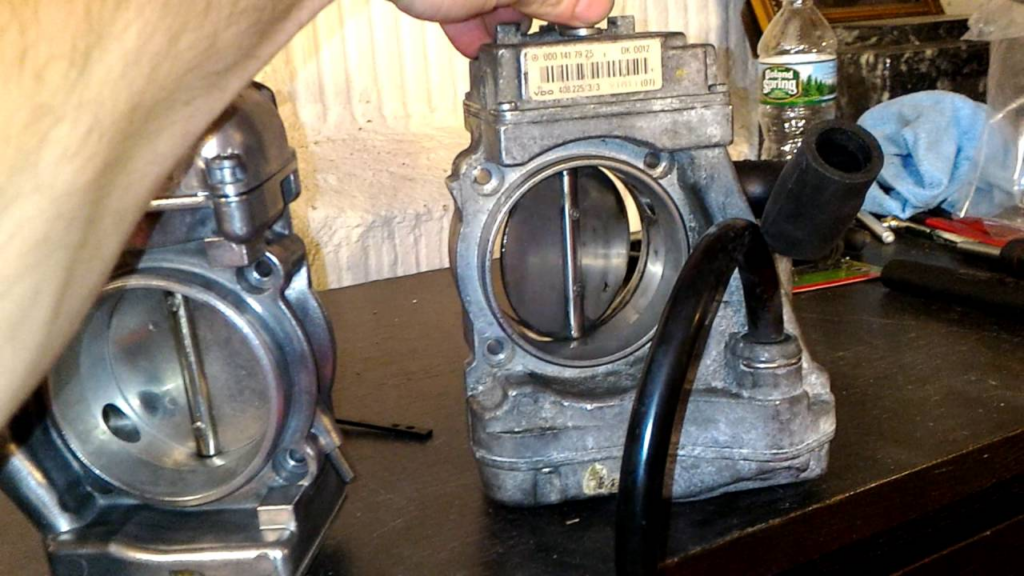
Symptoms:
- – Car won’t accelerate
- – Rough idle
- – Jerking or hesitation
- – Surging RPMs
- – Check Engine Light
- – Poor fuel economy
- – Whistling or sucking sounds
Common Causes:
- – Carbon buildup
- – Damaged motor
- – Faulty throttle position sensor (TPS)
- – Internal mechanical wear
- – Electrical failure
How to Check if a Throttle Body Isn’t Working
=> Visual Inspection
Look for carbon buildup or a stuck butterfly valve.
=> Actuation Test (Recommended)
Using Xentry or OBD tool to command the throttle plate.
=> Check for Fault Codes
Codes like P2101, P2112, or P2176 confirm throttle issues.
=> Voltage Test
TPS and actuator voltage should increase smoothly as throttle opens.
=> Idle Behavior
Fluctuating RPM often indicates a faulty actuator or sensor.
=> Cleaning Test
If cleaning improves function, carbon buildup was the issue.
If nothing changes → actuator failure.
Conclusion
This case study shows how a faulty throttle valve actuator caused severe power loss in a Mercedes-Benz G Class W463 with the M273 engine. Through proper Xentry diagnosis, wiring checks, and a failed actuation test, the issue was accurately isolated and resolved by replacing the throttle body.
If your Mercedes shows similar symptoms, refer to the Mercedes Power Loss and Limp Mode: Full Troubleshooting Guide to understand all potential causes boost leaks, fuel pressure faults, limp mode triggers, MAF sensor issues, turbo problems, and more.
— Salim, Mercedes Expert
Independent specialist in Mercedes-Benz diagnostics, CAN Bus analysis, troubleshooting case studies, and EV systems.