

Table of Contents
Case Study: Front Rear Differential Lock System Malfunction in a Mercedes-Benz G Class W463
The Mercedes-Benz G Class 463 AMG is an icon of off-road engineering combining raw power with advanced drivetrain systems like the front and rear differential locks. These components ensure the vehicle maintains traction even on the most challenging terrains.
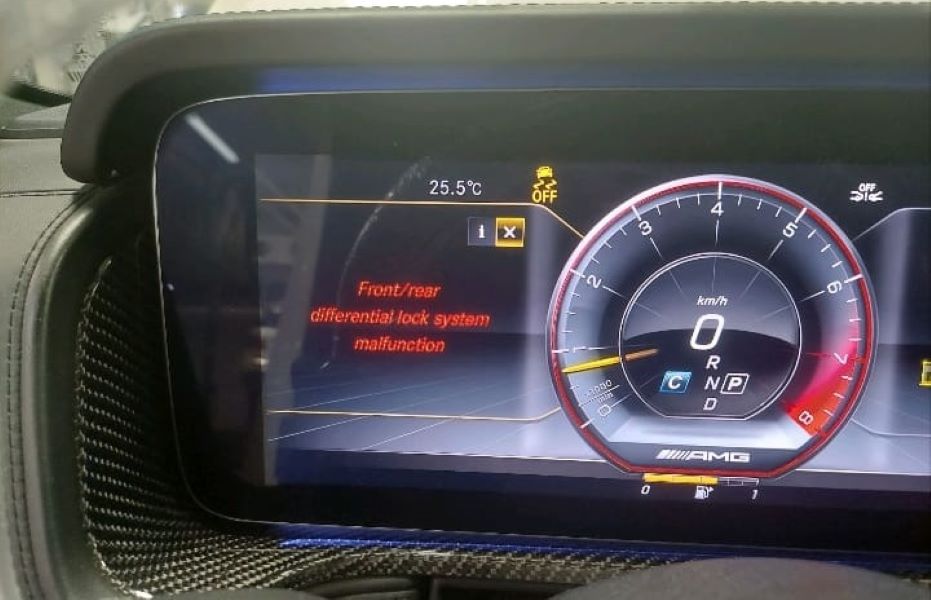
However, when the “Front Rear Differential Lock System Malfunction” warning appears on the instrument cluster, it signals a potential breakdown in the complex network of actuators, sensors, and communication modules that control the locking differentials.
This real-world Mercedes G Class case study demonstrates how our technicians diagnosed and fixed this issue using a structured diagnostic approach.
For a complete library of related case studies, see our hub:
Mercedes Transmission Issues: Causes and Fixes
Vehicle Details
- Model: Mercedes-Benz G Class W463 AMG
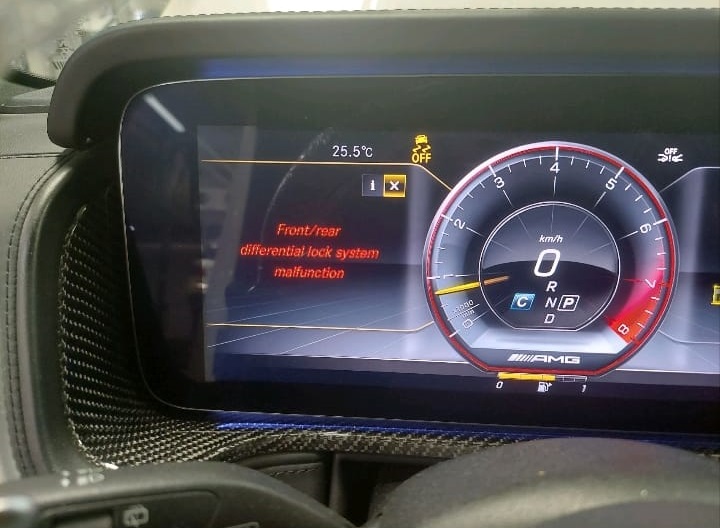
- Complaint: “Front Rear Differential Lock System Malfunction” warning displayed on the dashboard
Step 1: Confirming the Fault
Upon arrival, the vehicle displayed a persistent Front Rear Differential Lock System Malfunction message. The driver reported intermittent behavior sometimes the system worked briefly before disengaging automatically.
Since the differential lock system is electronically controlled, the fault could originate from an actuator failure, wiring problem, or CAN communication error within the drivetrain control network.
Step 2: Connecting Mercedes XENTRY Diagnostic Tool
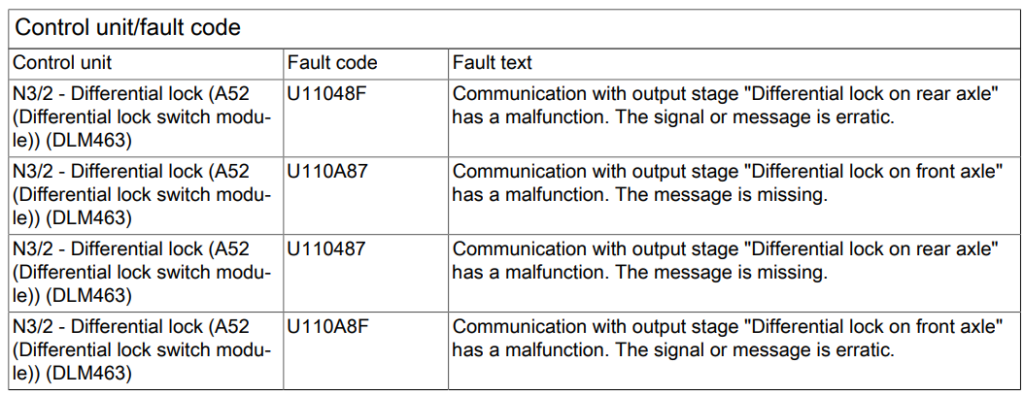
To start, we connected the Mercedes-Benz XENTRY diagnostic system to perform a full scan of the drivetrain control modules. The following fault codes were retrieved:
- – U11048F: Communication with output stage “Differential lock on rear axle” ; signal/message erratic
- – U110A87: Communication with output stage “Differential lock on front axle” ; message missing
- – U110487: Communication with output stage “Differential lock on rear axle” ; message missing
- – U110A8F: Communication with output stage “Differential lock on front axle” ; signal/message erratic
These fault codes confirmed a communication failure between the control unit and the front/rear differential actuators, pointing toward a likely malfunction in one of the output stages.
Step 3: Electrical & Physical Inspection
To rule out a simple power or wiring issue, we performed several verification steps:
- – Voltage and Ground Checks: Measured voltage levels at both actuators all within specification.
- – Connector Inspection: Examined the electrical connectors and harnesses near the axles no signs of corrosion, damage, or loose pins.
- – CAN Communication Verification: Checked for continuity and resistance between the drivetrain control unit and the actuators readings were normal.
With wiring and power verified, attention shifted to the actuator units themselves.
Step 4: Identifying the Faulty Differential Actuator
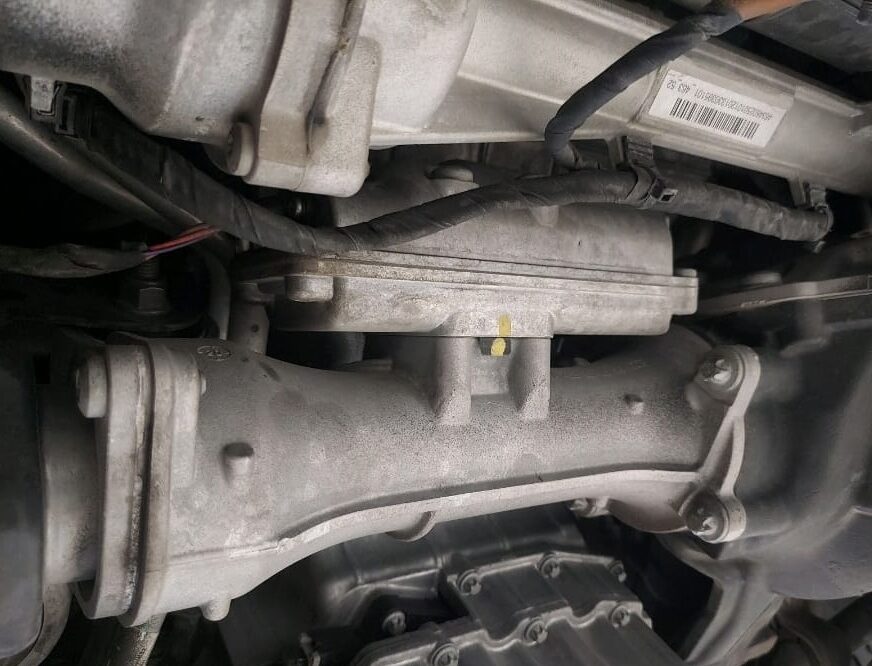
Live data monitoring revealed that the front differential actuator failed to respond during the activation test, while the rear actuator operated normally.
This indicated an internal failure within the front differential actuator, which was no longer engaging the lock mechanism despite receiving correct voltage and communication signals.
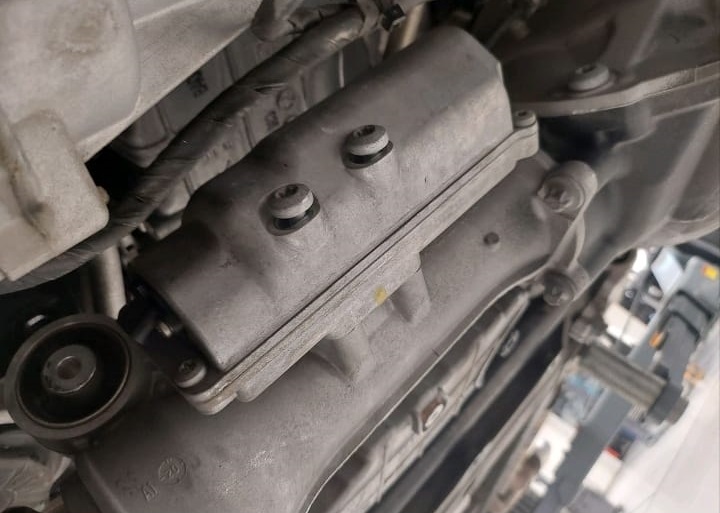
Step 5: Replacing the Front Differential Actuator
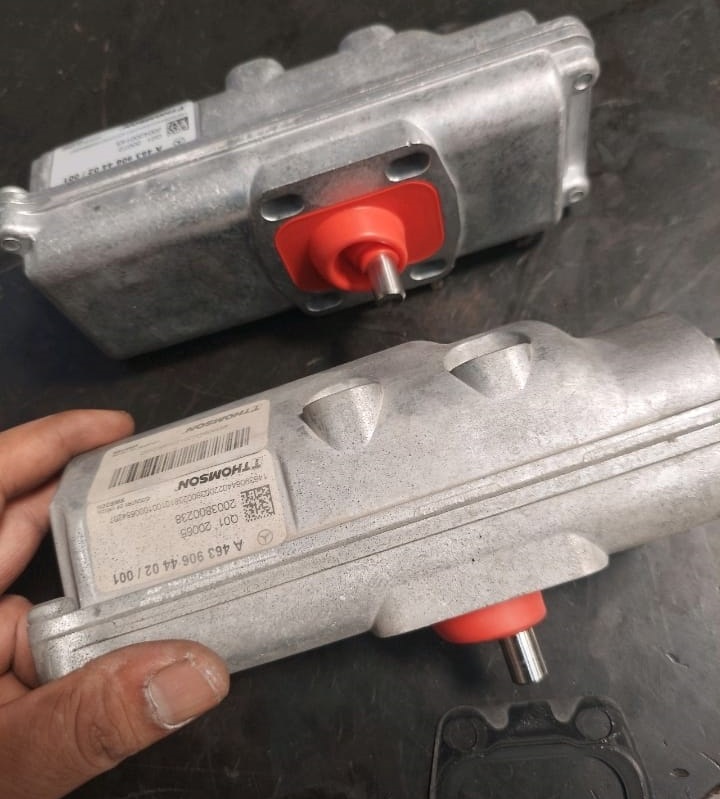
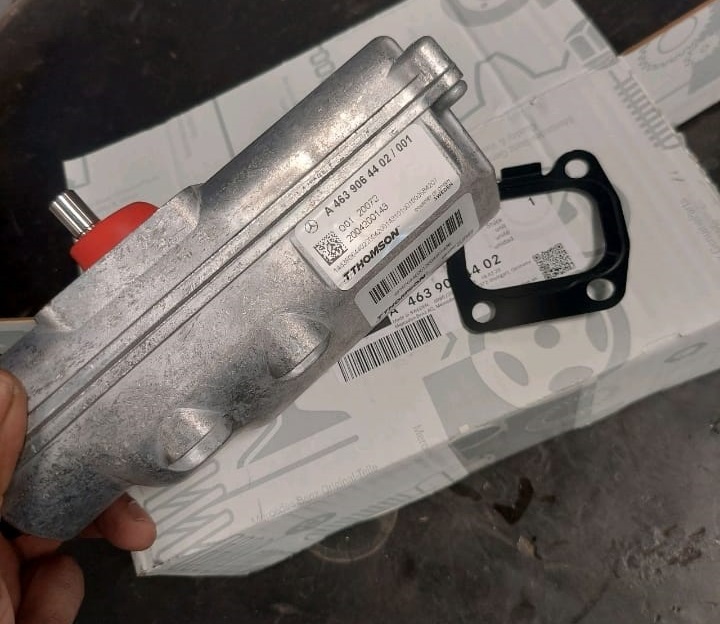
Following Mercedes-Benz repair protocol, we replaced the faulty front differential actuator with an OEM unit.
Repair procedure included:
- 1. Safely lifting the vehicle and disconnecting the front driveshaft for actuator access.
- 2. Removing the defective actuator and inspecting the mechanical engagement mechanism.
- 3. Installing the new actuator and sealing the assembly to prevent water or dirt ingress.
- 4. Performing actuator initialization and system calibration using XENTRY.
After replacement, all fault codes were cleared, and a functional test was conducted.
Step 6: Final Testing and Verification
We performed a full function test by engaging and disengaging the front and rear differential locks multiple times:
- – Both actuators responded instantly to control inputs.
- – The dashboard warning message disappeared.
- – A final system scan confirmed zero stored fault codes.
The Front Rear Differential Lock System Malfunction issue was successfully resolved.
Key Diagnostic Takeaways
- – Communication faults (U1104xx, U110Axx) often indicate actuator failure rather than wiring damage.
- – Always verify voltage, ground, and CAN continuity before replacing control modules.
- – Actuator replacement must be followed by a teach-in or initialization process to restore proper function.
- – Moisture or corrosion in the differential housing area can accelerate actuator failure preventive sealing is recommended.
Understanding Differential Locks in the Mercedes G Class
What Is a Differential Lock?
A differential lock is a key drivetrain feature that enhances traction by ensuring both wheels on the same axle rotate at the same speed. In normal driving, a differential allows each wheel to turn at different speeds necessary when cornering or driving on smooth pavement.
However, in off-road or low-traction conditions, this open-differential design can become a disadvantage. If one wheel loses grip, it spins freely while the other remains stationary, causing the vehicle to lose momentum.
When the differential lock is engaged, it overrides this behavior by mechanically or electronically connecting both wheels together. This forces equal rotation, allowing the wheel with traction to continue propelling the vehicle forward.
In the Mercedes-Benz G Class (W463), the differential lock system can independently control the center, rear, and front axles, allowing drivers to tailor traction to the terrain — from loose sand to steep rocky climbs.
Common situations where the diff lock is used include:
- – Climbing uneven hills where one wheel lifts off the ground.
- – Driving through mud, snow, or deep sand.
- – Recovering from situations where one wheel is slipping excessively.
This advanced control system is one reason the Mercedes G-Class maintains its reputation as a true off-road legend.
What Is a Rear Differential Locker?
The rear differential locker specifically targets the rear axle, locking both rear wheels to spin at the same rate. This feature is especially important during off-road driving or towing, where traction differences between the left and right rear wheels can be extreme.
How It Works:
- – Under normal driving, the rear differential allows each wheel to rotate freely for smoother handling.
- – When traction loss is detected, the locker engages, ensuring both rear wheels receive equal power.
- – This prevents the “free-spinning” wheel effect, helping the G-Class maintain forward momentum.
Types of Lockers Used in Mercedes Vehicles:
- – Manual Lockers: Activated by the driver via a dashboard switch (common in the G-Class).
- – Automatic or Selectable Lockers: Electronically controlled, engaging only when traction loss is detected.
Key Benefits:
- – Significantly improved traction on uneven or slippery terrain.
- – Enhanced stability during off-road climbs and descents.
- – Maintained control during towing or heavy-load conditions.
Important Note:
Engaging the differential locks on high-traction surfaces (like dry pavement) can cause drivetrain strain or tire wear. Always use diff locks only when extra traction is required.
Why This Matters
Understanding how differential locks and rear lockers work helps explain why faults like the Front Rear Differential Lock System Malfunction can cause such significant performance loss. These systems are the backbone of the G-Class’ off-road control and proper diagnosis and repair are crucial for maintaining Mercedes’ legendary 4×4 capability.
Conclusion
The Front Rear Differential Lock System Malfunction in the Mercedes-Benz G-Class W463 was traced to a faulty front differential actuator. After precise diagnostics with XENTRY and component replacement, the system was fully restored.
Differential locks are vital for traction and off-road stability, so any malfunction should be diagnosed early to prevent drivetrain stress.
For more real-world transmission and drivetrain repair insights, visit
Mercedes Transmission Issues: Causes and Fixes your complete guide to solving Mercedes shifting and traction problems.
— Salim, Mercedes Expert
Independent specialist in Mercedes-Benz diagnostics, CAN Bus analysis, troubleshooting case studies, and EV systems.