

Table of Contents
How to Tell If Timing Chain Is Bad (Mercedes Guide + M256 Case Study)
If you suspect a timing chain problem in your Mercedes, you’re right to act quickly. Timing chain issues are among the most serious causes of engine noise, rattling, vibration, and poor performance and they can lead to catastrophic damage if ignored.
This guide explains exactly how to tell if a timing chain is bad, the warning signs, and how to perform a proper diagnosis using Mercedes tools like Xentry. We also include a detailed case study on the Mercedes M256 engine.
For more engine-noise diagnostics, visit our hub:
Mercedes Engine Noise and Vibration Problems: Full Diagnosis
1. Understanding Timing Chain Function and Failure
1.1 What Is a Timing Chain?
The timing chain synchronizes the crankshaft and camshaft(s), ensuring valves open at the correct moment. Unlike rubber timing belts, timing chains are metal and are designed to last the life of the engine but they do stretch, wear, or fail, especially in high-output turbo engines.
1.2 The Most Common Symptoms of a Bad Timing Chain
If your Mercedes engine is developing a timing chain problem, you will almost always notice one or more of the following:
1. Rattling Noise at Cold Start
A worn or stretched chain and weak tensioner cause a metallic rattling sound for a few seconds after startup.
This symptom is one of the strongest indicators of timing chain wear.
2. Engine Misfires
If the chain skips even one tooth, valve timing becomes incorrect, causing:
- – Cylinder misfires
- – Uneven idle
- – Rough running
3. Check Engine Light (CEL)
Mercedes engines will trigger timing-related fault codes like:
- – P0016 : Crankshaft/Camshaft correlation
- – P0017 : Timing misalignment
4. Poor Engine Performance
A stretched chain disrupts combustion timing, causing:
- – Reduced power
- – Hesitation on acceleration
- – Vibrations at idle
5. Metal Shavings in the Oil
Worn timing chain guides or links generate metal particulate visible during an oil change a very serious warning sign.
1.3 Risks of Ignoring Timing Chain Symptoms
A failing timing chain can eventually break, causing catastrophic engine damage:
- – Bent valves
- – Damaged pistons
- – Damaged cylinder head
- – Complete engine failure
This is why Mercedes technicians treat timing chain noise as a priority diagnosis.
2. How to Check a Timing Chain (Step-by-Step)
Now let’s move into the practical diagnostic process, focusing on Mercedes engines especially the M256.
2.1 Why the Mercedes M256 Engine Is Sensitive to Timing Issues
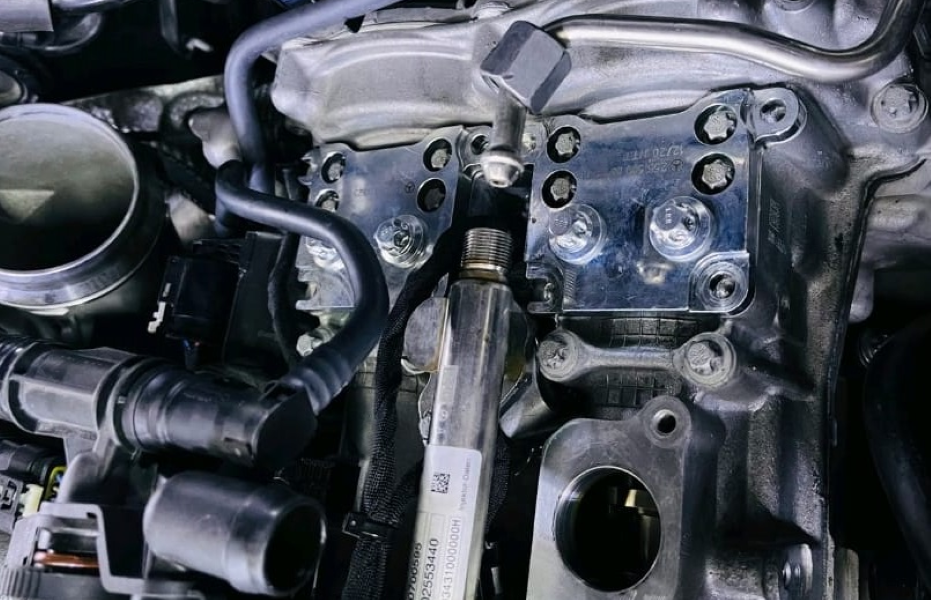
The 3.0-liter inline-six M256 uses:
- – An integrated starter generator (ISG)
- – An electric auxiliary compressor
- – High-precision camshaft timing
- – Multi-stage chain tension system
Because of its advanced design, even minor chain stretching can cause noticeable symptoms.
2.2 Tools Required
For an accurate timing chain diagnosis on any Mercedes engine, you need:
Tools
- – OBD-II scanner
- – Xentry Diagnostics (Mercedes dealer tool)
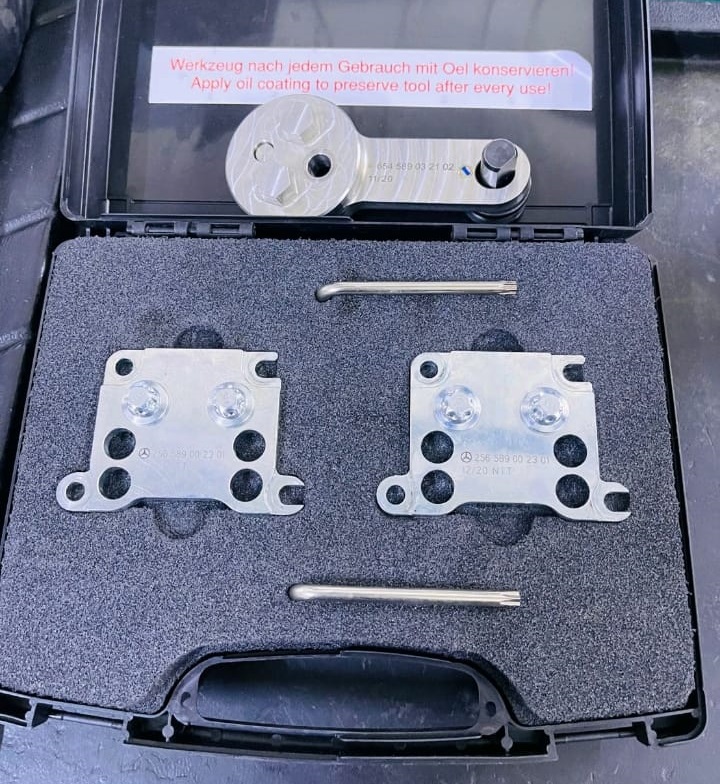
- – Engine timing locking kit
- – Torque wrench
- – Standard socket set
- – Stethoscope (optional for noise pinpointing)
2.3 Step-by-Step: How to Check a Timing Chain on a Mercedes
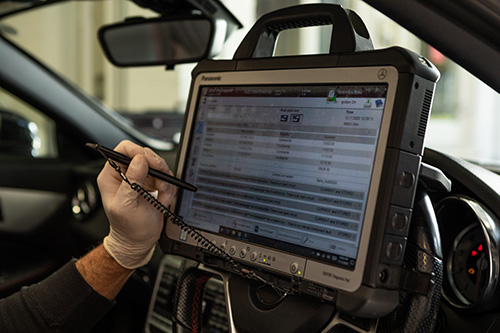
Step 1: Run a Diagnostic Scan (OBD-II or Xentry)
Connect Xentry and check for timing-related codes:
- P0016 : Camshaft Position A / Crankshaft correlation
- P0017 : Crankshaft / Intake Camshaft correlation
- P0340 / P0365 : Camshaft sensor issues
- Over-advanced or retarded timing faults
These codes are strong indicators of timing chain stretch or tensioner problems.
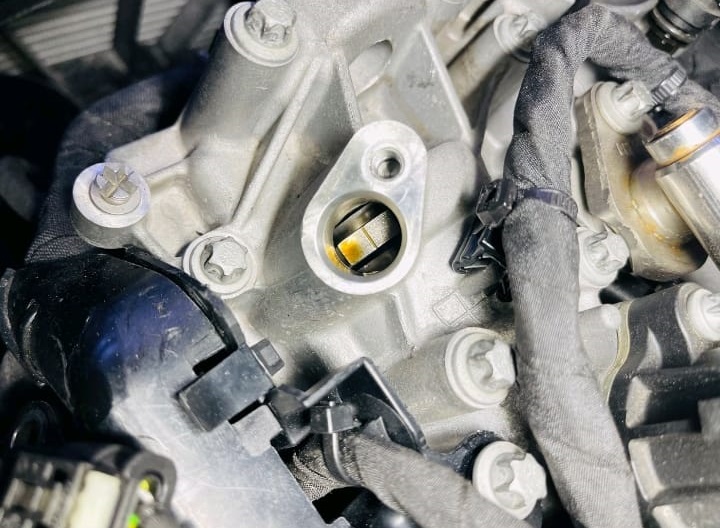
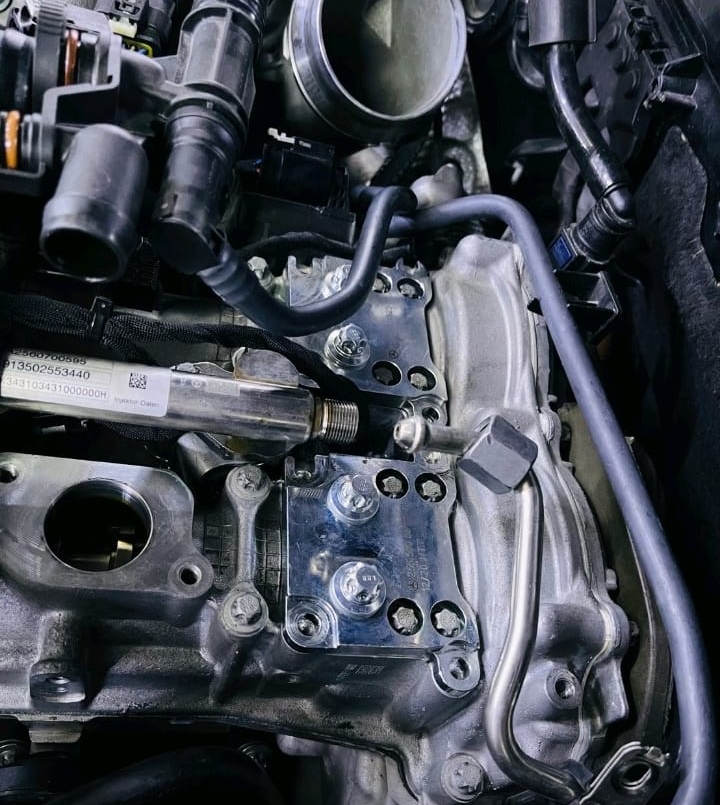
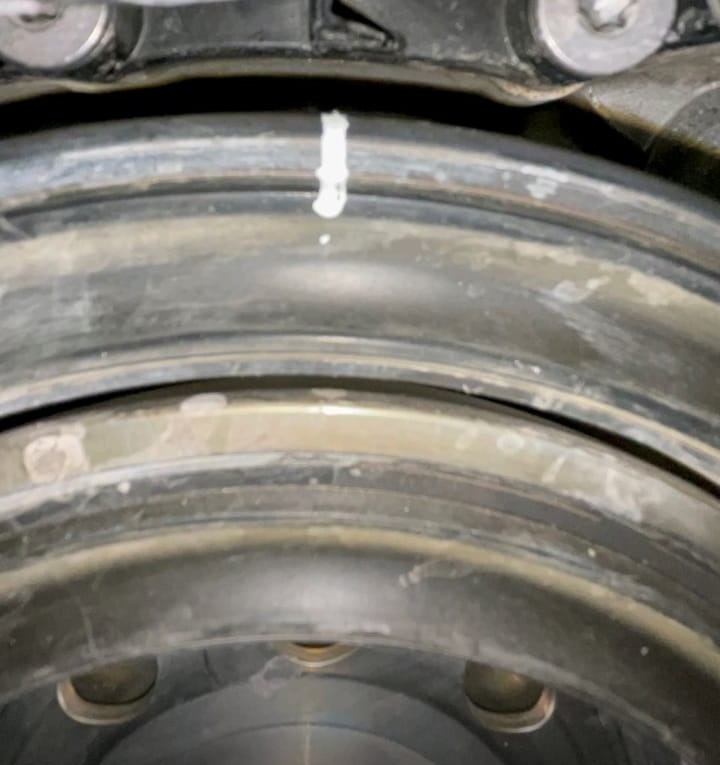
Step 2: Perform a Visual Inspection
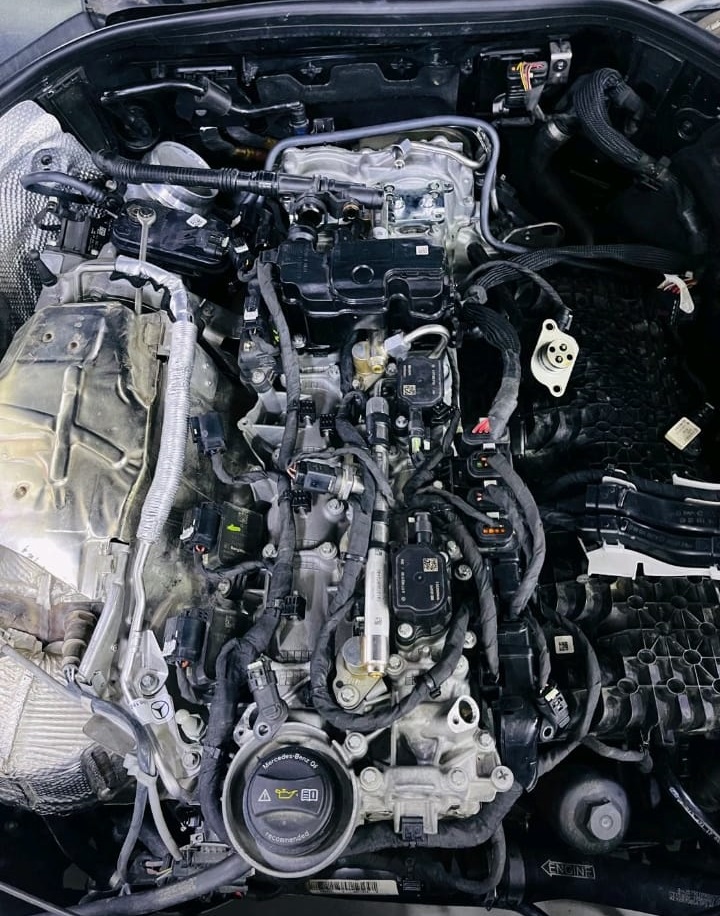
Remove the engine cover and observe what you can through the timing chain area:
Look for:
- – Chain slack
- – Worn sprocket teeth
- – Oil leaks around the timing case
- – Tensioner position (if visible)
Use the included images as references (insert your images in WordPress).
Step 3: Perform a Listening Test
Start the engine and listen for:
Cold-start rattling (most important)
If the chain rattles for 1–5 seconds, your timing chain tensioner is likely losing oil pressure overnight.
Constant metallic chatter
This may indicate worn chain guides.
Step 4: Physical Timing Chain Check (Advanced)
If symptoms continue, perform a deeper inspection:
This requires:
- – Removing the timing chain cover
- – Locking camshaft and crankshaft using the timing tool kit
- – Inspecting chain tensioner, guides, and sprockets
Check for:
- – Chain elongation
- – Worn or broken guides
- – Tensioner collapse
- – Wear marks on sprockets
Step 5: Measure Timing Chain Stretch
Using the factory specifications:
- – Measure chain link spacing
- – Compare with Mercedes allowable stretch values
- – If beyond limits → timing chain replacement is mandatory
Step 6: Reassembly and Final Testing
Reassemble components, refill oil, and reset any codes.
Then perform:
- – Cold start noise test
- – Road test
- – Xentry timing actual-values comparison
If all tests pass, the job is complete.
3. Mercedes M256 Engine Case Study (Timing Chain Diagnosis)
Customer Complaint
The owner reported:
- – Rattling noise during cold start
- – Reduced engine smoothness
- – Check engine light appearing intermittently
Workshop Diagnosis
- 1. Xentry quick test → fault code P0016 detected
- 2. Cold start test → clear 2-second metallic rattle
- 3. Physical inspection → tensioner partially collapsed
- 4. Timing tools installed → chain observed to be stretched beyond tolerance
Repair Performed
- – Timing chain replaced
- – Chain tensioner replaced
- – Both guides replaced
- – Fresh oil and filter
- – Timing re-adaptation using Xentry
Result
- – Engine noise eliminated
- – No more timing correlation faults
- – Smooth and stable idle
- – Customer satisfied
Conclusion
Spotting a bad timing chain early can save your Mercedes engine from thousands of euros in damage. By following the step-by-step process diagnostic scan, listening test, visual inspection, and physical timing check you can accurately determine whether your chain needs replacement.
To continue improving your diagnostic knowledge, visit:
Mercedes Engine Noise and Vibration Problems: Full Diagnosis
— Salim, Mercedes Expert
Independent specialist in Mercedes-Benz diagnostics, CAN Bus analysis, troubleshooting case studies, and EV systems.