

Table of Contents
Loss of Power in Car While Driving ; Case Study in Mercedes-Benz W205 (OM626 Engine)
Sudden loss of power in car while driving is one of the most alarming issues any driver can face especially when acceleration becomes limited and the check-engine light comes on. If your Mercedes struggles to accelerate, stays stuck below a certain RPM, or enters limp mode, make sure to review the Mercedes Power Loss and Limp Mode: Full Troubleshooting Guide, which explains every common cause of low power, limp mode activation, turbo faults, EGR failures, and boost leaks.
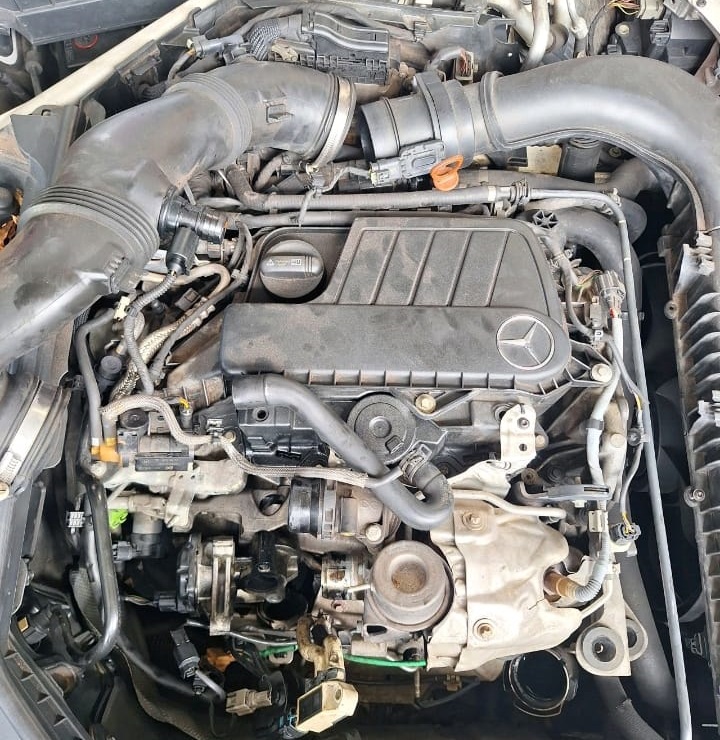
In this real-world case study, a Mercedes-Benz C Class W205 equipped with the OM626 engine arrived at the workshop with a severe performance issue:
The vehicle would not accelerate beyond 3000 RPM and displayed a check-engine warning.
Below is the exact diagnostic path technicians followed to identify and resolve the problem.
Customer Complaint: Loss of Power While Driving
The owner reported:
- – The car would not accelerate beyond 3000 rpm
- – Noticeable lack of power during overtaking or uphill driving
- – Illuminated check-engine warning
This type of restricted acceleration is often a sign of EGR flow problems, turbo issues, or limp mode activation.
Step 1 : STAR Diagnosis Scan
Technicians connected the Mercedes STAR DIAGNOSIS system to read stored fault codes.
Fault Code Found:
P040100 : The flow rate of the exhaust gas recirculation positioner (low pressure) is too low.
This code points directly to:
- – Low EGR flow
- – Possible blockage
- – Faulty EGR filter
- – Stuck EGR flap
- – Intake restriction
A low EGR flow rate is one of the most common causes of loss of power in car while driving on modern diesel Mercedes engines.
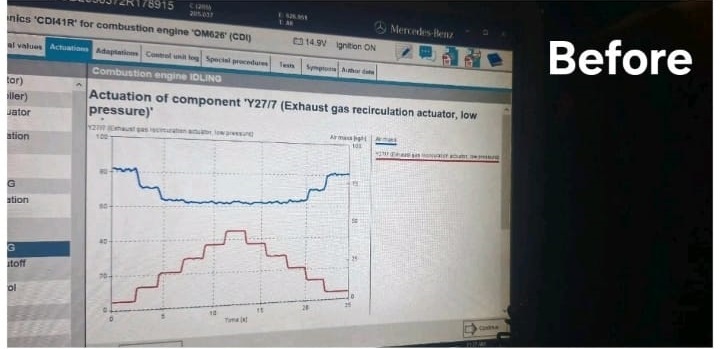
Step 2 : Checking Actual Values & EGR Function
The technician evaluated:
- – EGR position values
- – Flow-related parameters
- – Exhaust temperature reading
- – Pressure measurements
All values pointed to restricted flow inside the low-pressure EGR circuit.
Step 3 : Physical EGR System Inspection
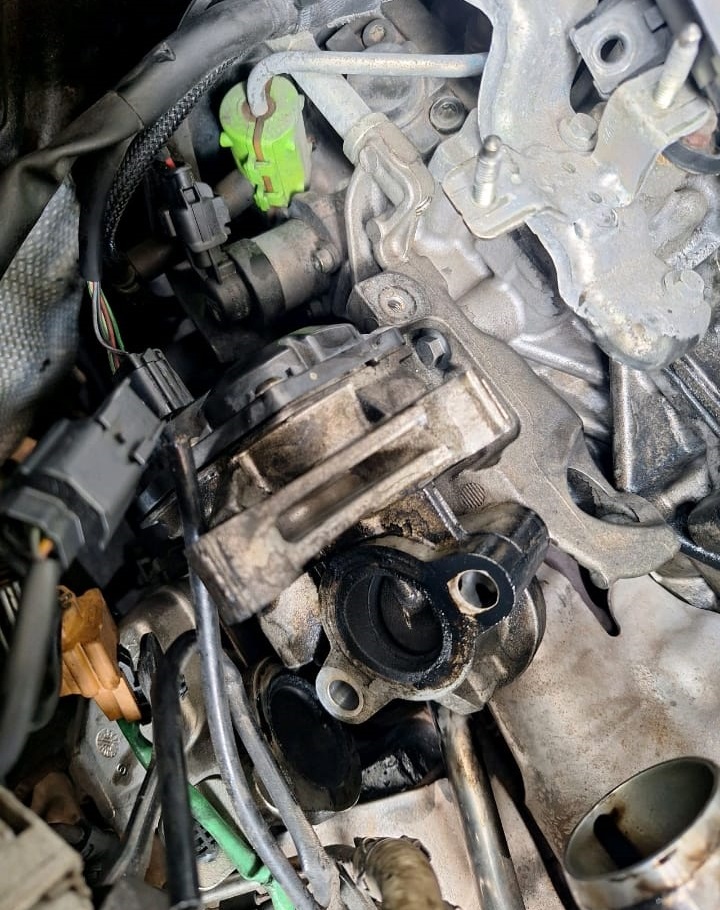
Upon inspecting the EGR unit and related components, the technician discovered:
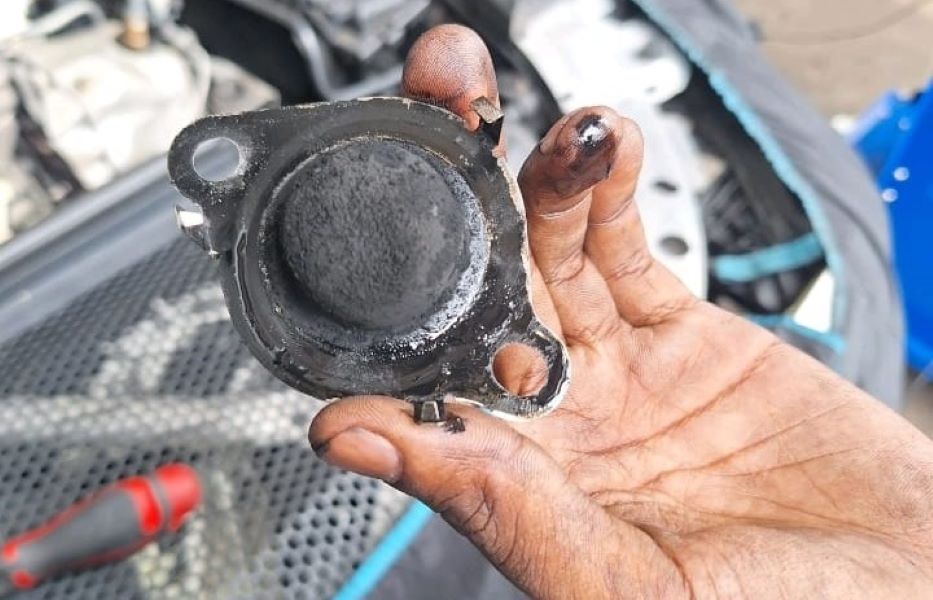
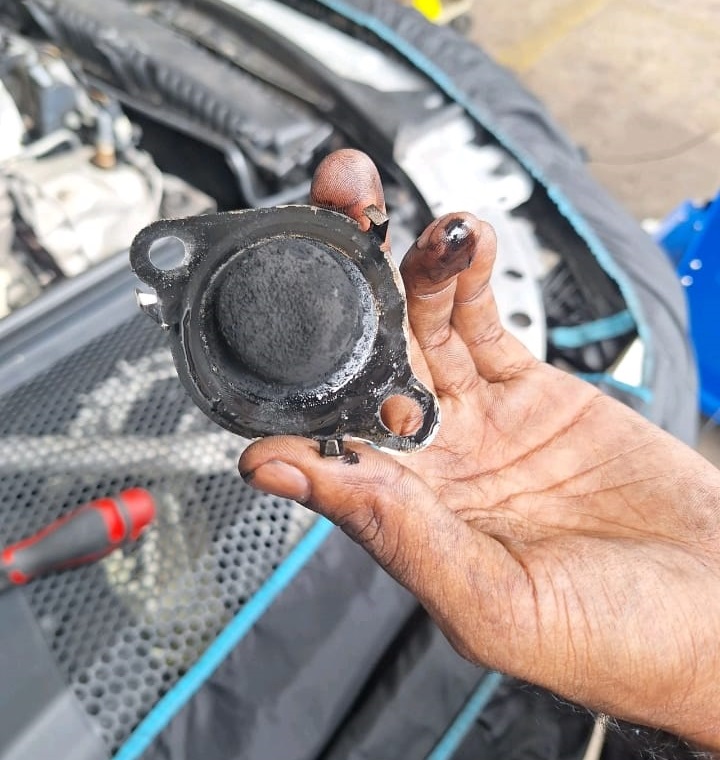
A clogged EGR filter
This soot-loaded filter prevented exhaust gases from circulating correctly triggering limp mode and limiting the engine’s RPM.
A blocked EGR filter disrupts the combustion cycle, causing:
- – Low acceleration
- – High emissions
- – Turbo underperformance
- – Rough engine response
This explained why the vehicle couldn’t exceed 3000 RPM.
Step 4 : Cleaning the EGR Filter
To restore proper flow:
The EGR filter was removed and thoroughly cleaned
Soot and carbon buildup were removed, restoring normal EGR flow characteristics.
Step 5 : System Recheck & Confirmation
After cleaning:
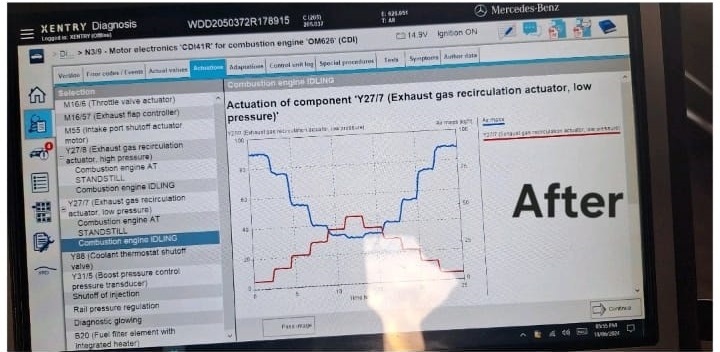
- – STAR DIAGNOSIS showed normal EGR flow
- – No more fault codes returned
- – Exhaust parameters were stable
The technician performed a full system check to confirm:
- – EGR valve operation
- – Pressures and air mass values
- – Turbo response
All readings returned to normal.
Step 6 : Road Test
A road test confirmed:
- – The engine now accelerated smoothly past 3000 rpm
- – No limp mode activation
- – Improved throttle response
- – No check-engine indicator
The issue was fully resolved.
Why a Clogged EGR Filter Causes Power Loss
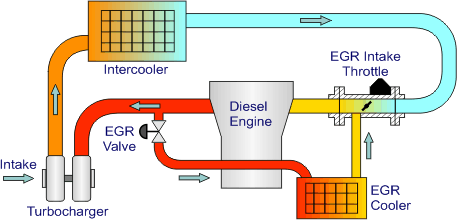
The EGR system reduces NOx emissions by recirculating exhaust gases.
But when the EGR filter becomes clogged:
- – Exhaust cannot circulate properly
- – The ECU limits power to protect the engine
- – Combustion temperatures increase
- – Turbo response becomes unstable
- – The vehicle may enter limp mode
This creates the classic symptom: Loss of power in car while driving
What Is an EGR Valve and What Does It Do?
The EGR valve:
- – Recirculates exhaust gases to lower combustion temperature
- – Reduces NOx emissions
- – Helps prevent engine knocking
- – Improves long-term engine efficiency
When it becomes clogged or stuck, the engine cannot breathe properly causing power loss.
How Does the EGR Valve Work?
- 1. Opens during cruising or acceleration to allow exhaust gases into the intake
- 2. Mixes exhaust with fresh air to lower combustion temperatures
- 3. Closes during idle or light load for stable engine operation
If it can’t open due to blockage, EGR flow becomes too low, leading to error code P040100 and severe power limitation.
How to Clean the EGR System (General Guide)
1. Locate the EGR valve (usually near the intake manifold)
2. Disconnect battery & wiring
3. Remove the EGR valve and filter
4. Clean carbon buildup using EGR cleaner
5. Reinstall with new gaskets if necessary
6. Reset the adaptation values using diagnostics
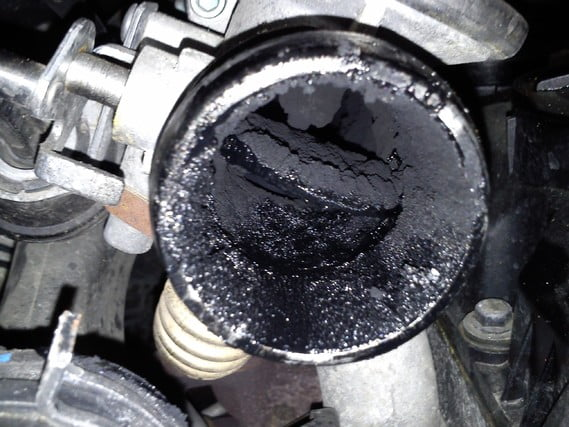
Regular EGR cleaning prevents excessive soot buildup and loss of power.
Conclusion
This real-world case of loss of power in car while driving on a Mercedes-Benz W205 OM626 clearly shows how a clogged EGR filter can prevent the engine from accelerating past 3000 rpm. By cleaning the EGR filter, restoring airflow, and clearing fault codes, the problem was fully resolved.
If your Mercedes suffers from similar symptoms, refer to the Mercedes Power Loss and Limp Mode: Full Troubleshooting Guide to identify whether the issue is caused by:
- – EGR blockage
- – Turbo problems
- – Boost leaks
- – Fuel pressure faults
- – Intake manifold issues
- – Sensor malfunctions
Proper diagnosis ensures fast, accurate repair and prevents long-term engine damage.
— Salim, Mercedes Expert
Independent specialist in Mercedes-Benz diagnostics, CAN Bus analysis, troubleshooting case studies, and EV systems.