

Table of Contents
Mercedes PRE SAFE System Explained: How It Works, Functions & Common Issues
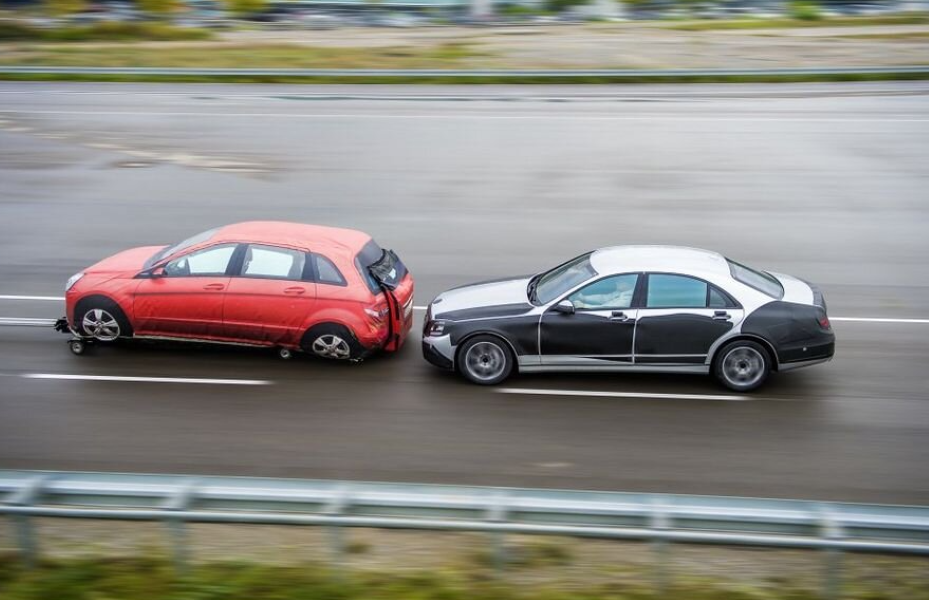
Modern Mercedes-Benz vehicles are equipped with PRE-SAFE®, an intelligent anticipatory safety system designed to prepare the vehicle and its occupants before a collision occurs. Unlike traditional safety systems that react after an impact, PRE SAFE works before the crash reducing injury risk and enhancing passenger protection.
To help readers navigate all driver-assistance faults, here is the related hub:
Explore All Driver Assistance Faults in our guide: Mercedes Driver Assistance System Faults: Radar, Blind Spot Fixes
What Does Mercedes PRE-SAFE® Do?
PRE-SAFE® continuously monitors your driving environment using radar sensors, cameras, and vehicle data. When it detects a potential collision frontal, lateral, or rollover it automatically activates a series of preventive safety measures.
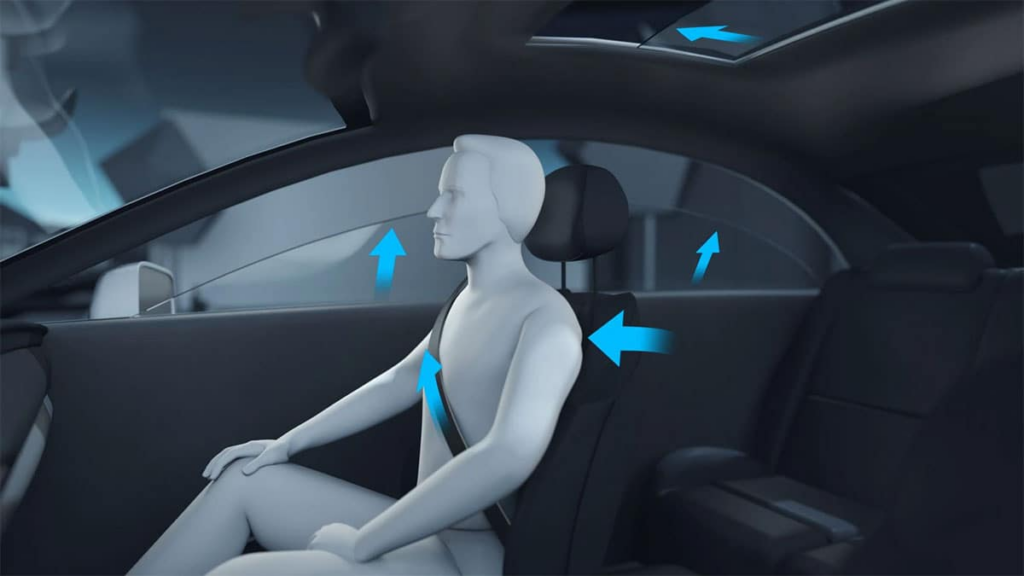
How PRE-SAFE® Predicts an Accident
The system evaluates inputs such as:
- – Sudden steering corrections
- – Rapid deceleration
- – Skidding
- – Approaching vehicles
- – Imminent rear-end impact
Using this data, PRE-SAFE® prepares the vehicle and its passengers milliseconds before impact, giving conventional safety systems (SRS airbags, seatbelt pretensioners) a much better chance to protect occupants.
Mercedes PRE SAFE® Brake (With Pedestrian Recognition)
The PRE-SAFE Brake adds autonomous and semi-autonomous braking capability.
When It Works
- – Active from 7–200 km/h
- – For stationary obstacles: active up to 72 km/h
- – Detects:
- => Pedestrians
- => Vehicles
- => Stationary obstacles
How It Reacts
- Visual & audible warning to the driver
- Partial autonomous braking if no driver reaction
- Full autonomous braking if the collision is unavoidable
PRE-SAFE Brake can prevent accidents up to 50 km/h or significantly reduce the impact force at higher speeds.
Mercedes PRE SAFE® Rear : Protection From Behind
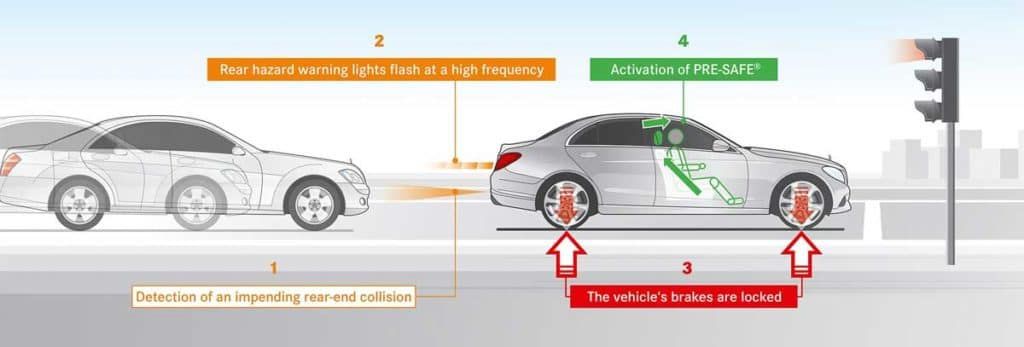
PRE-SAFE Rear extends protection to rear-end collision scenarios using a dedicated radar sensor in the rear bumper.
What It Detects
- – Approach speed of vehicles behind you
- – Distance and deceleration rate
- – Likelihood of rear collision
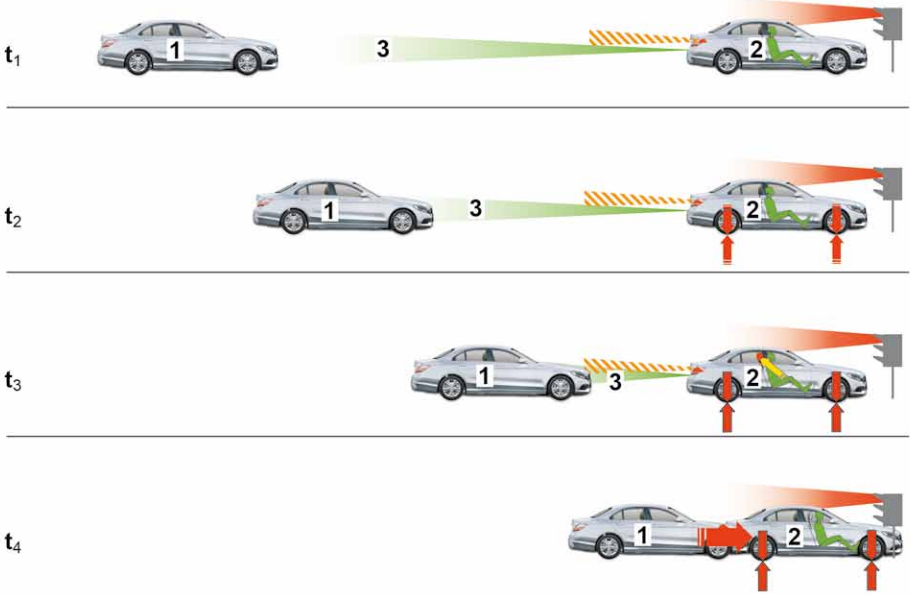
Sequence of Events
t₁ —> Detection & Warning
- – Approaching vehicle detected
- – Rear hazard lights flash rapidly to warn the other driver
t₂ —> Vehicle Preparation
- – PRE-SAFE® begins controlled braking to reduce the impact force
- – Helps prevent secondary impacts (e.g., hitting the car in front)
t₃ —> Passenger Protection Activated
- – Reversible belt tensioners engage
- – Occupants are positioned optimally for airbag deployment
t₄ —> Vehicle Stabilization
- – Vehicle is held braked for ~2 seconds after the collision
- – Helps prevent uncontrolled movement
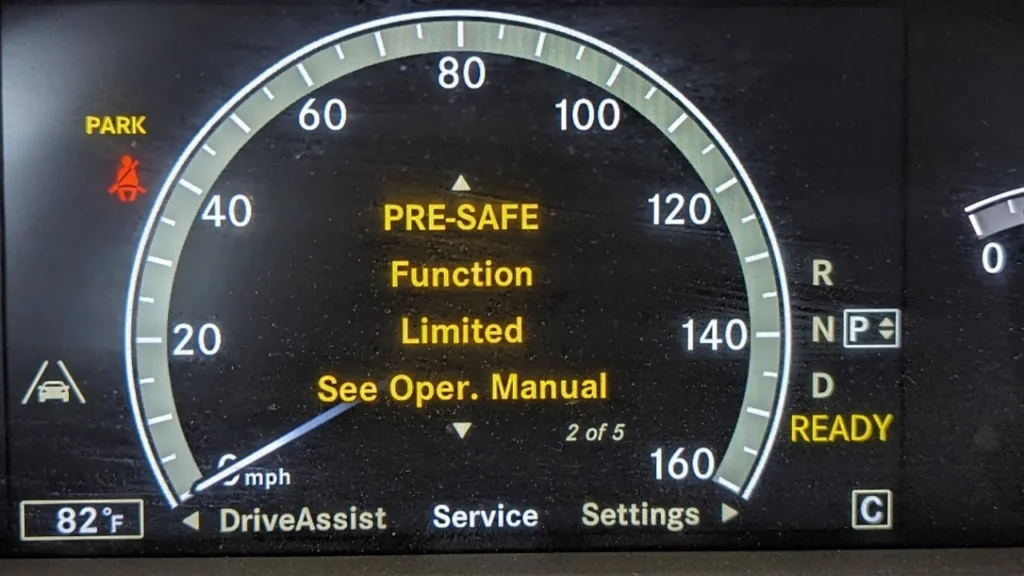
PRE-SAFE Inoperative : What Does It Mean?
“PRE-SAFE Inoperative” appears when the system is temporarily disabled or a fault is detected.
Common Causes
- – Faulty sensors (radar or camera)
- – CAN communication errors
- – Low voltage or weak battery
- – Faulty seatbelt pretensioner module
- – SRS system issues
- – Driver Assist module calibration errors
If this message appears, the system cannot prepare the car for a collision, so a diagnostic scan is required.
For a deeper breakdown, check this related article:
Pre-Safe Functions Limited Mercedes – Diagnosis & Fix Guide
Case Summary: PRE-SAFE in the Mercedes C-Class W205
The PRE-SAFE system in the W205 offers:
- – Early collision prediction
- – Automatic braking
- – Intelligent seatbelt tensioning
- – Enhanced rear-end crash mitigation
It highlights Mercedes-Benz’s commitment to anticipatory safety, reducing injury risks even before impact.
Conclusion
The Mercedes PRE-SAFE® system is one of the most advanced collision-prevention technologies available today. By preparing the vehicle and its passengers before a crash, it significantly enhances safety and reduces injury severity. Whether it’s frontal, lateral, or rear-end impact scenarios, PRE-SAFE® works silently and intelligently in the background to keep occupants protected.
If you receive warnings like “PRE-SAFE Inoperative” or “Pre-Safe Functions Limited,” they must be diagnosed immediately to ensure your driver-assistance and restraint systems are functioning at full capacity.
It’s a technology that provides peace of mind and confidence during every journey aboard the Classe C W205.
— Salim, Mercedes Expert
Independent specialist in Mercedes-Benz diagnostics, CAN Bus analysis, troubleshooting case studies, and EV systems.