

Table of Contents
PARKTRONIC Mercedes: How It Works, Common Faults & Real Fix Case Study
Modern Mercedes-Benz vehicles come equipped with PARKTRONIC, an ultrasonic parking assist system that detects nearby obstacles and helps drivers maneuver safely into tight spaces. It provides both visual and audible alerts, ensuring precision and confidence when parking especially in congested urban environments.
While PARKTRONIC enhances convenience and safety, issues can arise due to sensor failures, water ingress, electrical faults, or software errors.
In this article, we’ll explain how the system works, discuss the most frequent causes of malfunction, and share a real diagnostic case study from a Mercedes-Benz workshop.
To explore more safety system troubleshooting and real Mercedes case studies including radar, blind spot, and camera faults visit our hub:
Mercedes Driver Assistance System Faults: Radar, Blind Spot & Parktronic Fixes
How PARKTRONIC Works
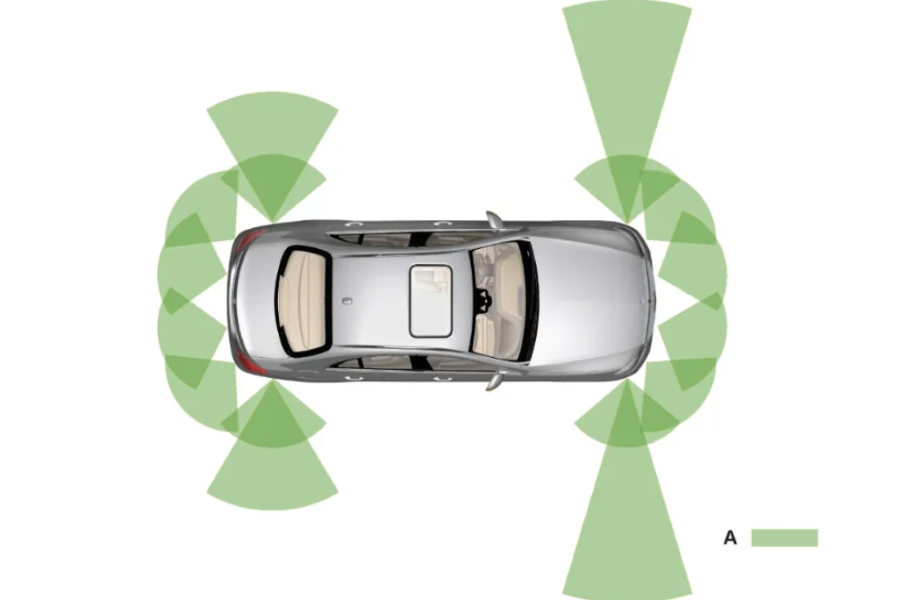
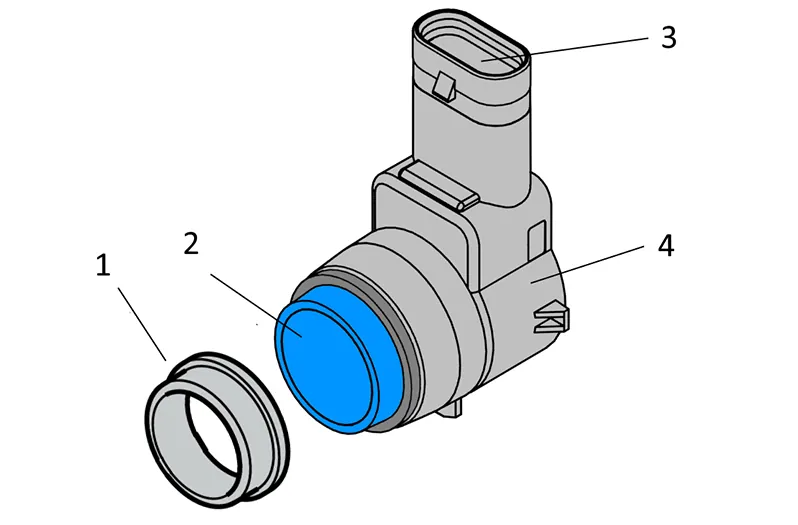
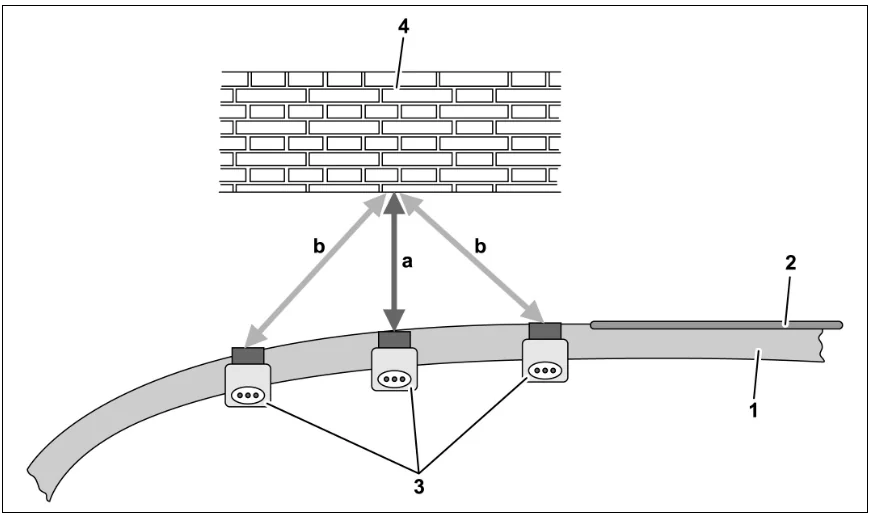
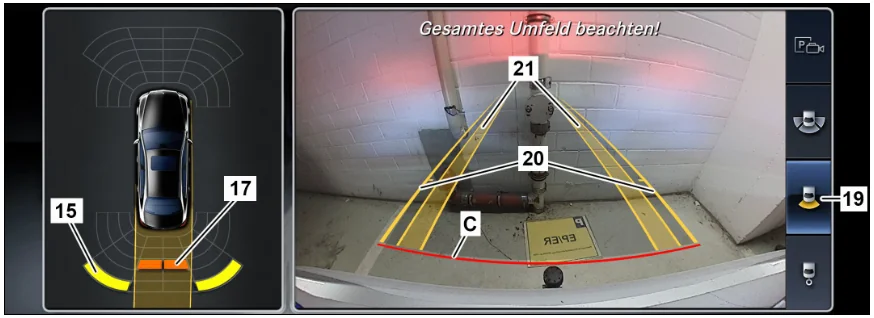
PARKTRONIC uses ultrasonic sensors in the front and rear bumpers to detect obstacles. The system interprets reflected sound waves to calculate distance and alert the driver.
| Component | Functionality |
|---|---|
| Ultrasonic Sensors | Emit and receive sound waves to measure proximity to nearby objects. |
| Control Module | Processes sensor data and triggers visual or audible alerts. |
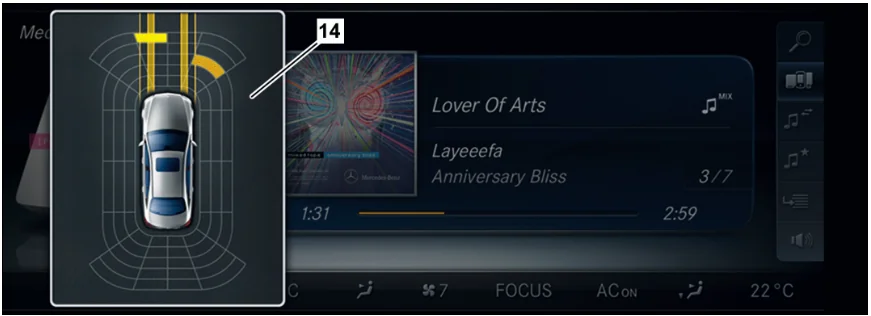
| Visual Indicators | LED bars on the dashboard or rear pillars show obstacle distance. |
| Audible Alerts | Beeps increase in frequency as the car nears an object. |
| Activation | Automatically activates at low speeds or manually via a dashboard button. |
PARKTRONIC is often integrated with Active Parking Assist, which can automatically steer the vehicle into a parking spot.
Common PARKTRONIC Faults & Diagnostics
| Cause | Symptoms | Diagnostic / Repair Action |
|---|---|---|
| Dirty or Blocked Sensors | No beeps, constant red lights | Clean sensors and ensure no ice or debris covers them |
| Disconnected or Broken Sensor | One zone inactive | Inspect harness and replace faulty sensor |
| Blown Fuse or Low Voltage | PARKTRONIC not responding | Check fuse in trunk, verify 12 V power supply |
| Faulty Control Module | System won’t activate | Scan with XENTRY, inspect CAN/BUS wiring |
| Software or Coding Issue | System intermittently fails | Update or reset via XENTRY diagnostics |
| Water Intrusion in Wiring | Random alerts, low voltage | Inspect connectors and harness for corrosion |
Case Study: Mercedes C-Class W205 , PARKTRONIC Not Working
Customer Complaint
A Mercedes-Benz C-Class W205 owner reported that PARKTRONIC stopped responding when attempting to park. The parking sensors provided no sound or visual alerts, even in close proximity to obstacles.
Since this feature was crucial for the driver’s daily parking routine, the customer brought the vehicle to an authorized Mercedes-Benz workshop for diagnosis.
Initial Inspection
Using STAR XENTRY, the technician performed a diagnostic scan and detected multiple error codes indicating voltage irregularities in the front right distance sensors.
- – The front right middle sensor showed insufficient voltage.
- – The front right outer sensor registered a component defect.
This suggested that the problem might involve not just the sensors themselves, but also their wiring harness or moisture exposure.
Diagnostic Process
- 1. Physical Sensor Check
The technician removed the front bumper to visually inspect all six front ultrasonic sensors and connectors. - 2. Electrical Testing
Each sensor was tested for supply voltage and signal return. The results confirmed that the affected sensors were receiving unstable power. - 3. Wiring Harness Inspection
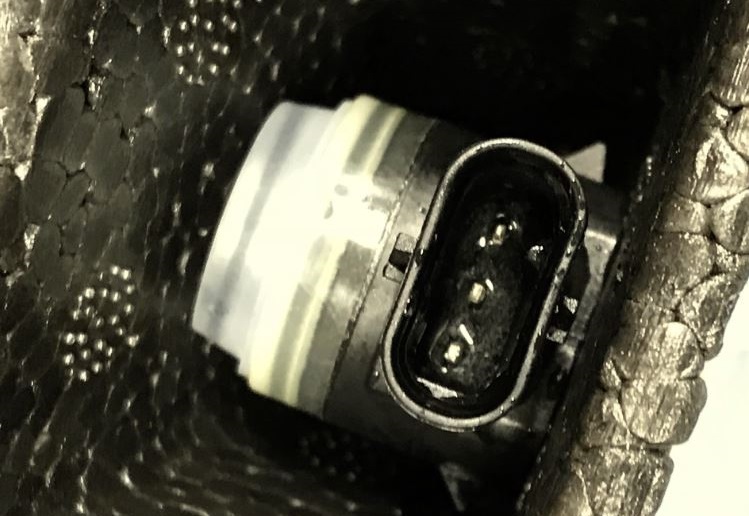
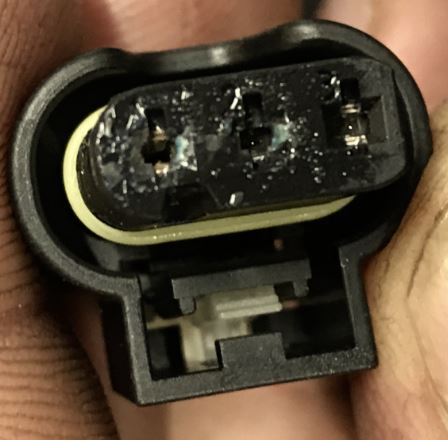
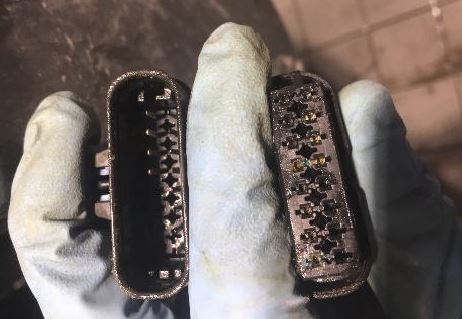
A visual check revealed moisture intrusion in the front bumper harness and connectors likely from car washes or rainy conditions. - 4. Connector Analysis
Corrosion traces were found in the sensor connector pins, explaining the low voltage and erratic readings.
Root Cause
The front bumper wiring harness and sensor connectors had been compromised by moisture ingress, causing short circuits and communication failure between the PARKTRONIC control unit and front sensors.
Repair Procedure
- 1. Harness Replacement
The front bumper frame wiring harness was replaced with a new OEM Mercedes part, ensuring proper insulation and water resistance. - 2. Sensor Replacement
Both the front right middle and front right outer ultrasonic sensors were replaced to restore complete coverage. - 3. Connector Reconditioning
The technician reconditioned the corroded connectors using Mercedes-approved repair kits and contact protectant grease. - 4. System Recalibration
After reassembly, the system was recalibrated using XENTRY to verify correct voltage values and sensor synchronization.
Outcome
After completing repairs, the technician conducted a test drive and multiple parking maneuvers.
PARKTRONIC operated flawlessly the system emitted accurate beeps, displayed correct distance indicators, and automatically activated at low speeds.
The issue was fully resolved, and the customer regained confidence in the car’s parking assistance feature.
Technician Insight:
“Moisture and corrosion in sensor wiring are the most common causes of PARKTRONIC malfunctions. A quick sensor replacement won’t fix it unless the harness and connectors are properly sealed.”
DIY vs Professional Repair
| Task | DIY-Friendly | Professional Recommended |
|---|---|---|
| Clean sensors | OK | — |
| Check fuse and voltage | OK | — |
| Reseat connectors | Intermediate skill required | — |
| Scan and clear codes | Needs OBD-II tool | Yes |
| Replace or recalibrate module | NO | XENTRY required |
How to remove parking sensors ?
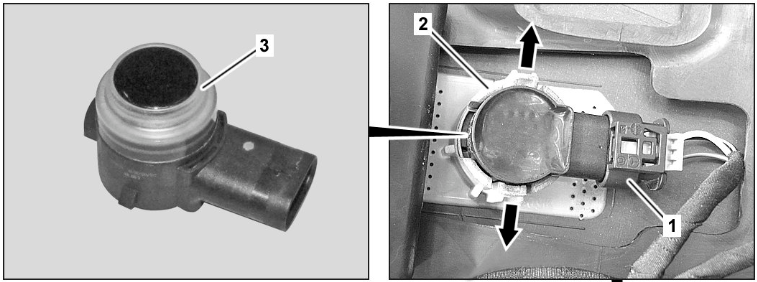
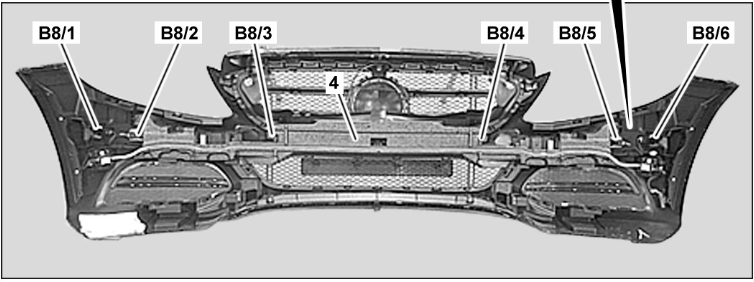
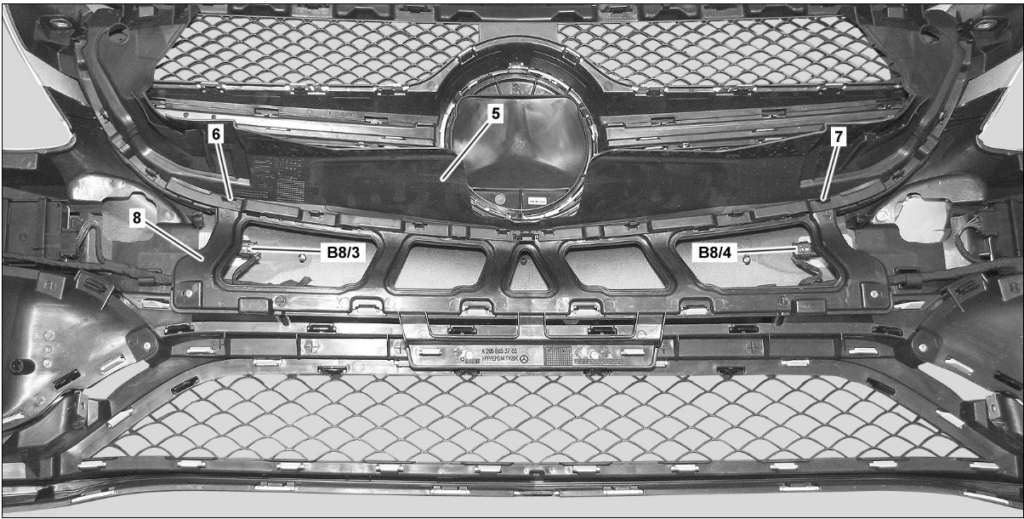
B8/1: Left Outer Front parking ultrasonic sensor
B8/2: Left Middle Front parking ultrasonic sensor
B8/3: Left Inner Front parking ultrasonic sensor
B8/4: Right Inner Front parking ultrasonic sensor
B8/5: Right Middle Front parking ultrasonic sensor
B8/6: Right Outer Front parking ultrasonic sensor
to remove parking sensors, follow the steps below;
- 1: Remove the front bumper
- 2: Detach the fender liner from the fender in the front area until the corresponding distance sensors (B8/1, B8/2, B8/5, or B8/6) are accessible
- 3: Remove the front engine compartment cover
- 4: Remove the shock absorber (4)
- 5: Unclip and remove the air deflector piece (5)
- 6: Unclip the locking hook (6) or the locking hook (7) and lift the middle base support (8) until the left inner front parking distance sensor (B8/3) or the right inner front parking distance sensor (B8/4) is accessible
- 7: Disconnect the electrical connector (1) from the corresponding distance sensor (B8/1, B8/2, B8/3, B8/4, B8/5, B8/6)
- 8: Unlock the locking hook of the corresponding bracket (2) in the direction of the arrow, remove the distance sensor (B8/1, B8/2, B8/3, B8/4, B8/5, or B8/6) from the bracket (2) and check the seal (3)
Preventive Maintenance Tips
- – Clean sensors regularly when washing your car to avoid debris buildup.
- – Inspect bumpers and harnesses after repairs or impacts to prevent wiring strain.
- – Keep connectors sealed and dry, especially in regions with high humidity.
- – Have your PARKTRONIC system scanned annually for stored low-voltage or CAN faults.
- – Always use OEM parts for replacement sensors to ensure compatibility.
Frequently Asked Questions
How do I activate PARKTRONIC in my Mercedes?
- – PARKTRONIC automatically activates at low speeds during parking maneuvers.
- – Some models also allow manual activation using the “P with cone” button on the dashboard.
What is the purpose of PARKTRONIC?
It uses ultrasonic sensors to detect obstacles around the vehicle, providing visual and audio alerts to prevent parking collisions and improve accuracy.
Why is my Mercedes PARKTRONIC not working?
Common causes include dirty sensors, damaged wiring, low voltage, or a faulty control unit.
Start by cleaning the sensors and checking for visible damage. If the warning persists, perform a diagnostic scan.
Where are the PARKTRONIC sensors located?
Most Mercedes models have six front and six rear ultrasonic sensors embedded in the bumpers. Each is responsible for monitoring a specific zone during parking.
Conclusion
The Mercedes PARKTRONIC system is an advanced and reliable parking aid but like all driver-assistance technologies, it depends on clean sensors, proper voltage, and healthy wiring.
As shown in our case study, issues like moisture in connectors or faulty sensors can disable the system, but precise diagnostics and OEM repairs restore full performance.
Regular maintenance and early fault scanning can prevent costly repairs while keeping your vehicle’s ADAS suite performing at its best.
For more real-world Mercedes driver-assistance fault solutions from radar to blind spot systems check our dedicated guide: Mercedes Driver Assistance System Faults: Radar, Blind Spot & Parktronic Fixes
— Salim, Mercedes Expert
Independent specialist in Mercedes-Benz diagnostics, CAN Bus analysis, troubleshooting case studies, and EV systems.