

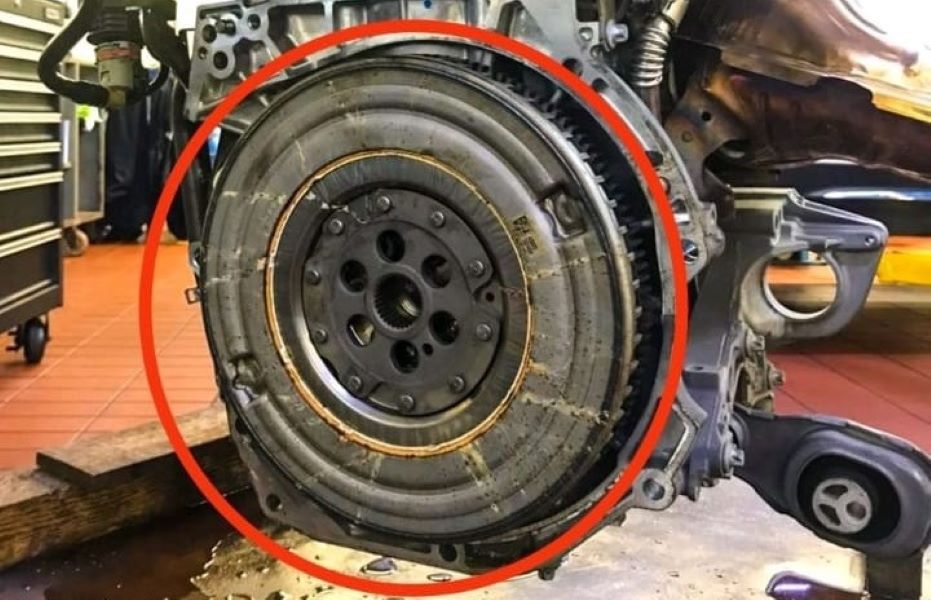
Table of Contents
Rattle Noise When Driving: Mercedes-Benz GLB 300 Case Study & Full Diagnostic Guide
A rattling noise when driving can turn a comfortable Mercedes ride into a stressful experience especially when combined with vibrations and uneven driving. Because rattle noises often overlap with many other mechanical faults, a structured diagnostic approach is essential.
This case study explains how a Mercedes-Benz GLB 300 developed a rattle noise while driving, how the issue was diagnosed, and the exact repair that solved the problem. This article also includes a complete rattling-noise troubleshooting guide, helping you understand all possible causes of rattling when driving.
For more diagnostic help, visit:
Mercedes Engine Noise and Vibration Problems: Full Diagnosis
Customer Complaint: Rattle Noise & Vibration in a Mercedes-Benz GLB 300
The owner of a Mercedes-Benz GLB 300 visited the workshop with concerns including:
- – Rattle noise when driving
- – Vibrations felt throughout the vehicle
- – Uneven or unstable driving ability
- – Reduced comfort during acceleration
The noise occurred continuously while driving, not just at startup, suggesting a mechanical rotating component.
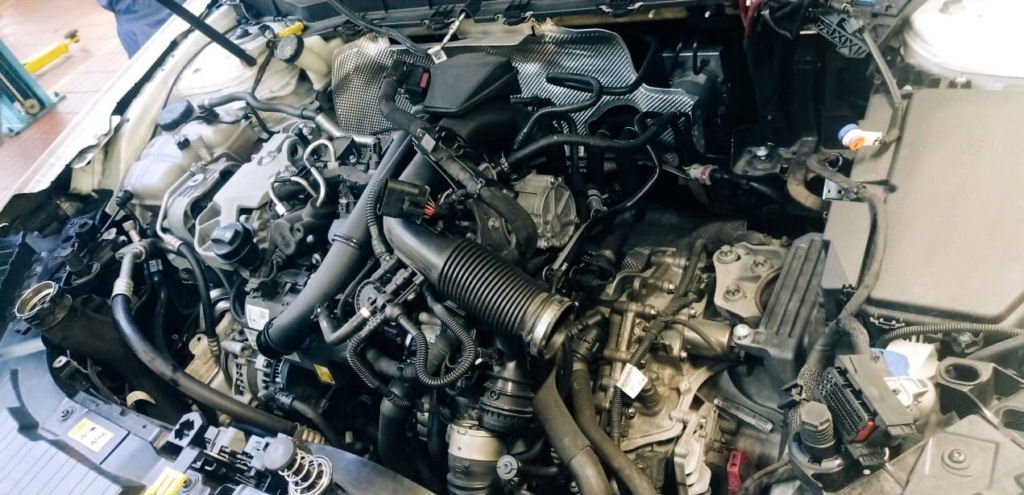
Diagnosis: How the Rattle Noise Was Identified
A systematic diagnostic process was performed to identify the exact source of the rattle noise.
Step 1 : Test Drive
A road test confirmed:
- – Rattle noise present across all RPM ranges
- – Vibration felt through the cabin
- – No abnormal gear shifting
- – Transmission control system behaving normally
The fact that the noise changed with engine load suggested a rotational imbalance or worn drivetrain part.
Step 2 : Transmission Inspection
Because the sound appeared near the transmission tunnel area, technicians inspected the transmission oil for:
- – Metal debris
- – Burnt smell
- – Metallic flakes
Result: No abnormal debris found.
This indicated the internal gearbox was not the cause.
Step 3 : Transmission Removal for Deeper Inspection
On the GLB 300 (front-wheel drive), the engine and transmission were removed together to fully inspect:
- – Torque converter
- – Flexplate
- – Dual-mass flywheel
- – Mounts and surrounding brackets
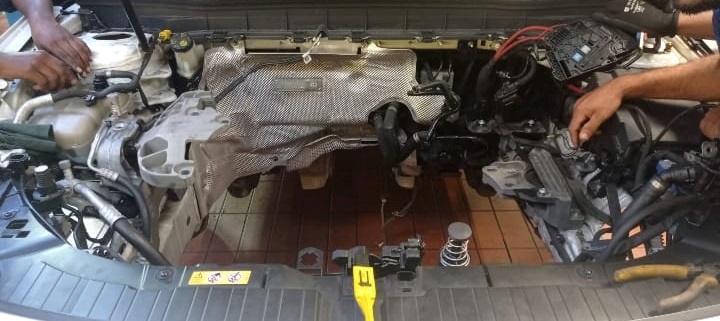
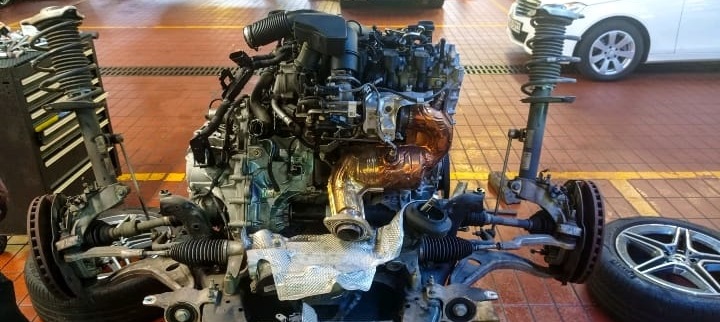
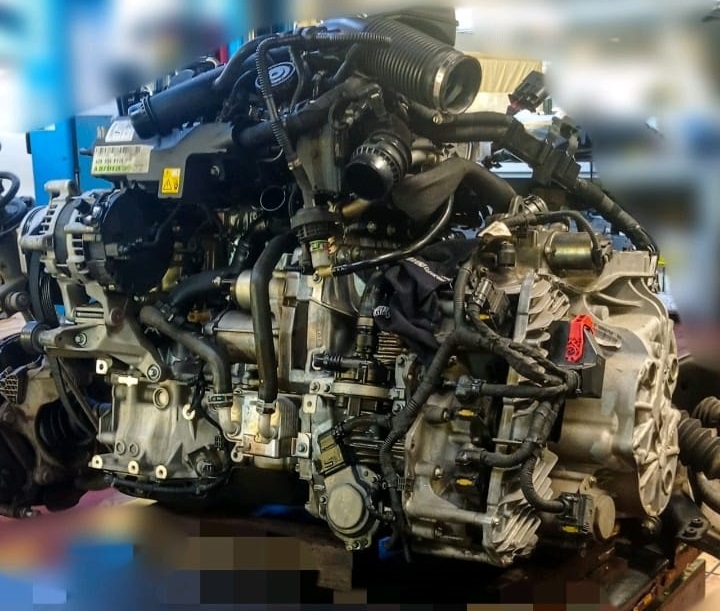
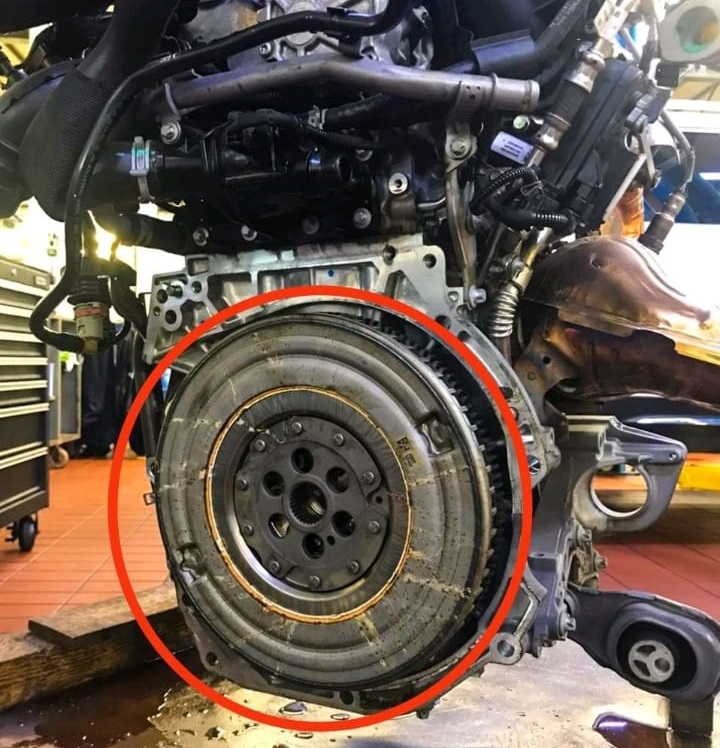
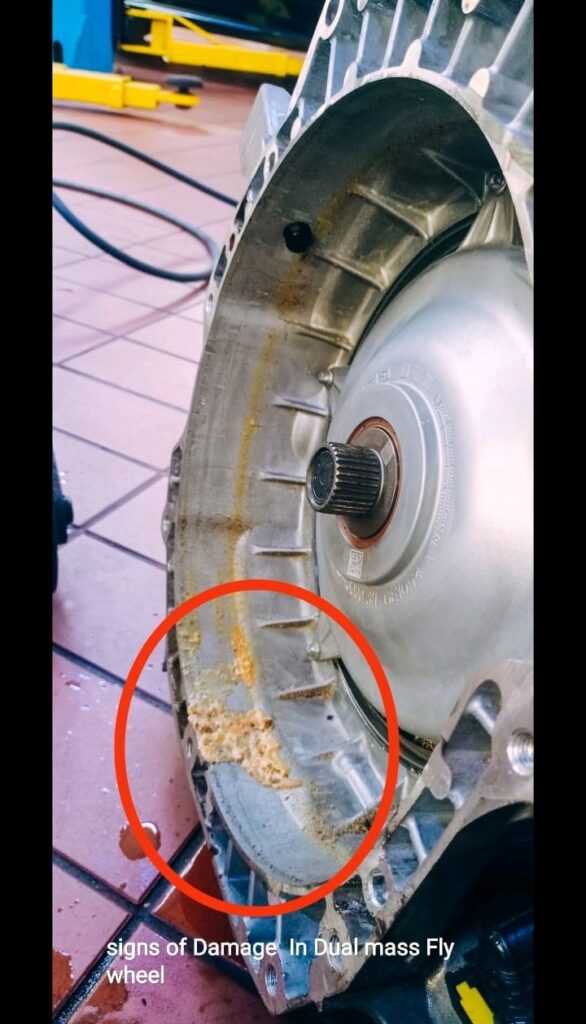
Actual Cause of the Rattle Noise: Damaged Dual-Mass Flywheel
After removing the drivetrain, the fault was identified:
The dual-mass flywheel (DMF) was damaged.
What the DMF is:
The dual-mass flywheel reduces vibrations by absorbing torsional movement between the engine and transmission.
What happens when it fails:
A faulty DMF causes:
- – Rattle noise when driving
- – Vibrations through the vehicle
- – Shuddering or uneven acceleration
- – Metallic chatter when shifting or idling
In this case study, the DMF springs had excessive play, producing continuous rattling under load.
Repair Performed: Dual-Mass Flywheel Replacement
Steps Completed:
- 1. Removed engine and transmission
- 2. Replaced damaged dual-mass flywheel
- 3. Inspected and cleaned surrounding components
- 4. Reassembled engine-transmission assembly
- 5. Performed test drive and noise check
Result:
- – Rattle noise completely eliminated
- – Vibrations gone
- – Smooth and stable driving restored
- – Customer satisfied
This confirms that even subtle DMF wear can dramatically affect comfort and noise levels.
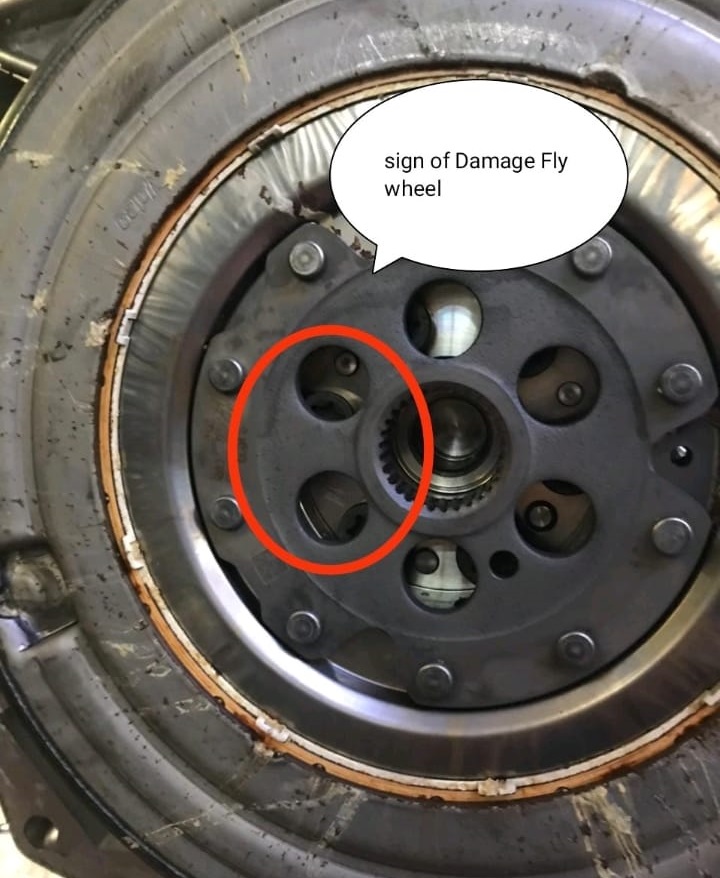
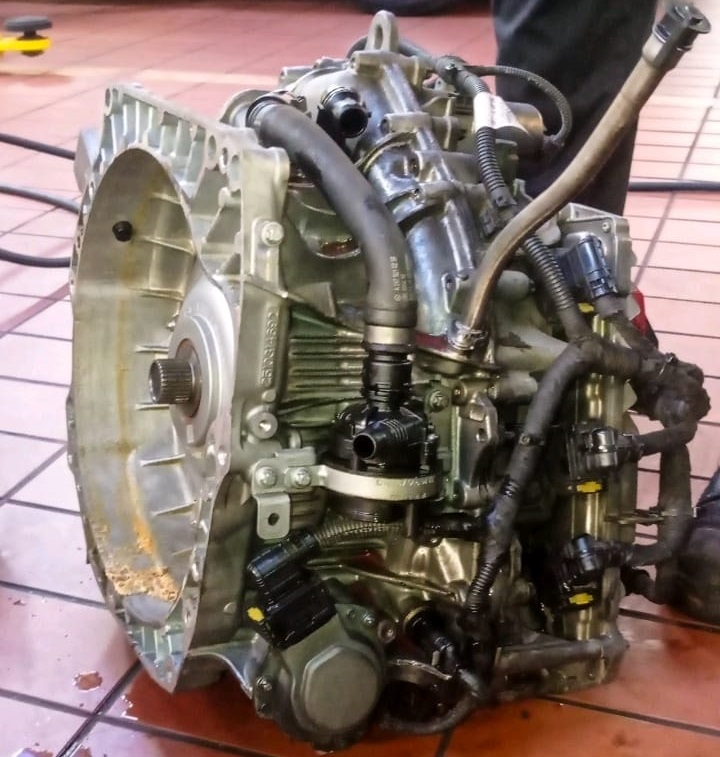
Common Causes of Rattling Noise When Driving (Full Diagnostic Guide)
A rattling sound can come from many places. Below is a complete list of the most common causes, helping technicians and owners diagnose faster.
1. Damaged Dual-Mass Flywheel
Location: Between engine and transmission
Symptoms:
- – Rattle when accelerating or idling
- – Vibrations
- – Harsh shifting
Cause: Worn internal springs or excessive play
2. Exhaust System Issues
Location: Exhaust pipes, muffler, clamps
Symptoms: Rattle when accelerating or hitting bumps
Cause:
- – Loose heat shield
- – Broken hanger
- – Damaged catalytic converter
3. Loose Bolts, Screws, or Clips
Location: Underbody, bumpers, panels
Symptoms: Rattle on rough roads
Cause: Loose fasteners vibrating against the chassis
4. Worn Suspension Components
Location: Struts, sway bar links, arms
Symptoms: Rattle when turning or hitting bumps
Cause: Worn ball joints, bushings, stabilizer links
5. Timing Chain or Engine Internal Issues
Location: Engine block / timing system
Symptoms: Rattle during acceleration
Cause:
- – Timing chain stretch
- – Faulty tensioner
- – Worn guides
(This can cause severe engine damage if ignored.)
6. Loose Interior Components
Location: Dashboard, doors
Symptoms: Light plastic rattles
Cause: Loose clips or trim pieces
7. Loose Heat Shield
Location: Underbody near exhaust
Symptoms: Metallic rattling at idle or during acceleration
Cause: Rusted or broken shield mounts
8. Brake System Problems
Location: Calipers, pads
Symptoms: Rattle at low speeds or when braking
Cause: Loose pads or worn hardware kit
9. Debris in the Undercarriage or Engine Bay
Location: Any external cavity
Symptoms: Rattle that changes with speed
Cause: Rocks or debris trapped under the car
Conclusion
In this Mercedes-Benz GLB 300 case study, the rattle noise when driving was caused by a damaged dual-mass flywheel. The repair restored smooth driving and eliminated all vibrations.
Rattle noises can mimic many issues, so a detailed diagnostic process test drive, inspection, and component removal when necessary is essential for accurate fault identification.
For more guidance on diagnosing engine noises, rattles, and vibrations, visit:
Mercedes Engine Noise and Vibration Problems: Full Diagnosis
— Salim, Mercedes Expert
Independent specialist in Mercedes-Benz diagnostics, CAN Bus analysis, troubleshooting case studies, and EV systems.