

Table of Contents
White Smoke From Exhaust in Mercedes-Benz E-Class W211 (OM646): Full Case Study & Fix
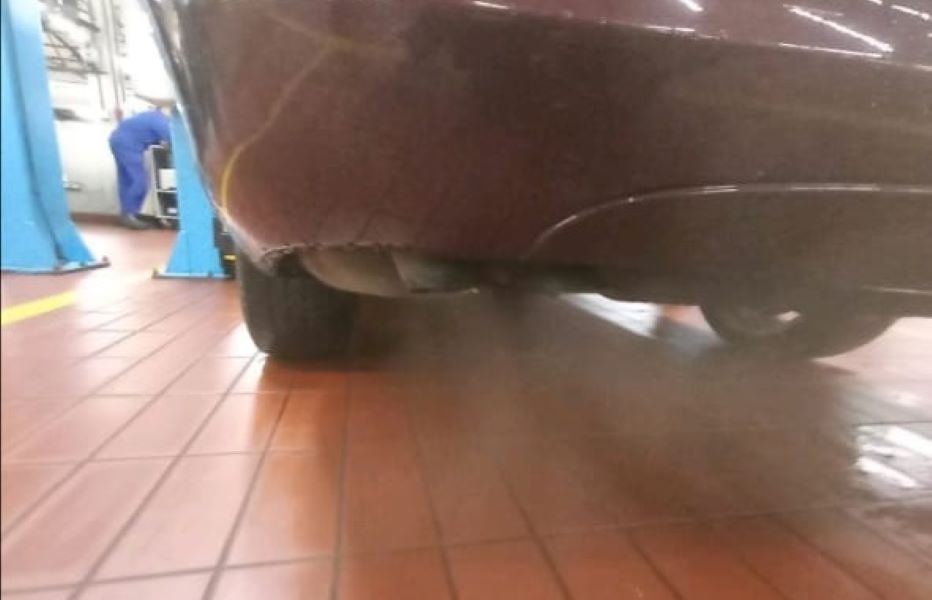
White smoke from the exhaust is never a harmless sign especially on a turbo-diesel Mercedes engine. In most cases, it indicates oil or coolant entering the exhaust stream and being burned, which can quickly lead to turbo failure, catalytic converter contamination, or even engine damage if ignored.
If your Mercedes is losing power, entering limp mode, or struggling to accelerate along with visible smoke, make sure to read the Mercedes Power Loss and Limp Mode: Full Troubleshooting Guide, which explains every major cause of performance loss, turbo issues, boost faults, and ECU protection modes in detail.
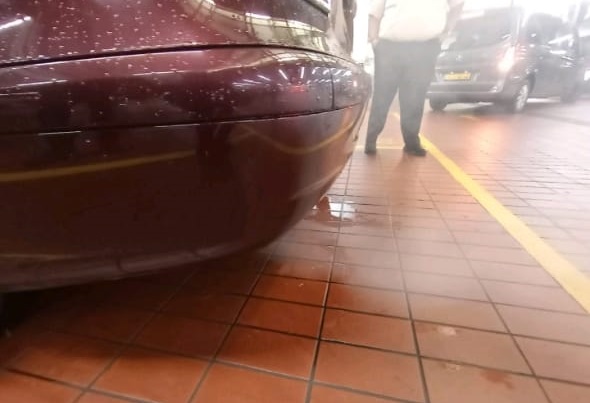
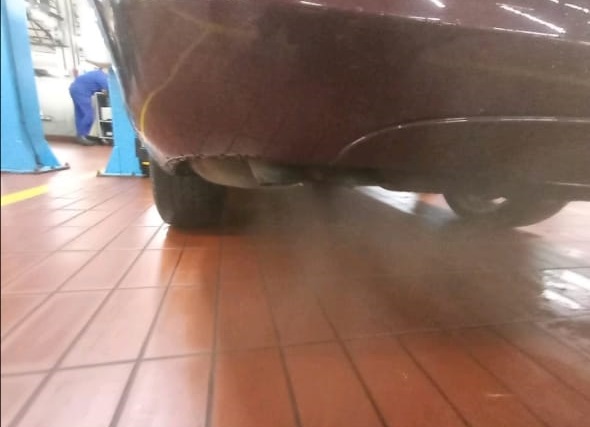
In this case study, we examine a Mercedes-Benz E-Class W211 equipped with the OM646 diesel engine, brought to the workshop for continuous white smoke from the exhaust. The diagnostic process revealed a failing turbocharger that was leaking engine oil directly into the exhaust housing.
Customer Complaint: Persistent White Smoke From Exhaust
The owner reported:
- – Heavy white smoke from the exhaust pipe
- – Smoke visible both at idle and under acceleration
- – Noticeable oil consumption
- – Occasional loss of engine performance
Because white smoke on a warm diesel engine is abnormal, the vehicle required immediate diagnosis.
Step-by-Step Diagnostic Procedure
1. Checking for Coolant or Oil Contamination
White smoke often indicates coolant entering the combustion chamber via:
- – Head gasket failure
- – Cracked cylinder head
- – EGR cooler leakage
Coolant level was checked and found stable, ruling out coolant-related issues.
2. Visual Inspection of Turbocharger System
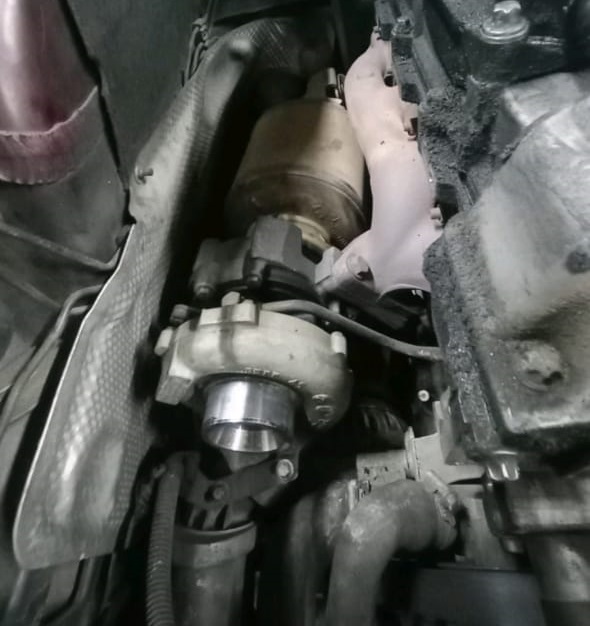
The intake hose was removed to inspect the turbocharger.
Finding:
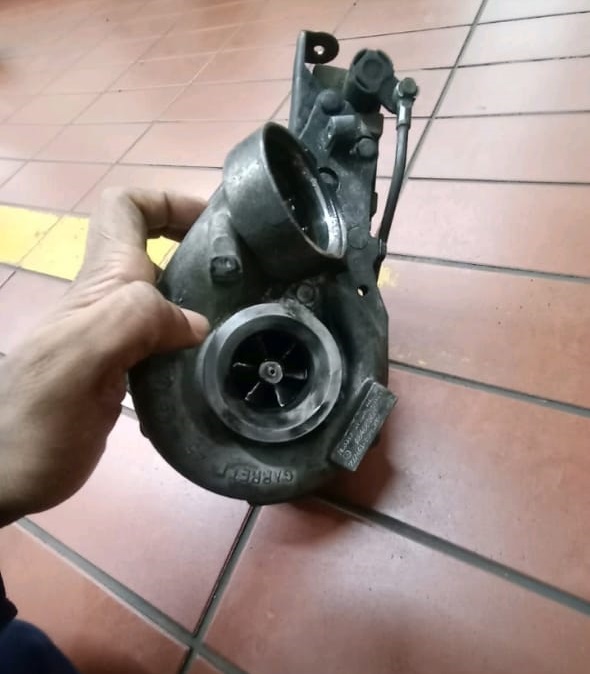
→ Significant oil contamination was present in the turbocharger
→ Oil had migrated into the exhaust turbine housing
→ This was the source of white smoke from the exhaust
3. Checking Turbocharger Shaft Play
The turbo shaft was inspected for:
- – Radial play
- – Axial play
- – Bearing wear
Finding:
→ Excessive shaft play confirmed internal seal and bearing failure
→ Turbo oil seals could not contain engine oil
→ Oil was leaking into exhaust gas stream, producing visible white smoke
4. Confirming the Root Cause
The excessive oil contamination inside the exhaust housing confirmed:
-> Turbocharger internal seal failure
-> Oil entering the exhaust system and burning as white smoke
No other components showed signs of coolant or oil leakage.
Repair Solution: Turbocharger Replacement
1. Removing the Faulty Turbocharger
The mechanic removed:
- – Air intake ducting
- – EGR connections
- – Exhaust manifold connections
- – Oil feed and return lines
Care was taken to prevent oil entering other components during removal.
2. Cleaning Intake and Exhaust System
Because oil had already passed through the system, the following were cleaned:
- – Intercooler
- – Intake pipes
- – Exhaust piping
- – Turbo inlet/outlet passages
Any damaged or heavily contaminated hoses were replaced.
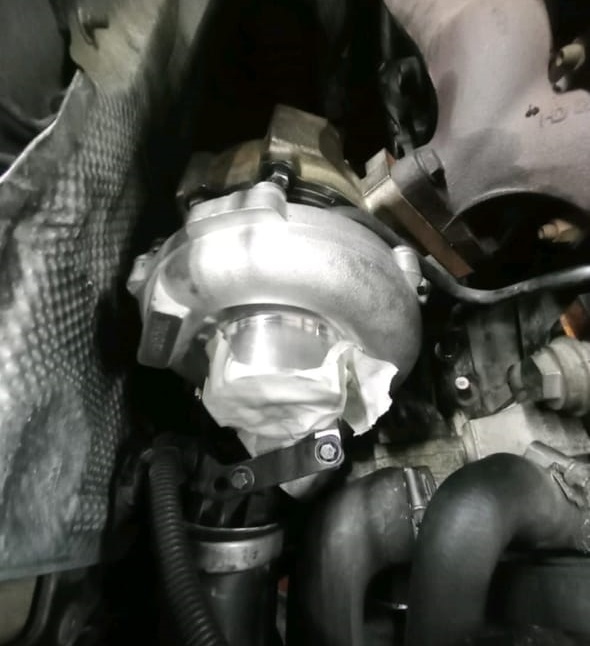
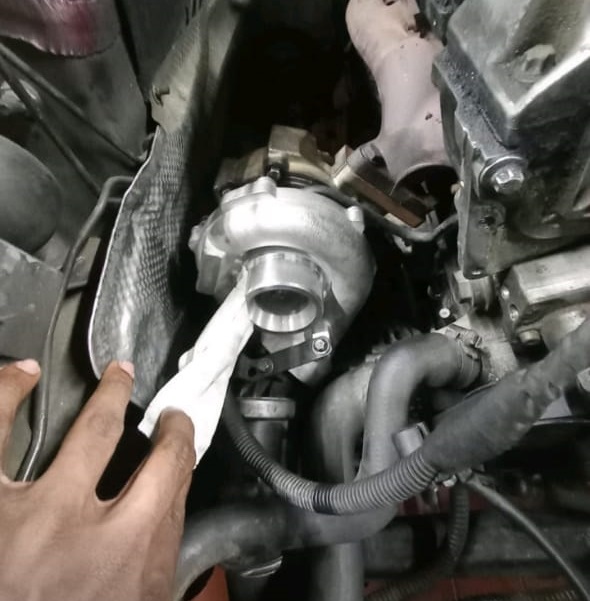
3. Installing a New Turbocharger
A brand-new turbocharger unit was installed. Before installation:
- – Turbo bearings were pre-lubricated
- – Oil feed and return lines were inspected for blockage
- – Gaskets and seals were replaced with OEM parts
4. Oil Change and Filter Replacement
The engine oil and filter were replaced to eliminate any contamination caused by the failing turbo.
5. Final Testing
After assembly, the engine was started and monitored for:
- – Remaining white smoke
- – Proper turbo boost operation
- – No oil leaks
- – Normal idle behavior
Result:
✔ No more white smoke
✔ Vehicle regained full performance
✔ Oil consumption stabilized
Is White Smoke From Exhaust Bad? (Yes; Here’s Why)
1. Indicates Oil or Coolant Contamination
White smoke generally means that oil or coolant is burning inside the exhaust system or cylinders.
2. Leads to Poor Engine Performance
Engines with white smoke often run rough, hesitate, and may enter limp mode.
3. Can Cause Expensive Damage
Ignoring white smoke risks:
- – Turbocharger destruction
- – Catalytic converter contamination
- – Head gasket failure
- – Cracked cylinder head
4. Increases Pollution
White smoke = incomplete combustion, increasing emissions.
5. Safety Issue
Heavy smoke reduces visibility, making driving unsafe.
Key Takeaways for Drivers
If you see white smoke from the exhaust, especially on a diesel Mercedes:
✔ Identify whether the smoke smells like oil or coolant
✔ Inspect the turbocharger for oil contamination
✔ Check shaft play excessive movement = failing turbo
✔ Act quickly to avoid engine and catalytic damage
✔ Replace damaged turbochargers rather than trying to repair them
Conclusion
This case study of a Mercedes-Benz E-Class W211 with the OM646 engine demonstrates how excessive white smoke can be traced back to turbocharger seal failure. By replacing the turbo, cleaning the air/exhaust pathways, and performing a complete oil service, the problem was resolved permanently.
If your Mercedes has white smoke along with reduced power or limp mode activation, refer to the Mercedes Power Loss and Limp Mode: Full Troubleshooting Guide to understand all related causes and diagnostic paths.
— Salim, Mercedes Expert
Independent specialist in Mercedes-Benz diagnostics, CAN Bus analysis, troubleshooting case studies, and EV systems.