

Table of Contents
Enhanced Case Study: Active Blind Spot Assist Inoperative in a Mercedes-Benz E-Class W212
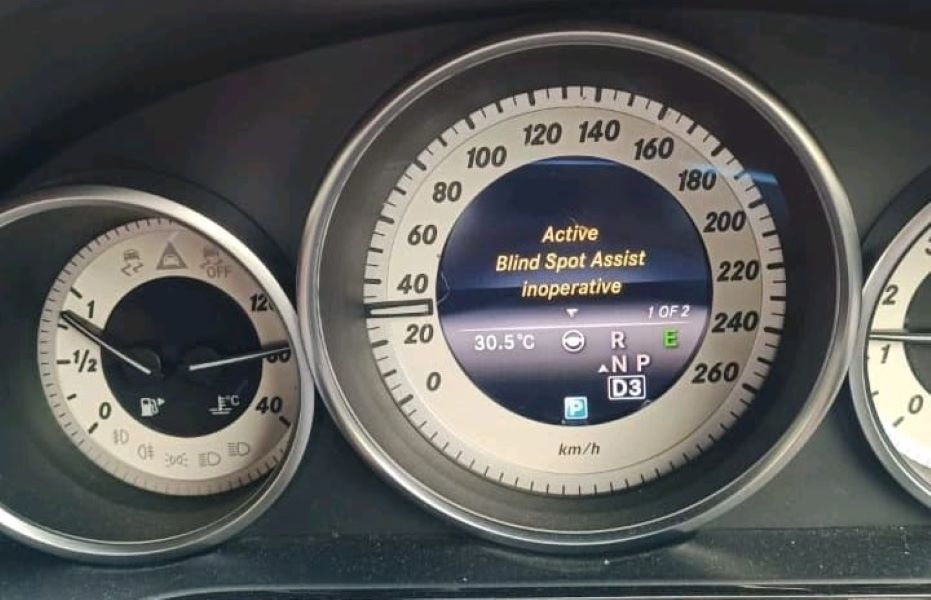
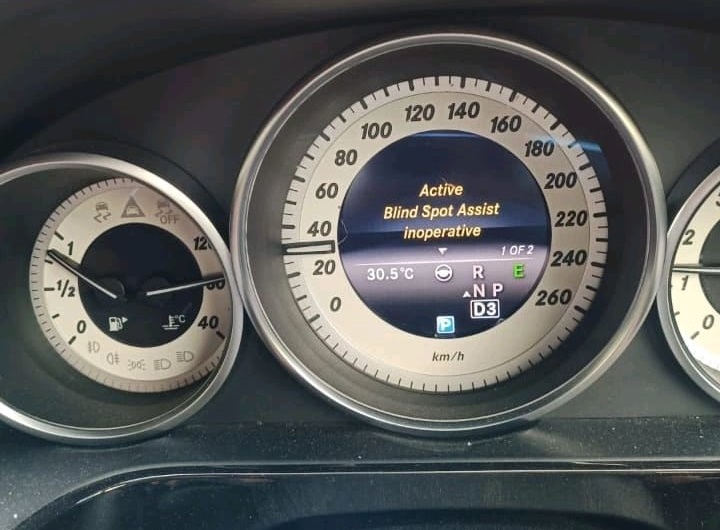
Modern Mercedes driver assistance systems rely heavily on radar-based monitoring. When a radar unit is misaligned or incorrectly installed, the system cannot interpret surrounding traffic accurately and the result is the dreaded “Active Blind Spot Assist Inoperative” warning.
As covered in our hub, the Mercedes Driver Assistance System Faults: Radar, Blind Spot Fixes Hub, blind-spot issues are often misunderstood, leading to unnecessary part replacements. This case study highlights a real-world diagnostic process where no components failed electronically the root cause was simply incorrect sensor positioning.
Vehicle & Customer Complaint
Model: Mercedes-Benz E-Class W212
Reported Issue: Persistent “Active Blind Spot Assist Inoperative” warning, with both mirror triangles no longer illuminating.
The customer noted that the warning appeared immediately after a bumper repair completed at another workshop a key clue suggesting potential sensor alignment issues. Because Blind Spot Assist supports safe lane changes at highway speeds, the vehicle required immediate evaluation.
Step 1: Full Diagnostic Scan & Accurate Fault Interpretation
Using Mercedes XENTRY Diagnostics, a complete scan of:
- – Blind Spot Monitoring System (BSD)
- – Rear bumper radar modules (B29/6 and B29/7)
- – CAN communication pathways
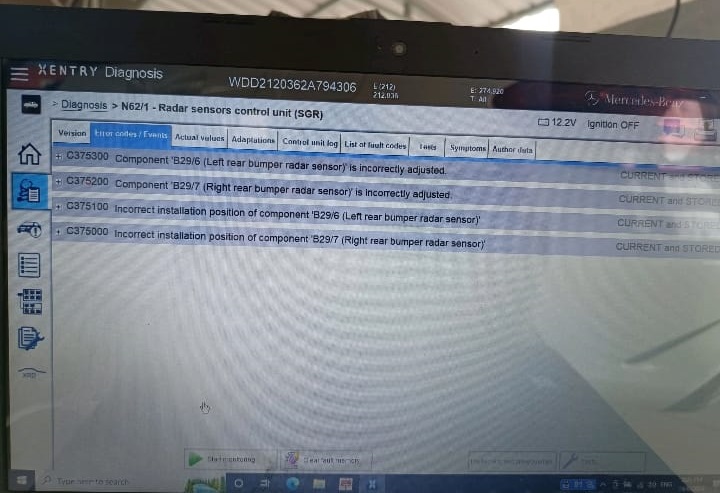
Resulted in the following fault codes:
- – C375300 : Incorrect adjustment of left rear radar sensor (B29/6)
- – C375200 : Incorrect adjustment of right rear radar sensor (B29/7)
- – C375100 : Incorrect installation position of B29/6
- – C375000 : Incorrect installation position of B29/7
Technical Interpretation
These codes form a very specific pattern:
- – Not wiring faults
- – Not power supply faults
- – Not internal radar failure
- – Consistent with incorrect physical alignment
This diagnostic pattern is commonly seen after:
- – Rear bumper repainting
- – Bumper removal for repairs
- – Parking sensor repairs
- – Rear minor collisions
- – Aftermarket bumper replacement
In 70%+ of such cases, the radar units work perfectly but are mounted at the wrong angle.
Step 2: Physical Radar Sensor Inspection
The rear bumper cover was removed for a detailed visual and functional inspection.
Findings
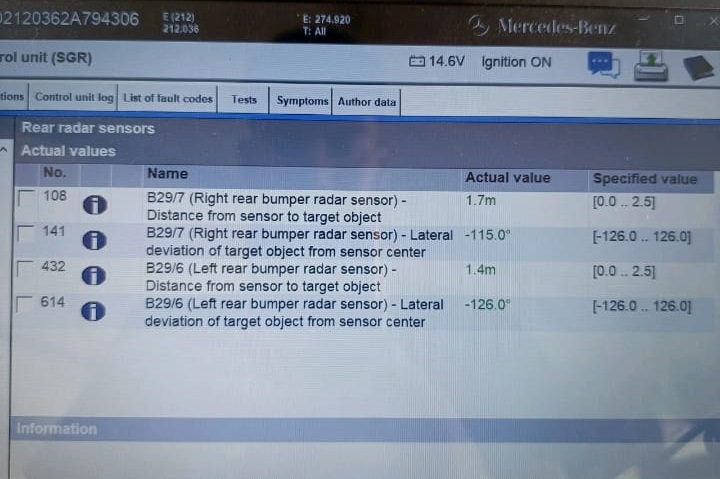
Radar sensors responding correctly
Live data confirmed both sensors were active, receiving power, and transmitting signals.
No wiring damage
No cut wires, bent pins, or loose connectors were found.
Zero water intrusion
Connectors were dry, and sealing gaskets were intact.
Incorrect radar mounting orientation
Both sensors were angled slightly upward and outward enough to distort the radar beam pattern.
Why This Causes Failure
Mercedes radar sensors work within extremely tight tolerances. Even a deviation of:
- – 2–3° horizontally, or
- – 1–2 mm vertically
can cause the Blind Spot Assist control unit to reject the signal as invalid.
This leads the system to shut down entirely as a safety precaution.
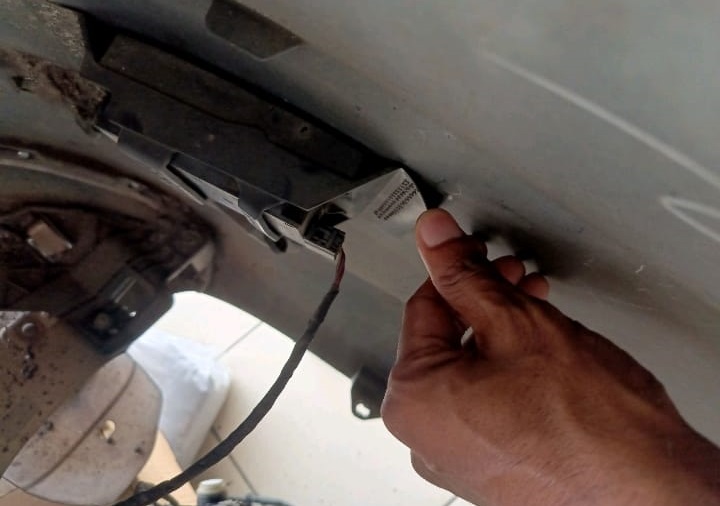
Step 3: Correcting the Misaligned Radar Units
Both radar sensors (B29/6 and B29/7) were removed and reinstalled using:
Factory Alignment Specifications
- – Exact mounting holes and brackets
- – Specified torque values
- – Correct horizontal and vertical orientation
- – Ensuring radar beam path aligns parallel to the road surface
Why Proper Radar Alignment Matters
Radar sensors must “look” straight down the adjacent lanes. If they are:
- – Tilted
- – Twisted
- – Set too deep or too shallow in the bumper
- – Installed with aftermarket brackets
the system immediately logs incorrect adjustment faults.
By reinstalling them precisely according to Mercedes OEM specifications, signal accuracy was restored.
Step 4: Recalibration & System Finalization
After reinstalling the sensors:
1. XENTRY Calibration
A calibration routine was run to synchronize the radar angles with the vehicle’s ADAS architecture.
2. Clearing Fault Memory
All diagnostic codes were cleared and the system reset.
3. Road Test Above 30 km/h
Blind Spot Assist activates only after 30 km/h (18 mph).
During the test drive:
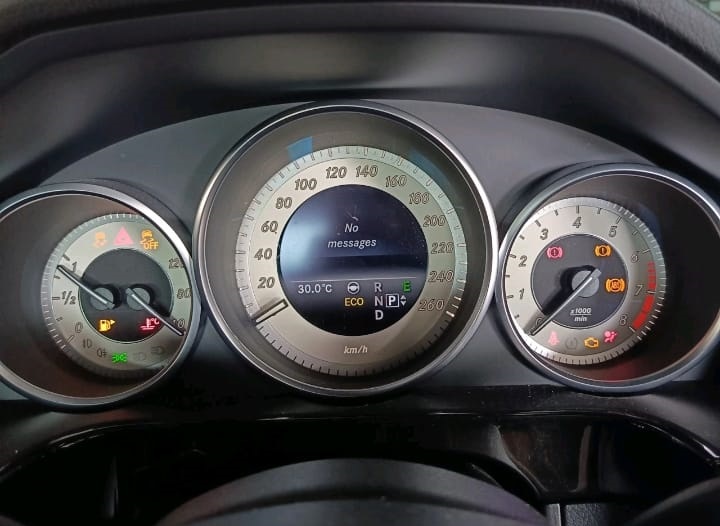
- – Mirror triangles illuminated correctly
- – No new codes appeared
- – System performed flawlessly during simulated lane-change scenarios
Final Result:
Complete restoration of Blind Spot Assist functionality.
No component replacements were required.
FAQ & Safety Advice
Q: Is it safe to drive with this message?
Yes, but lane-change warnings and automatic corrections will not function.
Q: Will the warning go away on its own?
Sometimes. A restart or cleaning the bumper area may resolve it temporarily.
Q: Do I need XENTRY to fix this?
Yes, if replacing or programming sensor modules. Otherwise, basic diagnostics can be done with simpler tools.
Q: Can I disable the system?
Yes, from the vehicle’s assistance menu but this is not recommended unless necessary for specific driving conditions (e.g. towing a trailer).
Conclusion
The “Active Blind Spot Assist Inoperative” warning on the Mercedes-Benz E-Class W212 is often interpreted as a serious sensor or module failure but as this case study demonstrates, incorrect radar sensor installation is one of the most common and overlooked causes. Even small alignment errors can disrupt the radar beam pattern, causing the system to shut down to protect driver safety.
By following a structured diagnostic approach starting with fault code interpretation, verifying wiring integrity, inspecting physical sensor orientation, and completing calibration with XENTRY the issue was resolved without replacing a single component. This reinforces a critical principle in ADAS diagnostics: always verify installation and alignment before ordering expensive radar modules.
For Mercedes owners, especially after bumper repairs or bodywork, this case highlights the importance of proper radar sensor positioning. For technicians, it is a reminder that precision and adherence to OEM specifications are essential to restoring full driver assistance functionality.
— Salim, Mercedes Expert
Independent specialist in Mercedes-Benz diagnostics, CAN Bus analysis, troubleshooting case studies, and EV systems.