

Table of Contents
Diesel Particulate Filter Problems in Mercedes-Benz E-Class W212 (OM651 Engine)
Diesel Particulate Filter (DPF) problems are one of the most common causes of power loss and limp mode in Mercedes diesel engines especially in models equipped with the OM651 engine. When the DPF becomes blocked, exhaust flow is restricted, soot accumulates rapidly, and the ECU reduces engine power to protect the turbocharger and emissions system.
If you’re troubleshooting power loss, slow acceleration, or limp mode in your Mercedes, make sure to check the Mercedes Power Loss and Limp Mode: Full Troubleshooting Guide, which serves as the main hub for diagnosing all turbo, boost, fuel pressure, and intake-related performance issues.
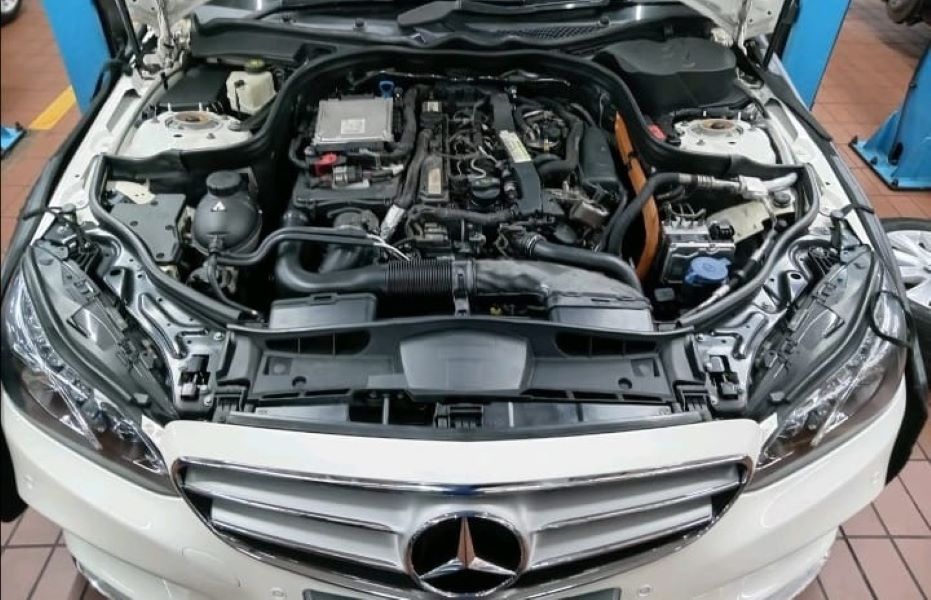
This case study focuses on a Mercedes-Benz E-Class W212 with the OM651 engine, brought into the workshop with a DPF warning light. Below is the complete diagnostic and repair process.
Case Study: Diagnosing Diesel Particulate Filter Problems
Vehicle: Mercedes-Benz E Class 212
Engine: OM651 engine
Customer Complaint: DPF warning light displayed on instrument cluster
1. Initial Quick Test
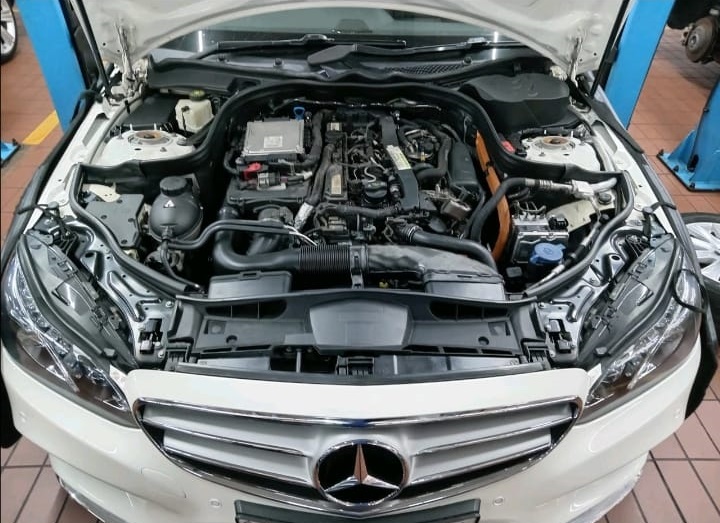
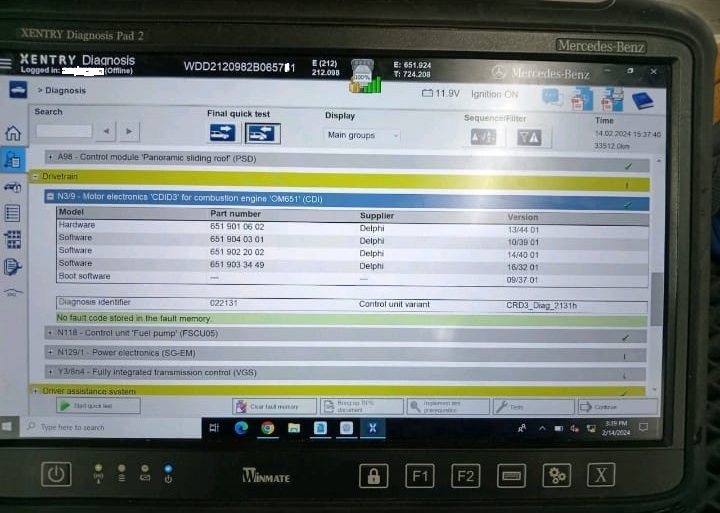
Using the Mercedes-Benz XENTRY diagnostic tool, the technician performed a complete quick test. Fault memory confirmed:
- – DPF soot load too high
- – Exhaust backpressure above threshold
- – ECU forced vehicle into reduced power mode
This is a classic indicator of blocked DPF channels.
2. Fault Code Analysis
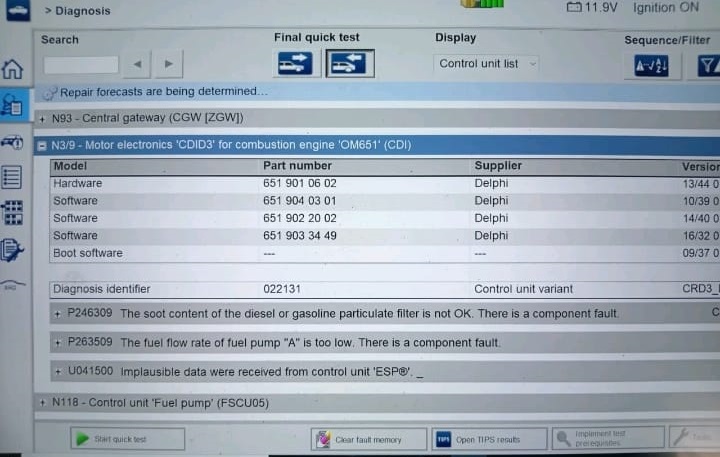
The stored faults confirmed:
- – The diesel particulate filter was heavily clogged
- – Necessary regeneration had failed during driving
- – ECU detected excessive soot accumulation and restricted engine performance
This level of blockage often occurs from:
- – Repeated short trips
- – Failed active regeneration
- – Faulty differential pressure sensor
- – Using poor-quality diesel fuel
Solution: DPF Regeneration & Reset
Forced DPF Regeneration (Workshop Procedure)
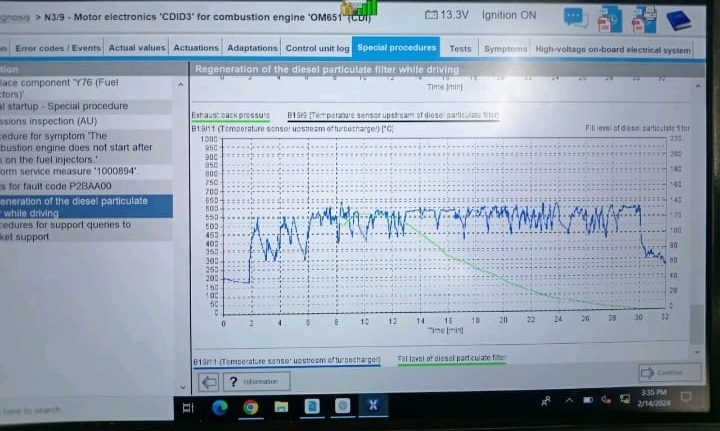
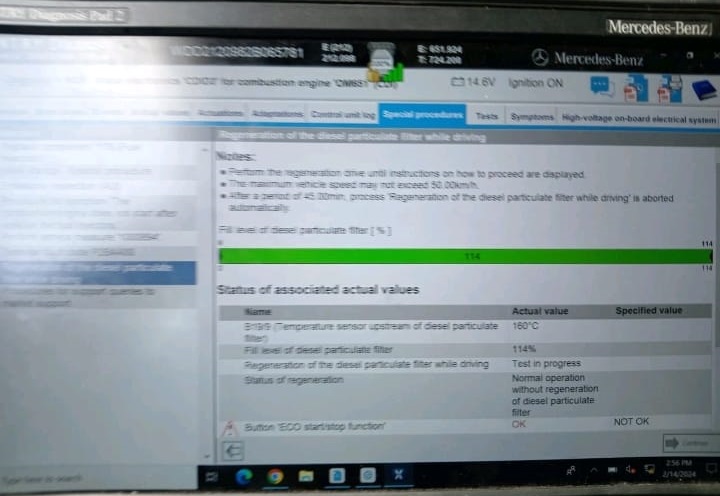
A forced regeneration was initiated using XENTRY. This process:
- – Raises exhaust temperature
- – Burns off accumulated soot
- – Clears internal DPF channels
Result:
✔ Soot load successfully reduced
✔ Exhaust backpressure returned to normal
✔ Engine performance restored
Final Checks After Regeneration
After the regeneration:
- – All fault codes were cleared
- – Exhaust temperature sensors were tested
- – Differential pressure readings were verified
- – A road test confirmed normal acceleration and no return of the DPF warning light
Understanding Diesel Particulate Filter Problems
What is a DPF?
A Diesel Particulate Filter traps harmful soot particles in the exhaust to meet emissions standards.
Without periodic regeneration, these particles build up and block the filter.
Symptoms of a Blocked DPF
- – DPF or engine warning light
- – Reduced power (especially during acceleration)
- – Higher fuel consumption
- – Turbo boost not reaching targets
- – Limp mode activation
- – Strong exhaust smell
How DPF Regeneration Works
1. Passive Regeneration
Occurs automatically during high-speed driving when exhaust temperature exceeds ~600°C.
2. Active Regeneration
ECU injects additional fuel to raise exhaust temperature when soot load reaches moderate levels.
3. Forced Regeneration (Workshop)
Required when passive and active regeneration fail.
Done via XENTRY at controlled RPM to burn soot and ash.
Tips for Successful DPF Regeneration
- – Drive at motorway speeds periodically
- – Avoid frequent short trips
- – Do not ignore early DPF warnings
- – Keep the engine healthy (oil, injectors, EGR, sensors)
How to Clean a Diesel Particulate Filter
Depending on blockage severity:
1. Passive / Active Regeneration
Automatic or ECU-triggered cleaning.
2. Forced Regeneration
Workshop procedure using diagnostic tools.
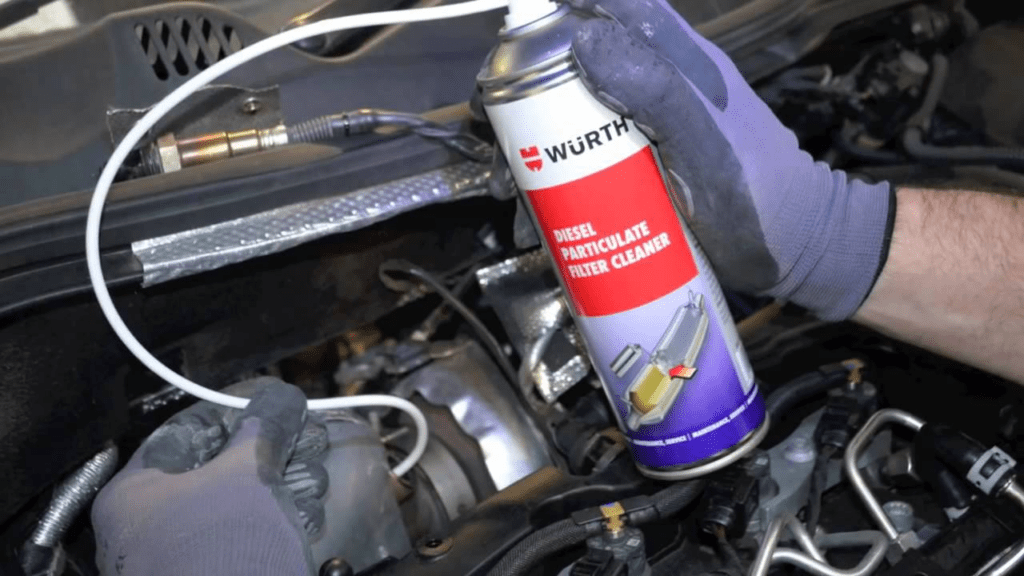
3. Chemical DPF Cleaning
Using a cleaning agent sprayed into the DPF channels (requires DPF removal in some cases).
- – A workshop procedure performed using diagnostic tools like Xentry to raise the temperature in the DPF and clear blockages.
4. Professional DPF Service Machine
Deep cleaning using heated fluid under pressure.
5. DPF Replacement
Necessary when the filter is physically damaged or ash accumulation is excessive.
Diesel Particulate Filter Location in OM651
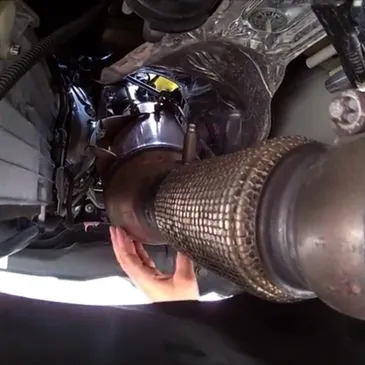
On the Mercedes-Benz E-Class W212 OM651:
- – Located under the vehicle
- – Integrated into the front exhaust section
- – Positioned near the engine to maintain high regeneration temperature
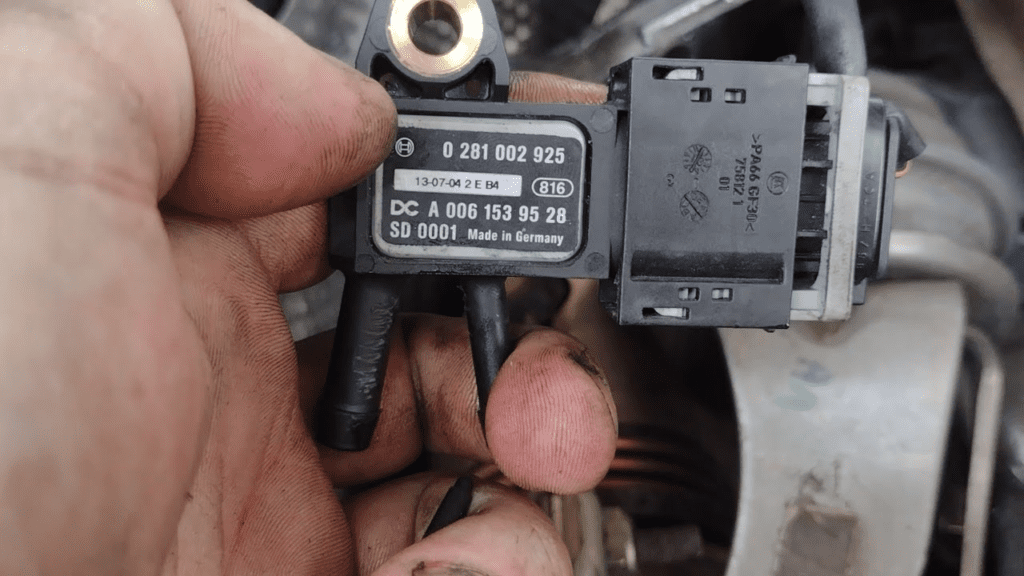
DPF Differential Pressure Sensor
Function:
Measures pressure difference before and after the DPF to calculate soot load.
Symptoms of Faulty Sensor:
- – DPF warning light despite clean filter
- – Incorrect soot load readings
- – Poor throttle response
- – Limp mode
Testing & Replacement:
- – Check live data in XENTRY
- – Inspect hoses for cracks
- – Replace sensor if readings are unrealistic
Preventing DPF Problems in Mercedes OM651
- – Use high-quality diesel
- – Perform regular motorway drives
- – Service injectors and EGR valve
- – Change engine oil at recommended intervals
- – Avoid unnecessary idling
- – Follow proper maintenance schedule
Conclusion
Diesel particulate filter problems can lead to reduced power, limp mode, and poor performance in the Mercedes-Benz E-Class W212 with the OM651 engine. Using the correct diagnostic approach fault code reading, pressure sensor verification, and forced regeneration most DPF issues can be resolved quickly.
To diagnose related issues such as boost loss, limp mode triggers, or acceleration problems, make sure to reference the Mercedes Power Loss and Limp Mode: Full Troubleshooting Guide, which explains every cause of power reduction in modern Mercedes engines.
— Salim, Mercedes Expert
Independent specialist in Mercedes-Benz diagnostics, CAN Bus analysis, troubleshooting case studies, and EV systems.