

Table of Contents
Engine Noises in Mercedes-Benz E-Class W212: Diagnosing and Fixing Abnormal Sounds (Case Study – M271 Engine)
Unusual engine noises are among the most common and most concerning complaints Mercedes owners experience. Whether it’s ticking, knocking, grinding, or tapping, any abnormal sound can signal mechanical wear that may lead to expensive repairs if ignored.
In this case study, we examine a Mercedes-Benz E-Class W212 equipped with the M271 engine, where the owner reported persistent engine noise. We break down the diagnostic steps, identify the exact root cause, and explain how the problem was successfully resolved.
For more engine-noise case studies and diagnosis guides, visit:
Mercedes Engine Noise and Vibration Problems: Full Diagnosis
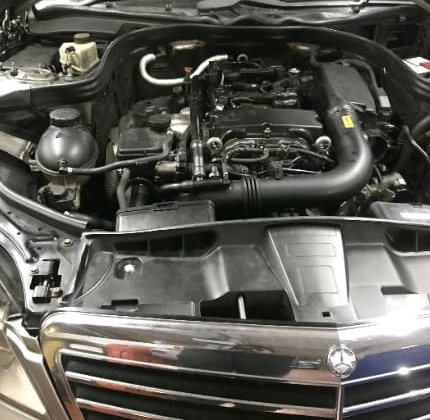
Case Study: Abnormal Engine Noises in a Mercedes E-Class W212 (M271 Engine)
Customer Complaint
The owner reported a persistent, abnormal engine noise coming from the engine compartment.
The noise:
- – Was clearly audible at idle
- – Became louder during acceleration
- – Seemed to originate from the cylinder head area
Because the M271 engine is known for timing chain and valvetrain issues, a structured diagnosis was essential.
Step-by-Step Diagnostic Process
The technician followed a full Mercedes-approved diagnostic workflow to identify the cause of the abnormal engine noise.
1. Quick Test & Fault Code Scan
A full diagnostic scan was performed using Mercedes diagnostic equipment.
- – No related fault codes were present
This ruled out electronic faults or sensor-related causes.
2. Noise Localization
Using a stethoscope and engine-side listening:
- – The noise was isolated to the valve cover / valvetrain area
- – The sound resembled mechanical friction or grinding
This pointed toward a camshaft, rocker arm, or timing component issue.
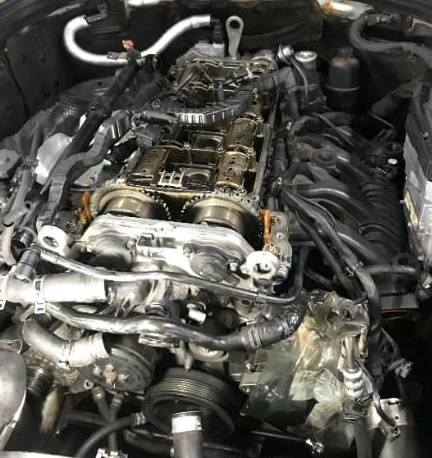
3. Valve Cover Removal
To inspect internal components, the technician removed the valve cover.
Checks included:
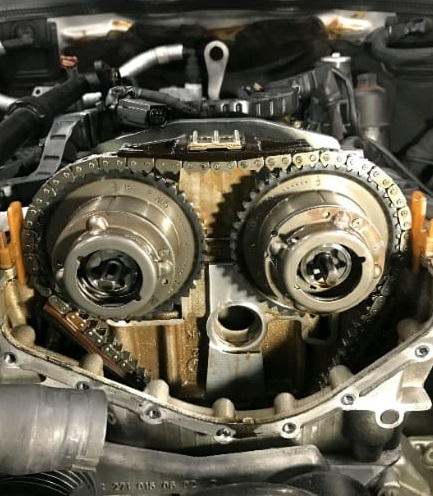
- – Camshaft timing marks
- – Cam sprocket alignment
- – Rocker arms
- – Camshaft lobes
- – Valve train elements
Timing marks were correct, which eliminated a timing chain misalignment.
4. Detailed Valvetrain Inspection
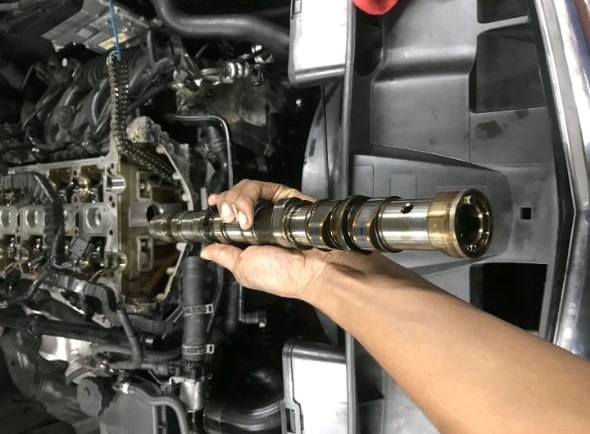
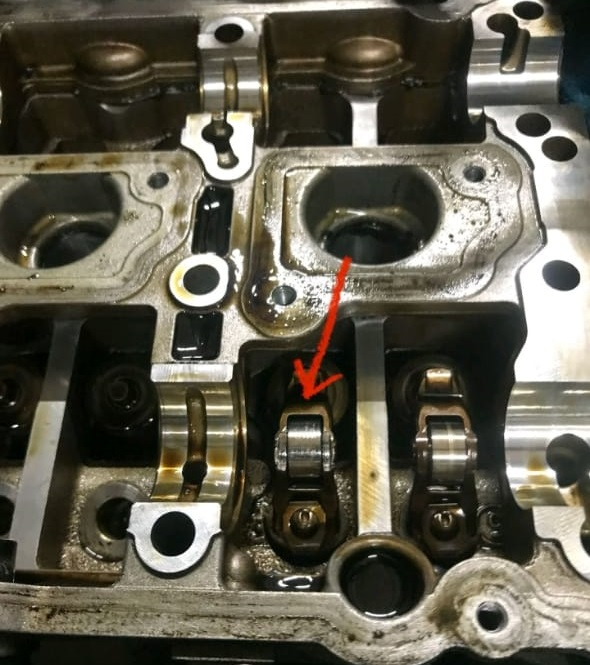
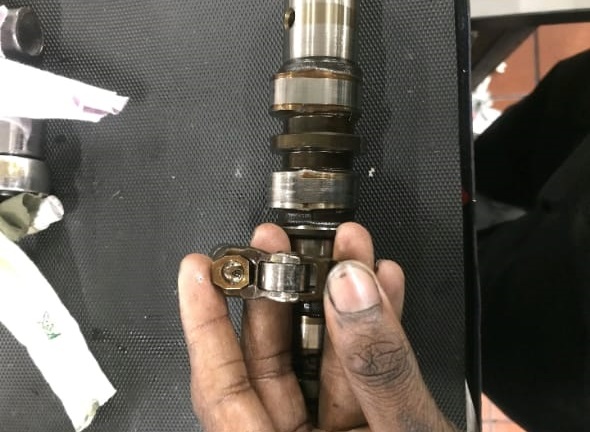
A thorough inspection of both camshafts and rocker arms revealed the real issue.
Findings:
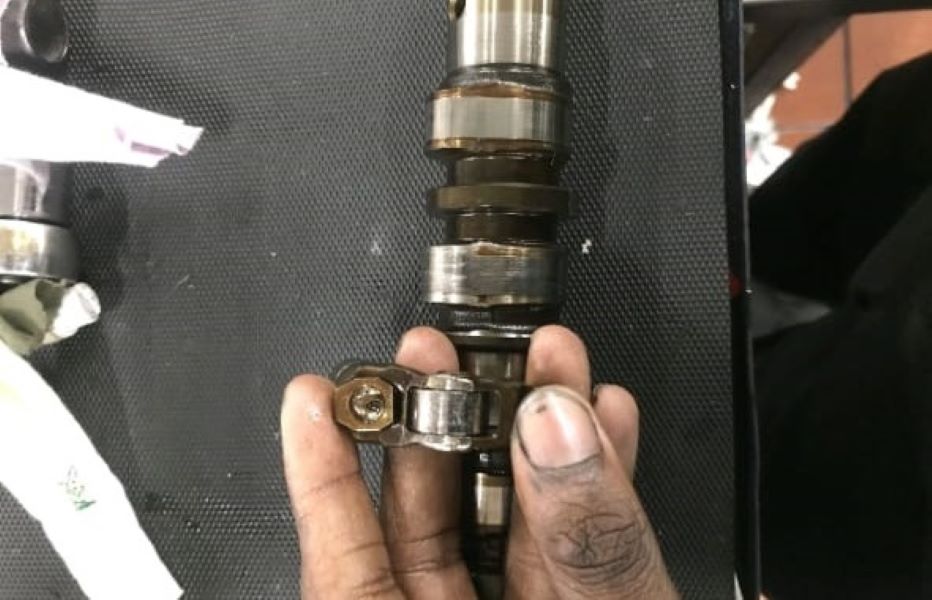
- – The exhaust camshaft lobes were damaged
- – The exhaust-side rocker arm needle bearing was severely worn
- – Excess play and friction were present
This explained the abnormal noise:
A worn rocker arm bearing creates metal-to-metal contact with the camshaft → producing a persistent tapping/grinding noise, especially during acceleration.
Root Cause of the Engine Noise
The final root cause diagnosis:
Worn rocker arm needle bearing (exhaust side)
This bearing failure caused:
- – Abnormal friction
- – Grinding/ticking sounds
- – Damage to the exhaust camshaft lobes
The damaged rocker arm allowed the camshaft to strike unevenly, generating the persistent noise.
This failure pattern is seen on certain M271 engines when lubrication is insufficient or components have aged.
Corrective Repairs
To restore proper engine function, the technician carried out the following repairs:
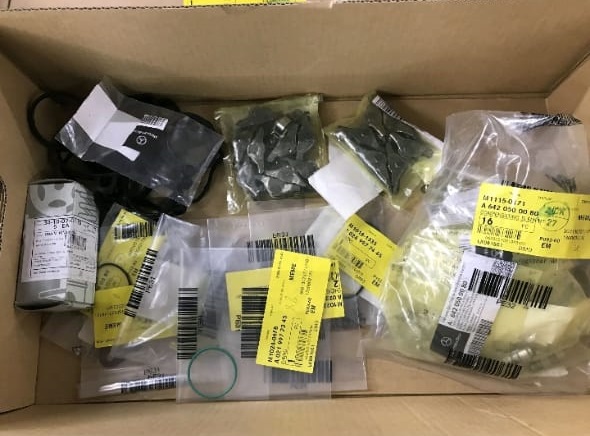
1. Exhaust Camshaft Replacement
A brand-new OEM exhaust camshaft was installed.
This ensures proper valve actuation and eliminates noise caused by worn lobes.
2. Replacement of All Rocker Arms and Elements
Because rocker arms wear evenly over time, the technician replaced:
- – All rocker arms
- – All rocker arm elements
This prevents future imbalance and ensures uniform wear on both camshafts.
Final Testing and Results
After reassembly:
=> Engine noise was completely gone
=> Smooth and quiet operation restored
=> Test drive confirmed no further abnormal sounds
=> No fault codes present
The repair successfully eliminated the abnormal engine noise.
The Worst Engine Noises You Should Never Ignore
Some engine noises indicate urgent mechanical problems.
Never ignore:
1. Knocking or Pinging
Often caused by detonation or worn rod bearings.
2. Tapping or Clicking
Indicates valvetrain wear, lifter issues, or low oil pressure.
3. Grinding or Screeching
May indicate timing chain damage, bearing failure, or accessory belt issues.
4. Hissing or Sizzling
Associated with overheating or coolant/oil leaks.
5. Loud Banging or Backfiring
Suggests severe misfires or ignition timing issues.
If any of these noises appear, immediate diagnosis is critical.
Engine Knocking: Common Causes
Engine knocking in the M271 or similar engines may be caused by:
- – Low octane fuel
- – Carbon buildup in combustion chambers
- – Incorrect ignition timing
- – Lean air–fuel mixture
- – Worn rod bearings
- – Faulty knock sensors
Left unchecked, knocking can quickly damage pistons, rods, and bearings.
Preventive Measures for Avoiding Engine Noises (M271 Engine)
1. Regular Oil Changes
Use high-quality oil and follow Mercedes intervals. Proper lubrication prevents valvetrain wear.
2. Monitor Noises Early
Addressing minor noises early prevents major component failure.
3. Proactive Replacement of Wear Items
If a technician spots:
- – Worn rocker arms
- – Camshaft wear
- – Bearing play
replace them immediately to avoid catastrophic damage.
Conclusion
This case study on the Mercedes-Benz E-Class W212 (M271 engine) shows how abnormal engine noise can be caused by valvetrain wear, particularly a damaged rocker arm needle bearing and exhaust camshaft.
Through systematic diagnosis listening tests, visual inspection, timing checks, and valvetrain examination the technician identified and corrected the issue effectively.
For more engine noise diagnosis guides and case studies across all Mercedes models, explore:
Mercedes Engine Noise and Vibration Problems: Full Diagnosis
— Salim, Mercedes Expert
Independent specialist in Mercedes-Benz diagnostics, CAN Bus analysis, troubleshooting case studies, and EV systems.