

Table of Contents
How to Check Tire Tread Depth: A Case Study in a Mercedes-Benz
Tires are one of the most critical yet overlooked safety components on any vehicle. For Mercedes-Benz owners, ensuring proper tire tread depth is essential for grip, braking, fuel efficiency, and overall road safety.
In this guide, we’ll explain how to check tire tread depth step by step, highlight a real case study on a Mercedes-Benz E-Class (W213), and share tips about tire types, wear indicators, and pressure checks.
For a full overview of maintenance schedules, including tires, oil, and transmission care, see our Mercedes Maintenance and Service Guide.
Why Tread Depth Matters
- – Grip & Handling → Deep grooves disperse water, reducing risk of skidding.
- – Hydroplaning Prevention → Worn tires cannot push water aside effectively.
- – Shorter Braking Distances → Adequate tread = safer stops.
- – Legal Requirement → Most regions require ≥1.6 mm (2/32 in) tread.
- – Even Wear Check → Uneven wear may point to alignment or suspension issues.
Tools to Measure Tread Depth
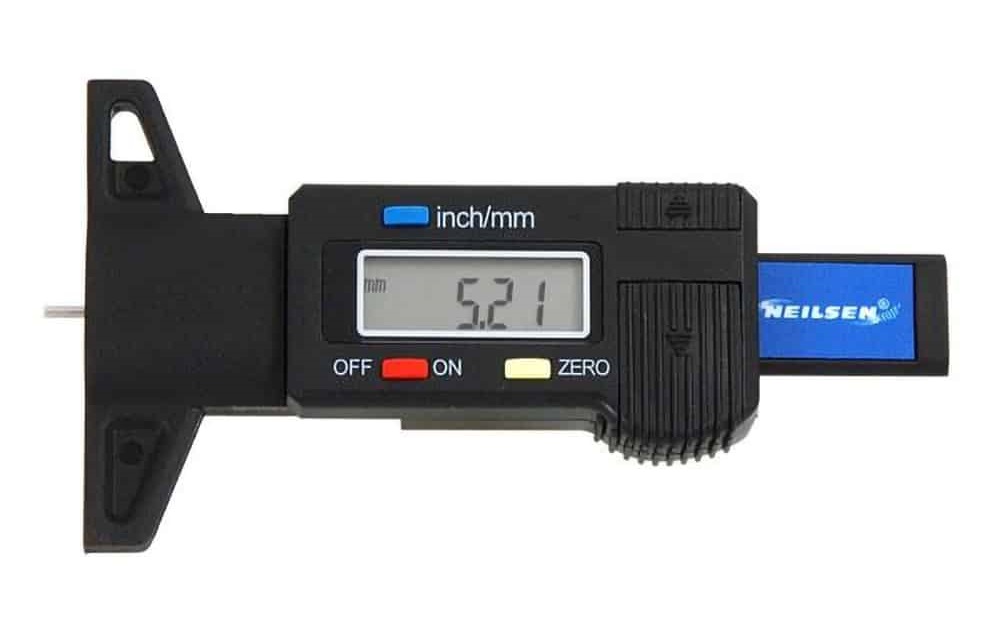
1. Tread Depth Gauge
- – Most accurate tool (manual or digital).
- – Shows depth in mm or 32nds of an inch.
2. Tread Wear Indicator Bars
- – Built into tire grooves.
- – When tread is flush with bars → replacement needed.
Best practice: Use a gauge for precision, confirm with indicator bars.
Case Study: Mercedes-Benz E-Class (W213)
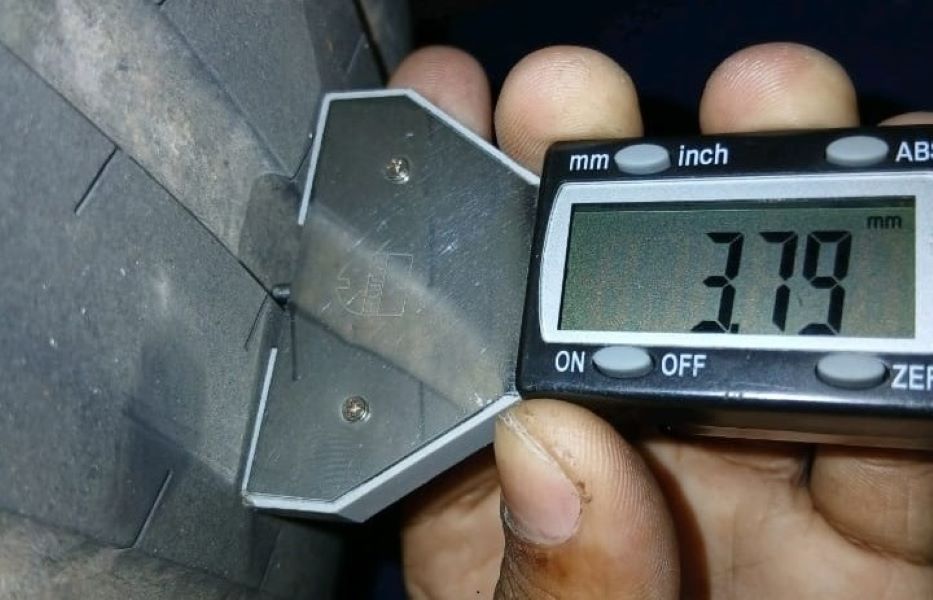
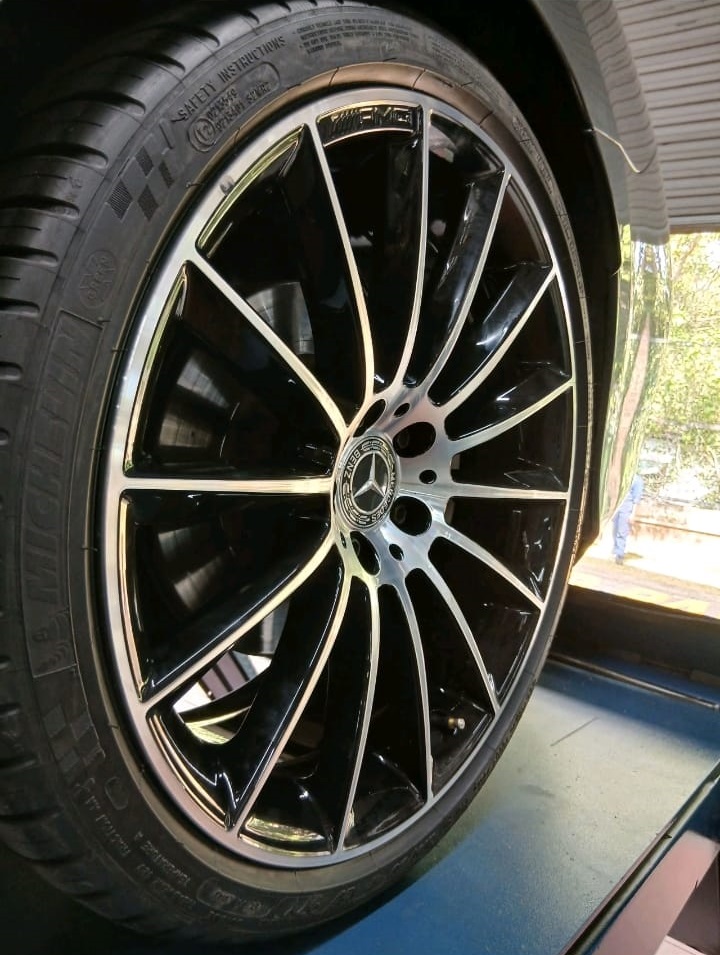
A customer visited our workshop with their Mercedes E-Class W213 for routine maintenance. Part of the service included checking tire tread depth.
- – Front tires: ~4.5 mm (safe but wearing).
- – Rear tires: ~3.0 mm (above legal minimum, but close to replacement).
- – Indicator bars: Nearly flush at the rear → time to plan new tires.
This confirmed both gauge readings and visual checks, ensuring accurate diagnosis.
Step‑by‑Step Guide to Measure Tire Tread Depth
Method 1: Using a Tread Depth Gauge
Tools Needed:
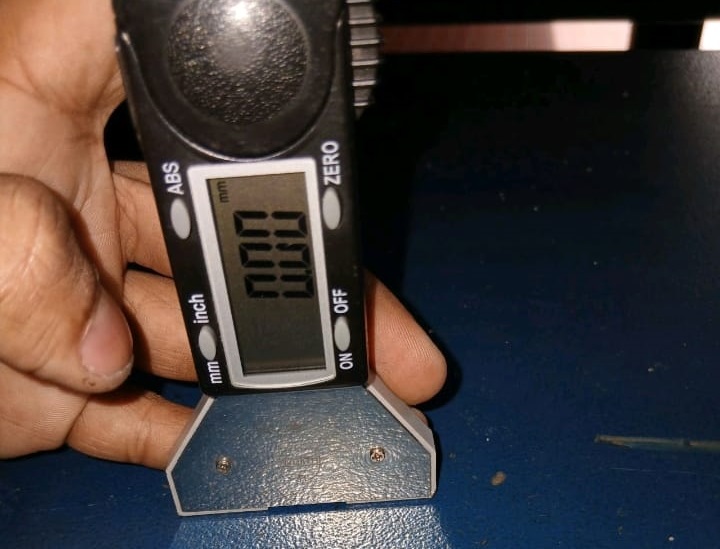
Tread depth gauge (manual or digital)
Steps:
- 1. Park on level ground → engage parking brake.
- 2. Inspect tires → check for cracks, bulges, embedded objects.
- 3. Clean grooves → remove stones, dirt, and mud.
- 4. Insert gauge → probe into main groove, base flush with tread.
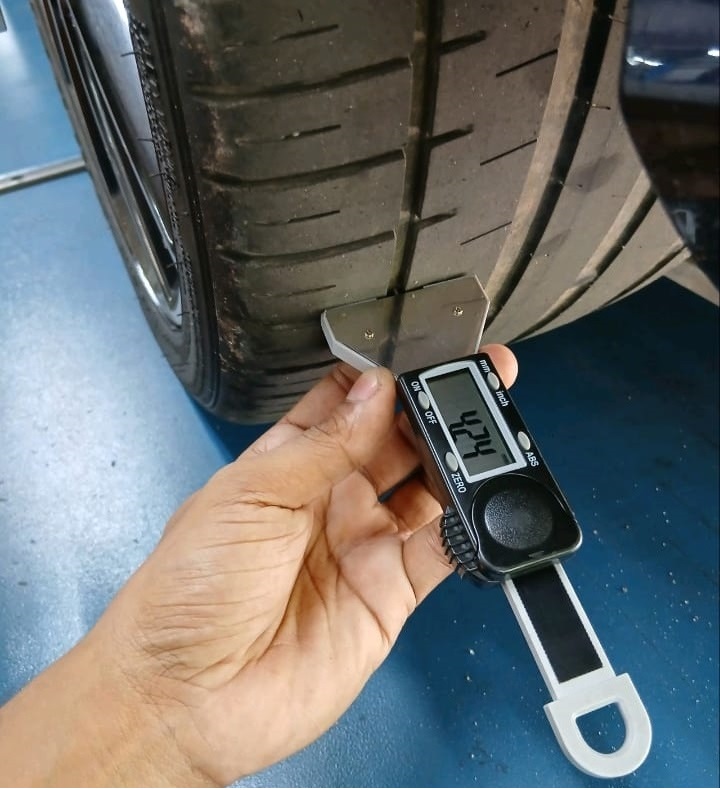
5. Read result → repeat at multiple points and across tire width.
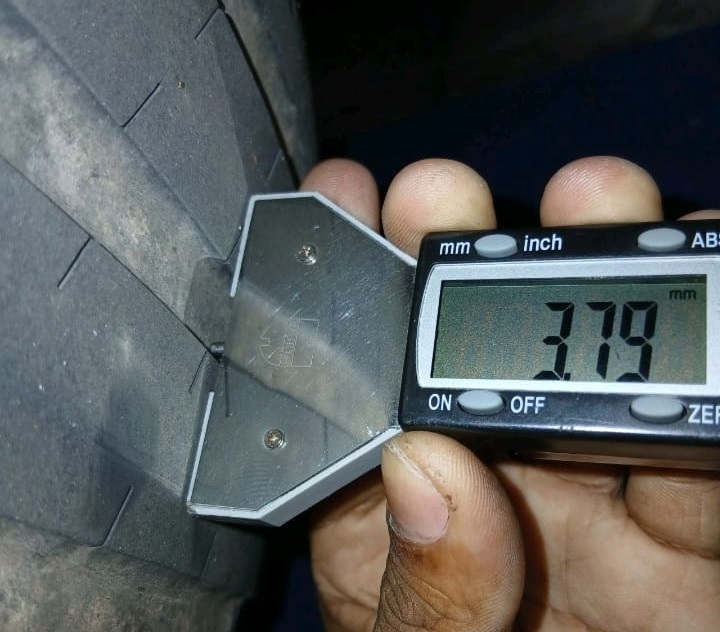
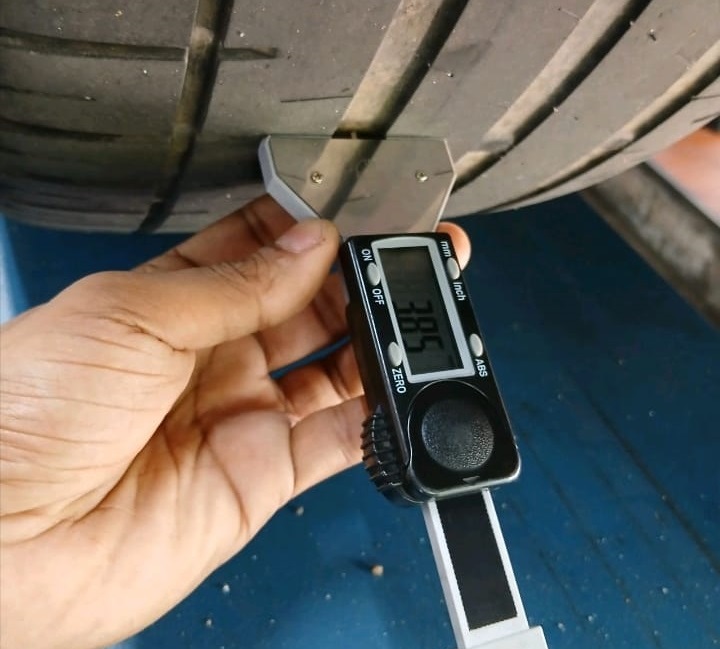
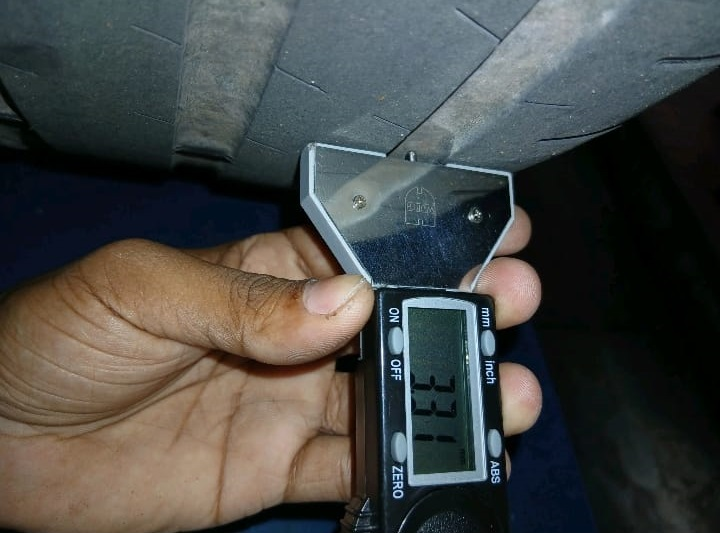
For our customer’s E‑Class, the front tires measured an average of 4.5mm, while the rears were around 3.0mm above the legal minimum but showing signs of wear.
Understanding Tread Wear Indicator Bars
- – Quick way to spot when replacements are needed.
- – Located in main grooves of all modern tires.
- – Become visible when tread wears to the legal minimum.
Symptom – Cause – Fix Table
| Symptom | Cause | Fix |
|---|---|---|
| Uneven tread wear | Misalignment / suspension issue | Wheel alignment & suspension check |
| Tread flush with wear bars | Tire at legal minimum | Replace tire immediately |
| Inner edge worn faster | Under-inflation / camber issue | Inflate properly, check suspension |
| Outer edge worn faster | Over-inflation or aggressive cornering | Adjust pressure, inspect steering |
Tire Types for Mercedes-Benz
- – Summer Tires → Max grip in warm conditions, shorter lifespan.
- – All-Season Tires → Balanced performance, longer life.
- – Winter Tires → Softer rubber + deep grooves for ice/snow.
- – Performance Tires (AMG models) → Exceptional handling, faster wear.
Always match OEM specifications listed in your owner’s manual or door sticker.
Don’t Forget Tire Pressure
- – Check monthly and before long trips.
- – Use a digital/analog gauge when tires are cold.
- – Compare with factory specs (usually on driver’s door sticker).
Example (E-Class W213): 36 PSI front, 39 PSI rear.
How Often to Check Tread Depth
- – Monthly
- – Before long journeys
- – At each oil change or service
Regular checks also help spot alignment or suspension problems early.
Summary Table
| Step | Action |
|---|---|
| 1 | Park on level ground & clean tread |
| 2 | Use tread depth gauge or indicator bars |
| 3 | Measure at multiple points |
| 4 | Compare results to legal limit (≥1.6 mm) |
| 5 | Adjust tire pressure to spec |
FAQs
Q: What is the minimum legal tread depth for Mercedes tires?
In most regions: 1.6 mm (2/32 in). Replacements are recommended at 3 mm for safety.
Q: Can I drive with uneven tread depth?
It’s unsafe. Uneven wear indicates alignment or suspension issues and should be corrected.
Q: How often should I rotate tires on a Mercedes?
Every 6,000–8,000 miles, or at each Service A/B interval, to promote even wear.
Q: Do performance AMG tires wear faster?
Yes, AMG performance tires offer maximum grip but shorter lifespan. Regular monitoring is essential.
Related Guides
Service A in Mercedes C300: Checklist, Cost & Reset Guide
Service B on Mercedes E-Class: Complete Checklist & Cost Guide
Mercedes 9G-Tronic Oil Change Guide: Cost & Interval
Service for Mercedes Benz: A & B Maintenance Guide
Conclusion
Checking tire tread depth on your Mercedes-Benz is a simple but powerful safety practice. Using a tread depth gauge and monitoring wear indicators can prevent accidents, reduce costs, and improve driving confidence.
In our case study with the Mercedes E-Class W213, the inspection showed it was time for new rear tires giving the owner peace of mind and a safer drive.
— Salim, Mercedes Expert
Independent specialist in Mercedes-Benz diagnostics, CAN Bus analysis, troubleshooting case studies, and EV systems.