

Table of Contents
Blind Spot Assist Inoperative, Mercedes Fix & Troubleshooting Guide
When your Mercedes shows “Blind Spot Assist Inoperative”, one or both rear short-range radar sensors (in the rear bumper corners) aren’t providing valid data. You may still see turn-signal flashes, but the mirror triangle won’t illuminate and linked functions (e.g., Active Brake Assist, lane change warnings) can be affected.
For a complete view of how ADAS components interact and how radar, Parktronic, and camera faults cascade see our master hub:
Mercedes Driver Assistance System Faults: Radar, Blind Spot & Parktronic Fixes
Common Causes & Quick Diagnostics
| Cause | Typical Symptoms | How to Check |
|---|---|---|
| Misaligned rear radar bracket | Blind Spot + Brake Assist warnings together | Inspect bracket behind bumper; check alignment/angle; codes like C3753xx, U150887 |
| Dirty/obstructed sensors | Temporary inoperative in rain/snow | Clean bumper corners; test drive > 15 km/h for self-reactivation |
| Harness/connector damage | Persistent warning, intermittent comms | Inspect pins for corrosion/bent contacts; wiggle test |
| Water ingress/corrosion | Warning appears in rain; intermittent side failure | Open connectors, dry, apply dielectric grease; check seals |
| Failed radar module | One side never detects; permanent warning | XENTRY shows U150887 (message missing); replace + calibrate |
Diagnostic & Repair Workflow (Technician-proven)
- 1. Scan all systems (XENTRY preferred): log codes in BSM/SRR and ESP (e.g., U150887, C3753xx).
- 2. Visual inspection: remove rear bumper lower trim; verify sensor bracket alignment and torque.
- 3. Clean & dry: mild soap + microfiber; avoid high pressure near sensor seams.
- 4. Harness & connectors: look for green crust, moisture, or pulled wires; repair + waterproof.
- 5. Module A/B swap test (if feasible): confirm side-specific failure before buying parts.
- 6. Replace faulty sensor (OEM), then teach-in/calibrate with XENTRY.
- 7. Road test: > 15–30 km/h lane pass; confirm mirror triangle and cluster warnings behave normally.
Case Study N*1: Blind Spot Assist Inoperative , Mercedes-Benz C-Class W205
Customer Complaint
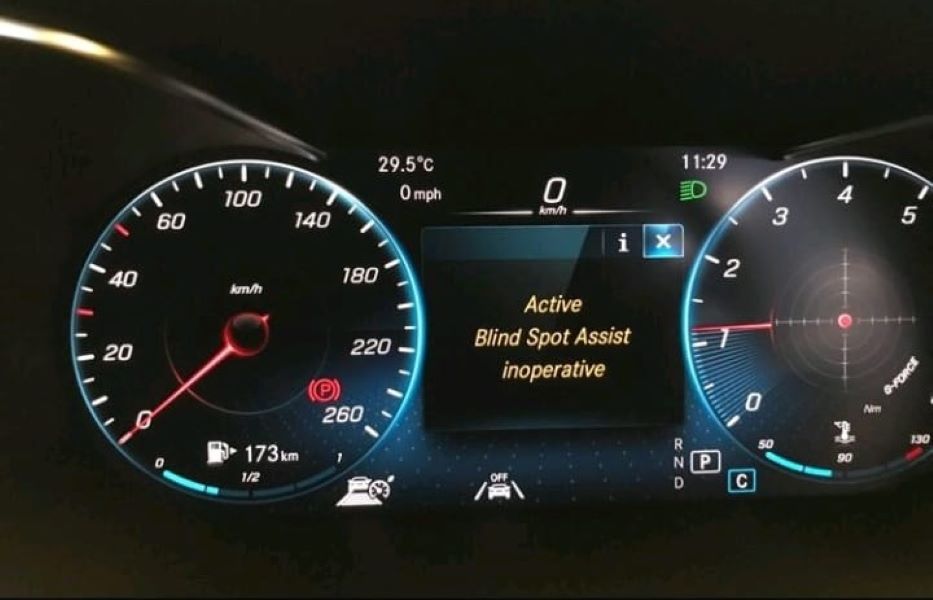
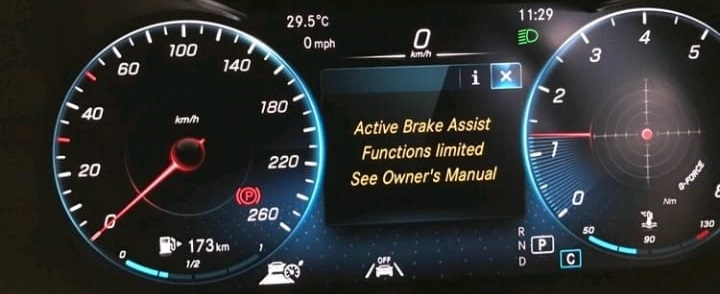
A customer arrived at the workshop with a Mercedes-Benz C-Class (W205) reporting persistent messages on the instrument cluster:
“Blind Spot Assist Inoperative”
“Active Brake Assist Inoperative”
Concerned about the safety of their daily commute, the owner requested a full inspection. Both systems had been inactive for several weeks, leaving the driver without lane-change assistance or automatic braking support.
Initial Diagnostic Assessment
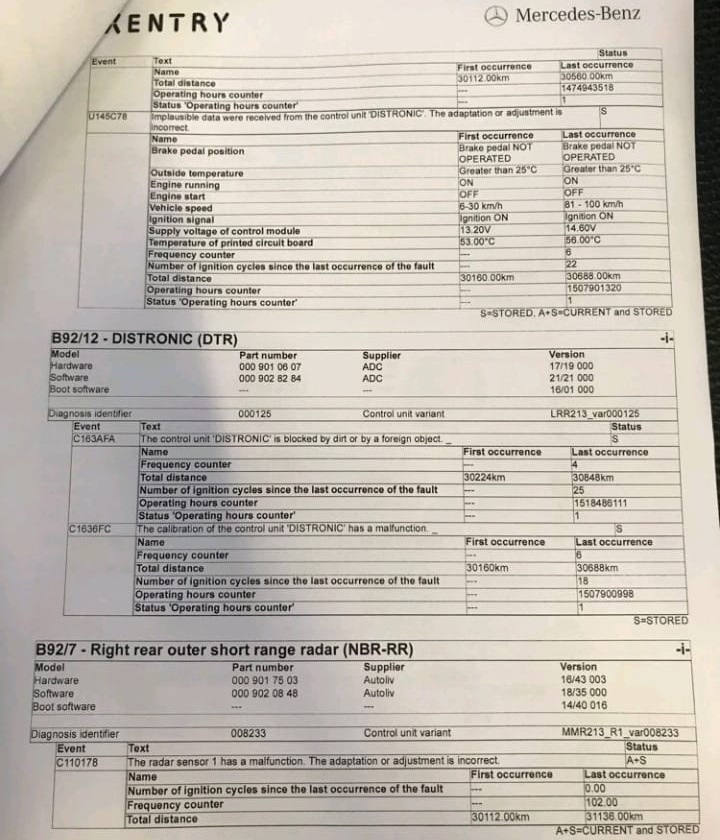
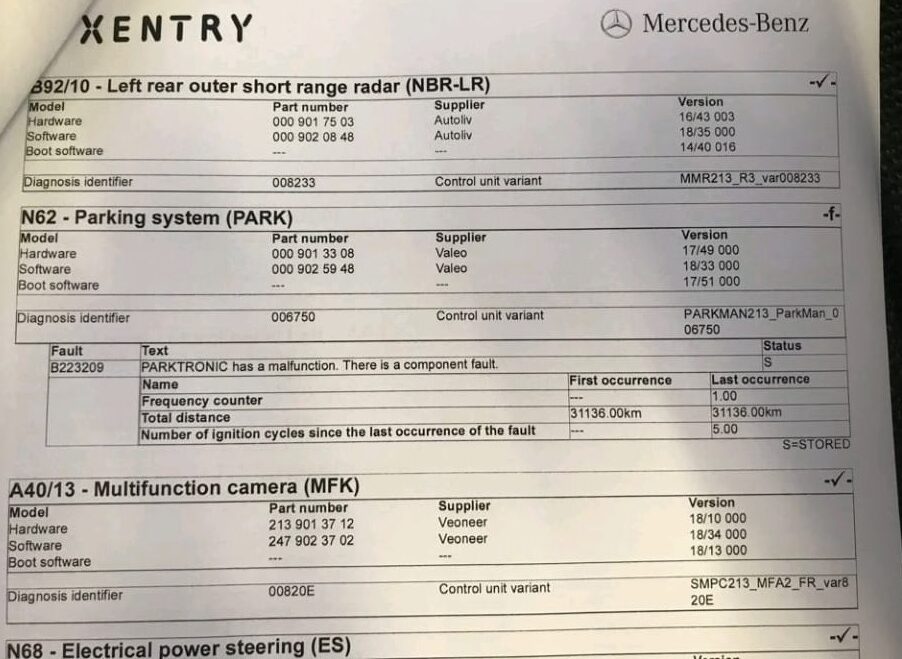
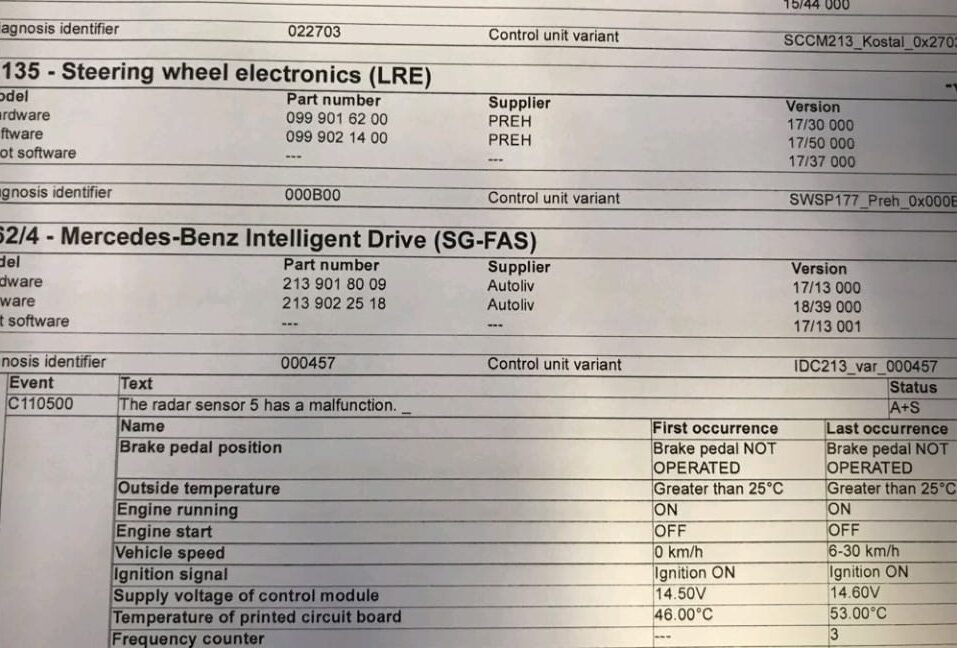
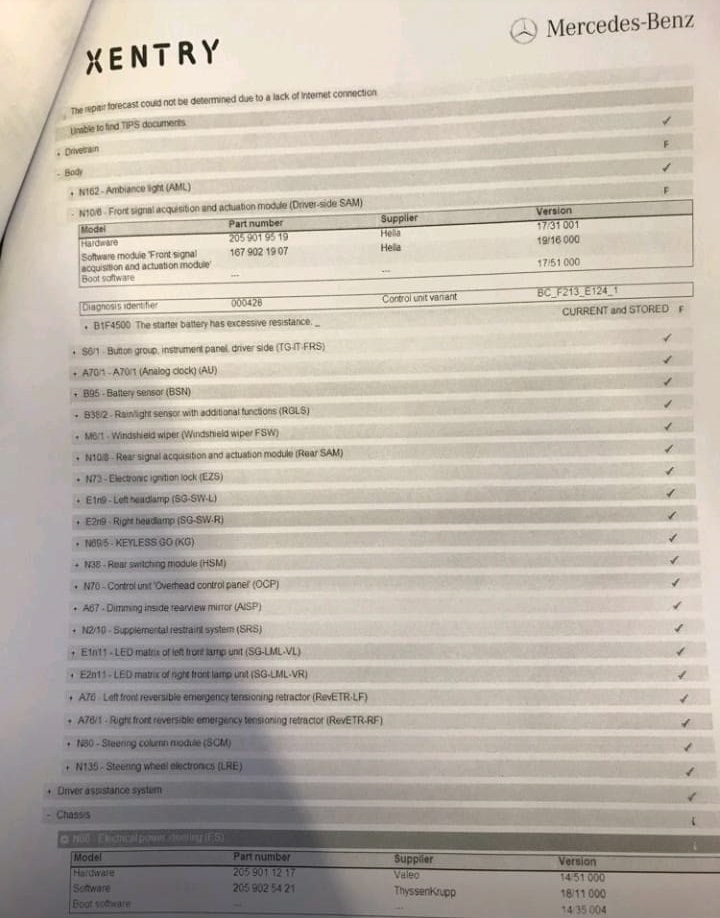
A certified Mercedes technician began the process using the Mercedes-Benz XENTRY Diagnostic System, which allows deep communication with ADAS modules like Short-Range Radar (SRR) and Electronic Stability Program (ESP).
The short test revealed multiple fault codes related to rear radar communication and CAN signal discrepancies. Most notably, the issue pointed toward the rear right short-range radar sensor, which supports both the Blind Spot Assist and Active Brake Assist systems.
Insight: The W205 model integrates radar data from both rear corners to support collision avoidance and side monitoring. A single misaligned or damaged sensor can cause multiple system faults simultaneously.
Step-by-Step Diagnostic Process
To confirm the root cause, the technician performed a structured inspection:
- 1. Wiring Diagram Verification
Accessed the official Mercedes wiring diagram to map the power, CAN high/low, and ground circuits of the right radar sensor. - 2. Rear Bumper Removal
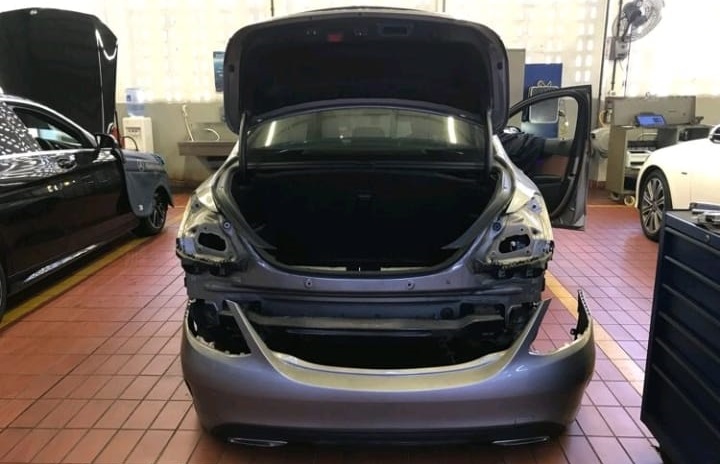
Carefully removed the rear bumper cover to visually inspect the sensor brackets, connectors, and wiring harness for physical damage or misrouting.
- 3. Electrical Integrity Check
Tested voltage supply (12 V) and CAN resistance values to confirm communication continuity. No open or short circuits were found. - 4. Mechanical Inspection
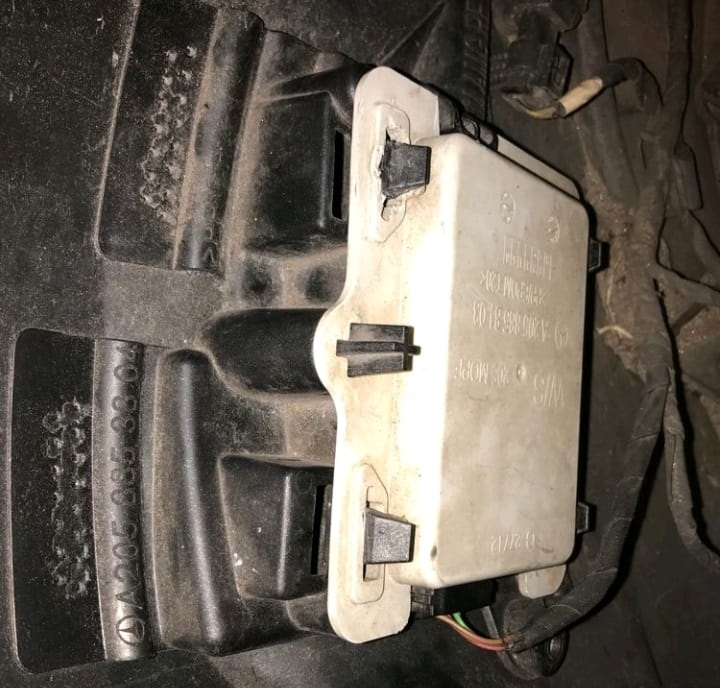
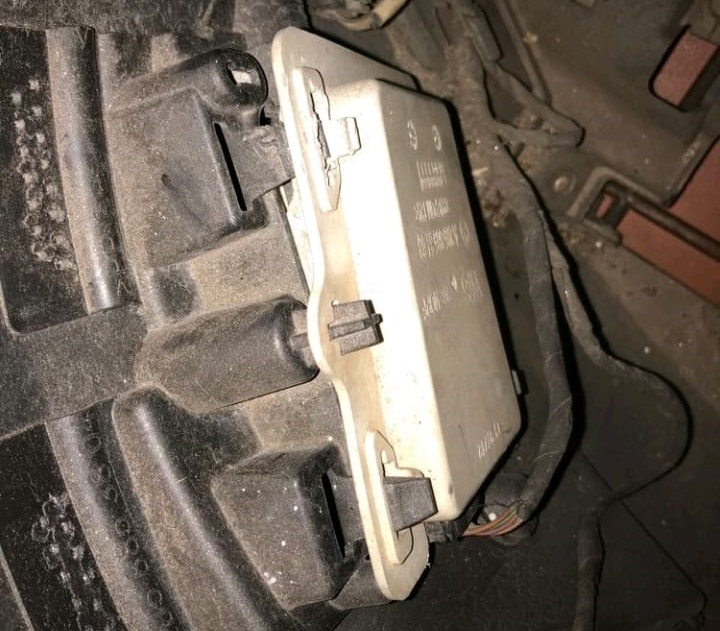
Measured radar bracket alignment using Mercedes OEM reference data. The right-side radar was found to be slightly tilted, causing the radar beam to deviate from its calibrated path.
Root Cause Identified
The issue originated from a misaligned rear right radar sensor bracket, likely due to minor bodywork or bumper impact.
This small misalignment caused inaccurate radar reflections, leading the ADAS control module to disable both the Blind Spot Assist and Active Brake Assist systems as a safety precaution.
Diagnostic Confirmation: Once the sensor was physically repositioned and secured at the correct alignment angle, all radar readings returned to nominal ranges in the XENTRY live data.
Repair Procedure
To restore proper operation:
- 1. Body Section Involvement
The vehicle was transferred to the body repair department, which specializes in radar bracket geometry correction. - 2. Bracket Realignment
The body technician adjusted and torqued the radar mounting bracket to the OEM-specified position and angle. - 3. System Calibration
After reinstallation, the radar sensor was recalibrated using XENTRY ADAS calibration targets to synchronize beam angles and communication with the ESP and IC radar modules. - 4. Fault Code Clearing and Verification
All DTCs were cleared, and the technician performed a 15 km road test to confirm full sensor coverage and system readiness.
Outcome
After successful calibration, both systems Blind Spot Assist and Active Brake Assist returned to full functionality. The warning messages no longer appeared on the cluster, and real-time detection was verified via live data monitoring.
The customer confirmed normal operation during a test drive, with blind spot triangles illuminating accurately and brake assist responding correctly.
Key Takeaways
| Diagnostic Stage | Finding | Action Taken |
|---|---|---|
| Fault Code Scan | Communication and calibration errors in right SRR | Isolated to right radar sensor |
| Physical Inspection | Bracket tilt/misalignment | Realigned to OEM geometry |
| Electrical Check | Power and CAN OK | No repair needed |
| System Calibration | Performed via XENTRY ADAS | Radar and ESP synchronized |
| Final Verification | Road test passed | Systems fully restored |
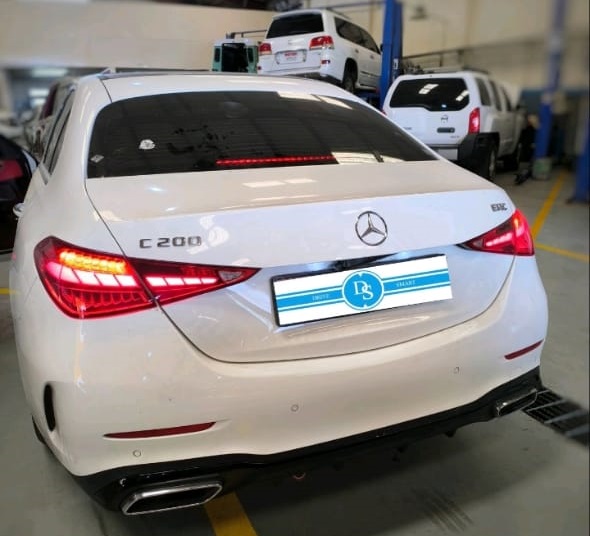
Case Study N*2: Blind Spot Assist Inoperative , Mercedes-Benz C-Class W206
Customer Complaint
A customer brought in their Mercedes-Benz C Class W206 with a constant warning on the instrument cluster:
“Blind Spot Assist Inoperative.”
The message appeared every time the vehicle was started and persisted during driving. The driver reported that the blind spot warning triangles in the mirrors were no longer illuminating, raising concerns about the vehicle’s safety systems during lane changes.
Initial Diagnostic Scan
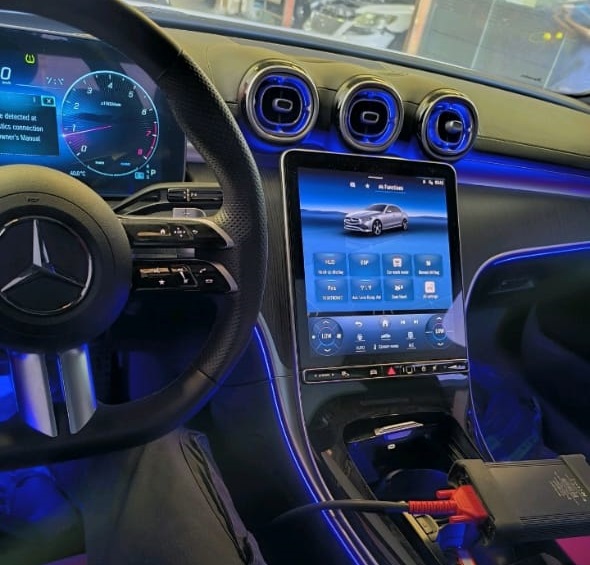
A comprehensive diagnostic test was performed using the Mercedes-Benz XENTRY system, the official OEM diagnostic tool for identifying and interpreting control unit communication faults.
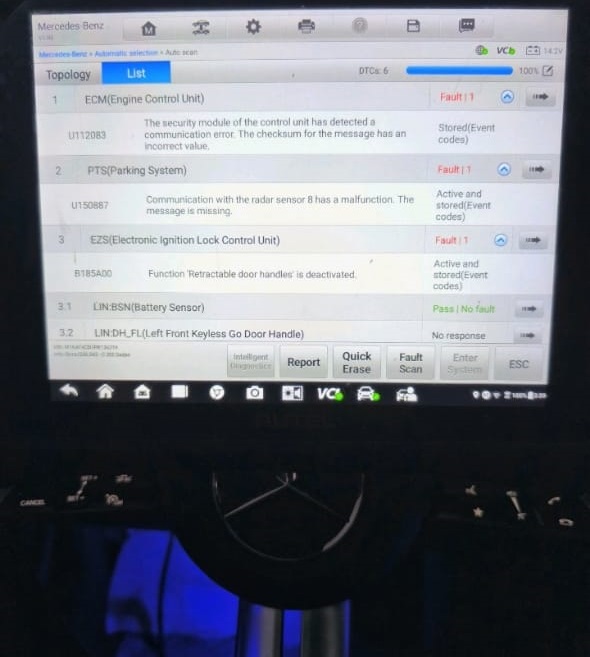
The scan revealed the following stored code:
- – U150887 : Communication with Radar Sensor 8 has a malfunction. The message is missing.
This fault indicated a communication loss between the rear radar control unit (Sensor 8) and the vehicle’s CAN network specifically the right-side short-range radar module responsible for Blind Spot Assist (BSA) and Active Brake Assist functions.
Technical Insight:
On the W206 platform, the two short-range radar sensors in the rear bumper handle blind-spot detection, rear cross-traffic alerts, and part of the collision-avoidance logic. A single radar fault can disable multiple driver-assistance systems.
Diagnostic Process
To confirm the fault’s origin, the technician followed a structured diagnostic path:
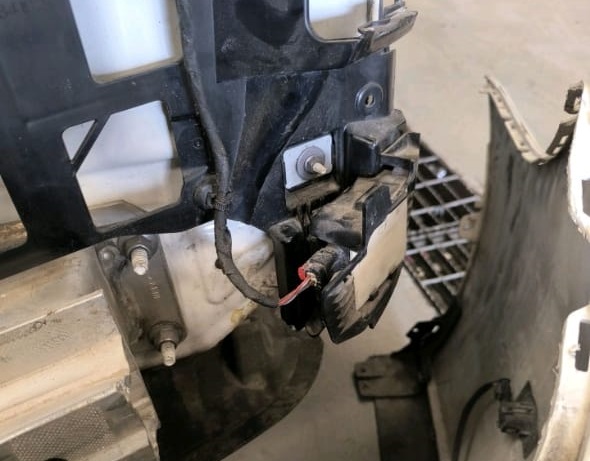
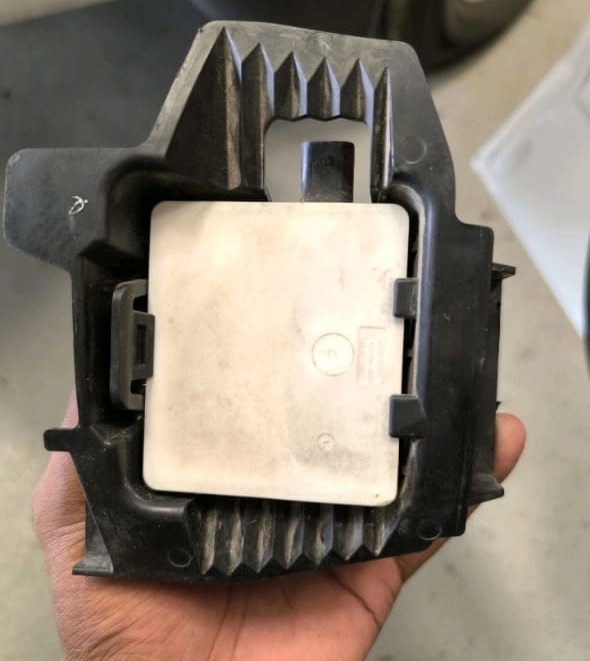
- 1. Visual and Physical Inspection
The rear bumper was carefully removed to access the right-side radar sensor (Radar Sensor 8) and its wiring harness.
- 2. Connector & Wiring Check
Each pin on the radar’s three-pin connector (power, ground, CAN communication) was inspected for corrosion, bent terminals, or water ingress. Continuity tests confirmed all circuits were intact and properly grounded. - 3. Signal Verification
The CAN bus lines were measured using a multimeter and verified to have correct resistance values (~60 Ω across CAN H/L), confirming healthy network communication up to the radar connector. - 4. Module Cross-Check
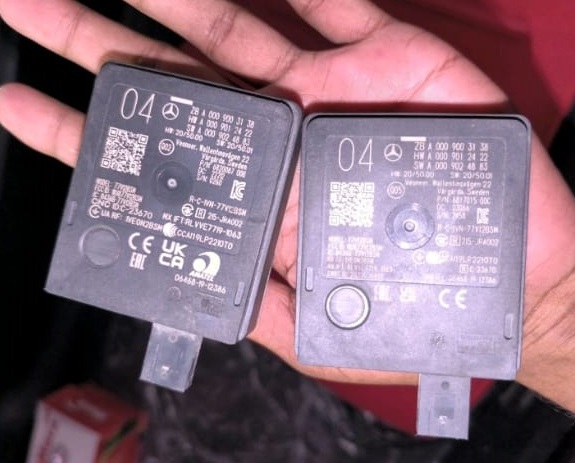
The left radar module (Sensor 7) was swapped temporarily to verify functionality. The fault then moved with the defective sensor, confirming internal failure of the right-side radar unit rather than wiring or control module issues.
Root Cause Identified
The diagnosis confirmed that the right-side blind-spot radar sensor (Radar Sensor 8) had internal communication failure.
The sensor could not transmit or receive data packets via CAN, causing the Blind Spot Assist module to shut down and log fault code U150887.
Finding Summary:
- => CAN wiring → OK
- => Connectors & seals → OK
- => Sensor module → Defective
Repair Procedure
- 1. Replacement of Faulty Sensor
Installed a new OEM Mercedes short-range radar sensor for the right side of the rear bumper. - 2. Sensor Calibration
Performed ADAS calibration using XENTRY with official calibration targets to align the radar beam and synchronize data with the vehicle’s ESP and BSA control units. - 3. Fault Code Clearing
Cleared stored DTCs and re-scanned all systems to confirm no residual errors. - 4. Verification Drive
Conducted a road test at speeds above 15 km/h to confirm blind-spot monitoring activation. The mirror triangles illuminated normally, and no new warnings appeared.
Outcome
After replacement and calibration, the Blind Spot Assist Inoperative message was fully resolved.
The system restored proper lane-change detection and visual alerts, and Active Brake Assist remained fully functional.
The customer confirmed that the vehicle’s warning indicators worked as expected and that blind-spot detection performed correctly during test drives.
Key Takeaways
| Diagnostic Stage | Finding | Action Taken |
|---|---|---|
| Fault code detection | U150887: Communication error with Radar 8 | Confirmed via XENTRY |
| Harness & connector inspection | No corrosion or broken wires | Verified integrity |
| Module swap test | Fault moved with radar | Confirmed sensor failure |
| Repair | Replaced right-side radar module | Performed calibration |
| Verification | No warnings after test drive | System restored |
Conclusion
This case demonstrates that a single defective short-range radar module can disable several safety functions on modern Mercedes models.
Through systematic testing and OEM-grade calibration, the technician restored full ADAS capability and ensured driver safety.
For more real-world case studies and diagnostic guides on Mercedes radar and camera faults, visit:
Mercedes Driver Assistance System Faults: Radar, Blind Spot & Parktronic Fixes
Blind Spot Assist Reset (What Actually Works)
- – Clean sensors & drive > 15 km/h: system often self-recovers after environmental blockage.
- – Ignition cycle (OFF → wait 60 s → ON).
- – Scan + clear codes (XENTRY/LAUNCH/AUTEL).
- – Voltage health: low 12 V can disable ADAS; test/charge/replace battery as needed.
- – Calibration after repair: mandatory after sensor replacement or bracket work.
DIY vs Pro : What to Tackle Yourself
| Task | DIY? | Notes |
|---|---|---|
| Clean sensor faces | OK | Use mild soap/microfiber; no pressure washer on seams |
| Basic scan / clear | OK | Consumer OBD can read some codes; XENTRY is best |
| Connector drying + grease | OK | Good if you’re comfortable removing trim |
| Bracket re-alignment | Partial | Often needs bumper removal; precise geometry |
| Sensor replacement + calibration | NO | Requires XENTRY procedures and targets |
Maintenance Tips That Prevent Comebacks
- – Wash bumper corners (light pressure), especially after snow/salt.
- – After any rear impact or bumper respray, request radar bracket verification + calibration.
- – Seal connectors (dielectric grease + heat-shrink) if you operate in rainy/coastal climates.
- – Use OEM sensors aftermarket often fails CAN messaging or calibration.
Where is the Mercedes blind spot detection sensor located?
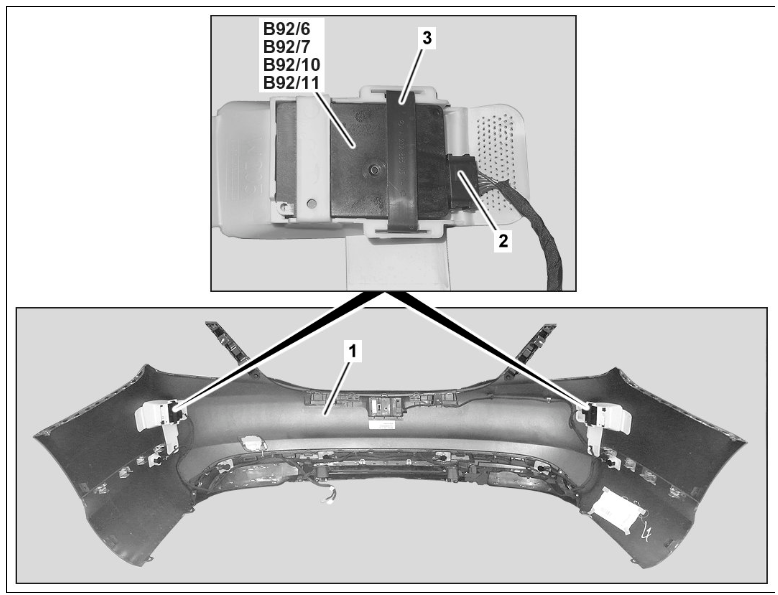
Mercedes blind spot sensors are typically located in the rear section of the vehicle. Here are the specific locations:
Rear Bumper
- – Rear Bumper Corners: The primary sensors for the Blind Spot Assist system are usually embedded in the rear bumper, near the corners. These radar sensors are strategically placed to monitor the blind spots along the sides and rear of the vehicle.
Side Mirrors
- – Integrated Indicators: While the sensors themselves are in the rear bumper, the visual indicators for the Blind Spot Assist system are integrated into the side mirrors. When a vehicle is detected in the blind spot, an icon (usually a triangle or a dot) lights up in the corresponding side mirror.
Conclusion
The “Blind Spot Assist Inoperative” warning in Mercedes-Benz vehicles is more than a minor inconvenience it signals a fault within one of the most critical driver-assistance systems. Whether caused by sensor misalignment, moisture intrusion, or module failure, even a small disruption in radar communication can disable both Blind Spot Assist and linked features such as Active Brake Assist.
As shown in the case studies above, restoring full functionality requires a structured diagnostic approach: verifying wiring integrity, sensor alignment, and communication through XENTRY Diagnostics, followed by precise radar calibration.
These steps not only fix the immediate warning but also ensure that the entire ADAS network performs as Mercedes-Benz designed it reliably, accurately, and safely.
For more expert-backed solutions to similar ADAS issues including radar, parking, and camera malfunctions explore our comprehensive guide:
Mercedes Driver Assistance System Faults: Radar, Blind Spot & Parktronic Fixes
— Salim, Mercedes Expert
Independent specialist in Mercedes-Benz diagnostics, CAN Bus analysis, troubleshooting case studies, and EV systems.