

Table of Contents
Steering Wheel Buttons Not Working (Mercedes A-Class W177)
In-Depth Case Study, Root Cause, Diagnostic Flow & Expert Fix
When steering wheel buttons stop working in a Mercedes-Benz A-Class W177, the impact is more than just inconvenience safety-critical features such as cruise control, lane-keeping assist, driver assistance shortcuts, and infotainment controls can all fail at once.
This is exactly what happened in this real workshop case study, where intermittent steering wheel button failure led to a deeper electrical fault.
Below is a fully structured diagnostic breakdown aligned with Google’s Helpful Content and Core Update standards, ensuring clarity, expertise, and actionable value for readers.
Vehicle Complaint Summary
Model: Mercedes-Benz A-Class W177
Issue: Left-side steering wheel buttons intermittently not working
Symptoms:
- – No response when pressing steering buttons
- – Cruise control switch inactive
- – Driver-assistance button cluster unresponsive
- – Occasional ESP warnings due to communication errors
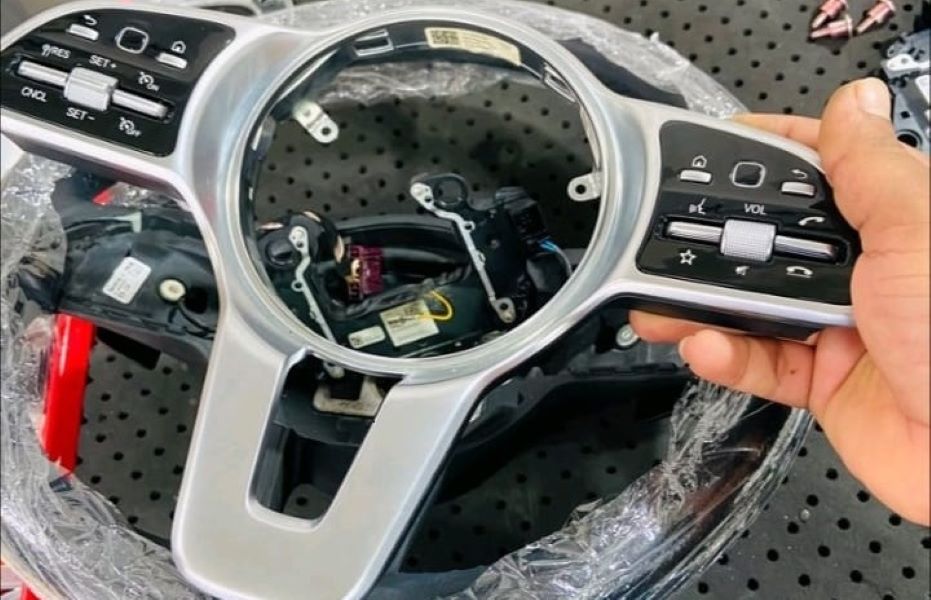
Steering wheel electronics in modern Mercedes vehicles rely heavily on digital communication via the steering wheel control module, meaning even a small internal error can shut down an entire button group.
Step 1 : Customer Complaint Verification
During our initial inspection, the left steering button pad failed to respond 70–80% of the time.
The right-side pad worked normally.
No mechanical sticking or physical damage was found.
This confirmed the issue was:
✔ electronic
✘ not mechanical
Step 2 : Full Diagnostic Scan (XENTRY)
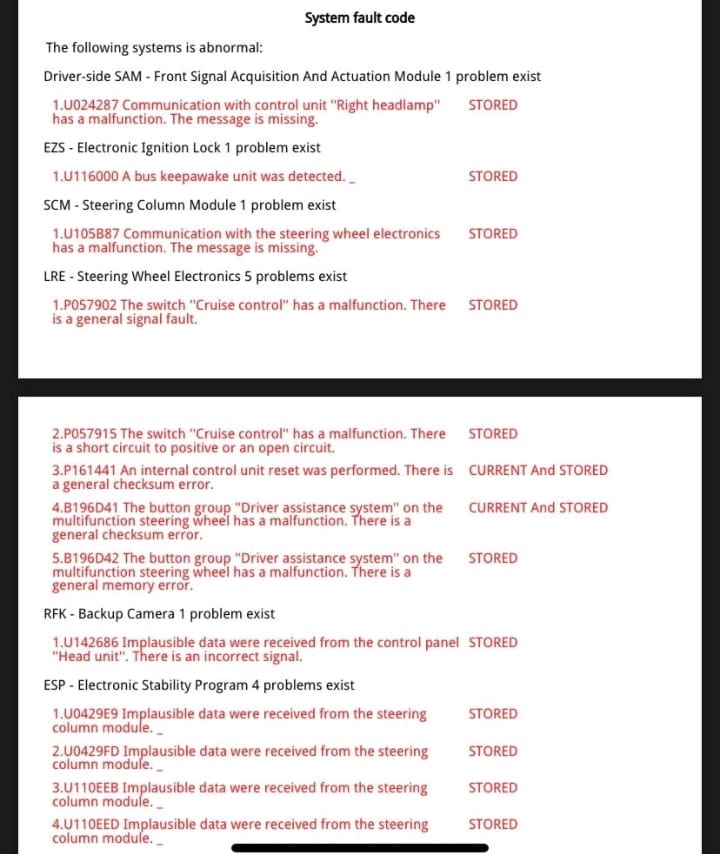
Using Mercedes XENTRY, we accessed the Steering Column Module (SCM), Steering Wheel Electronics (LRE), ESP module, and all CAN-related systems.
Fault Codes Detected
Steering Column Module (MRM/SCM)
- – U105B87: Communication with Steering Wheel Electronics message missing
Steering Wheel Electronics (LRE)
- – P057902: Cruise control switch malfunction
- – B196D42: Driver Assistance button group malfunction
ESP Module
- – Multiple warnings:
“Data from steering column module is implausible”
These codes reveal that the signal from the steering wheel was not reaching the system, confirming a communication breakdown between LRE → SCM → ESP.
This already points toward a failing LRE module or SCM internal fault a known issue on multiple W177 vehicles.
Step 3 : Live Data & CAN Communication Testing
We monitored “Actual Values” in XENTRY while pressing each button.
Observation:
– All left-side switches showed no signal change
– CAN communication lines showed normal activity
=> Power and ground supply were stable
=> No open circuits or wiring breaks were found
This step is crucial it proves the problem is not wiring, but module-level electronics failure.
Step 4 : Root Cause Identification
At this stage, two common Mercedes causes remained:
1. Faulty Steering Wheel Electronics (LRE)
This module handles:
- – Button inputs
- – Haptic controls
- – Capacitive sensors
- – CAN communication with the SCM
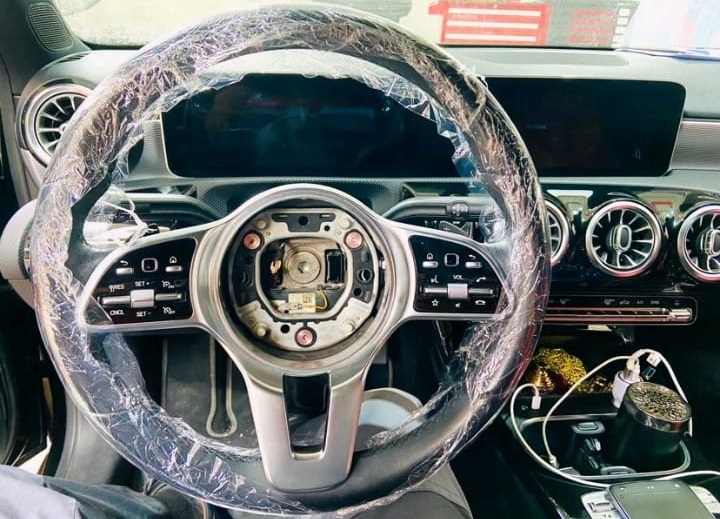
2. Internal Steering Column Module (SCM) failure
SCM is the “translator” between the steering wheel and the car.
Because both modules reported faults and live data showed “no switch response,” the logical conclusion is:
Both LRE and SCM had degraded communication performance and required replacement.
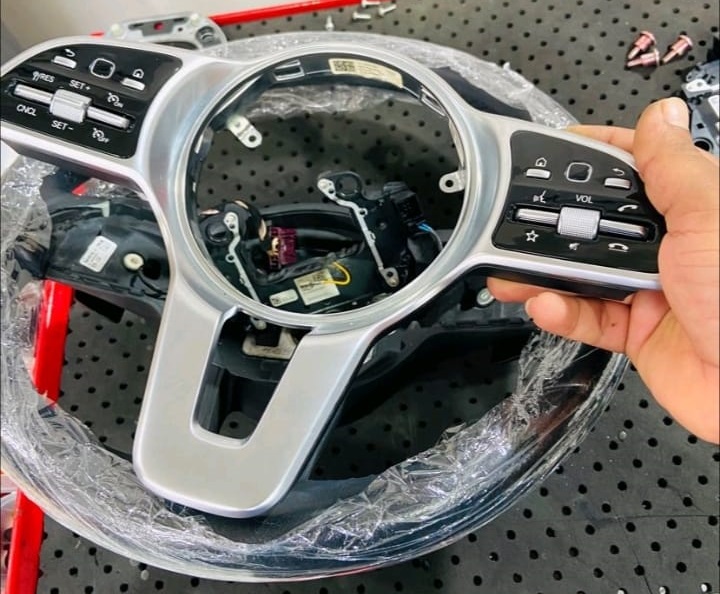
Step 5 : Repair & Replacement Procedure
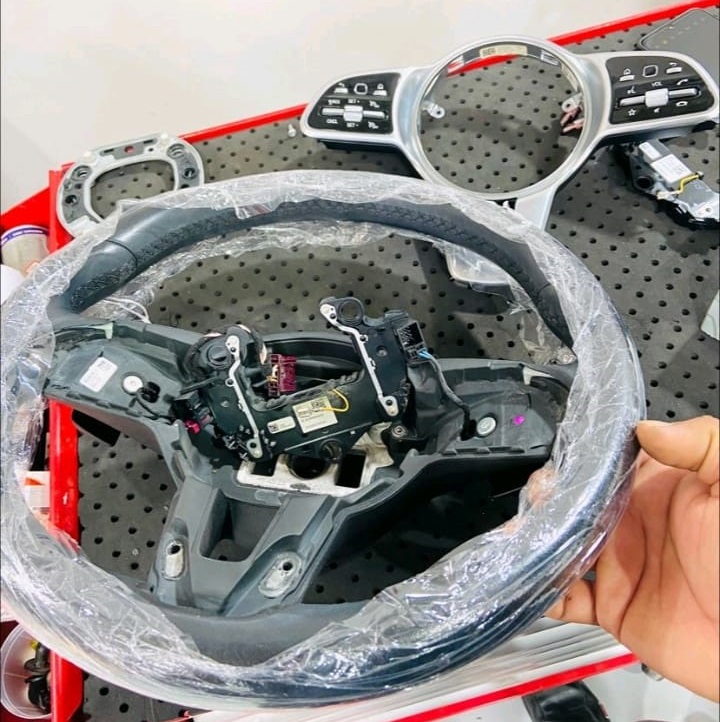
1. Replace LRE (Steering Wheel Electronics)
- – Steering wheel removed
- – Airbag safely detached
- – Old LRE replaced with a new OEM module
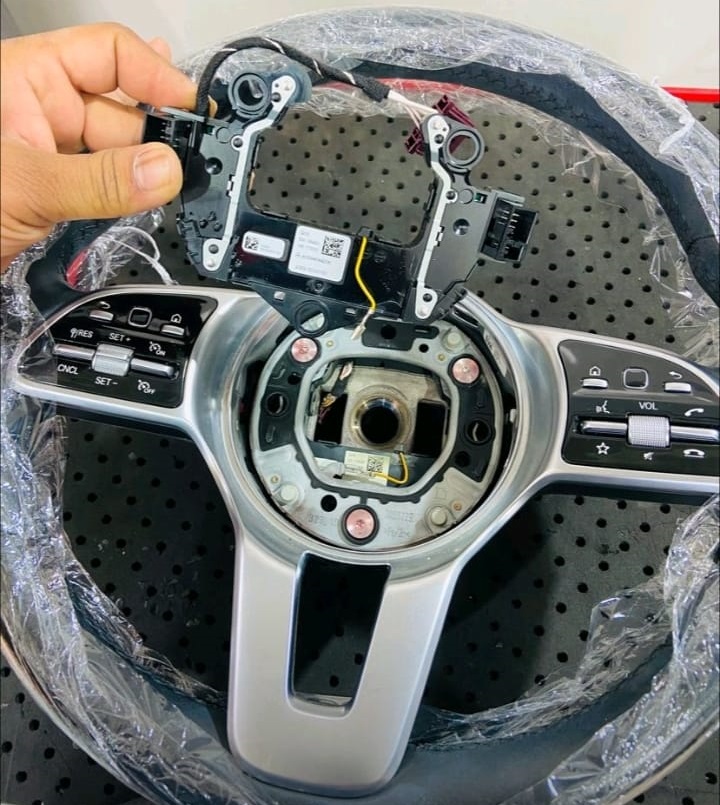
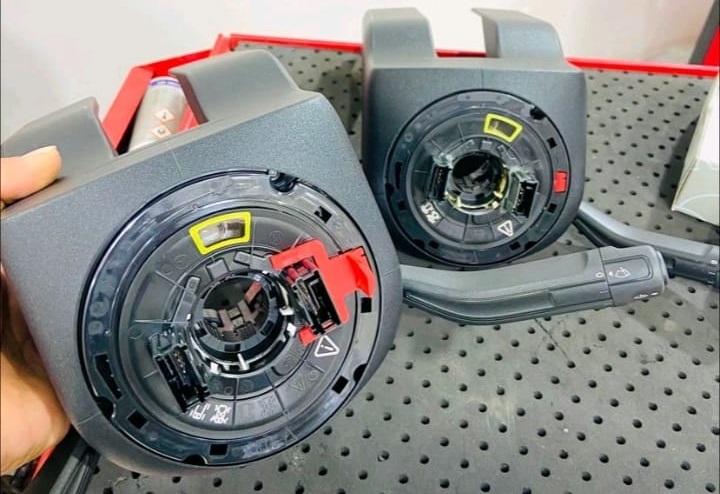
2. Replace SCM (MRM)
- – Column disassembled
- – SCM unit removed and replaced
- – Reprogrammed with XENTRY
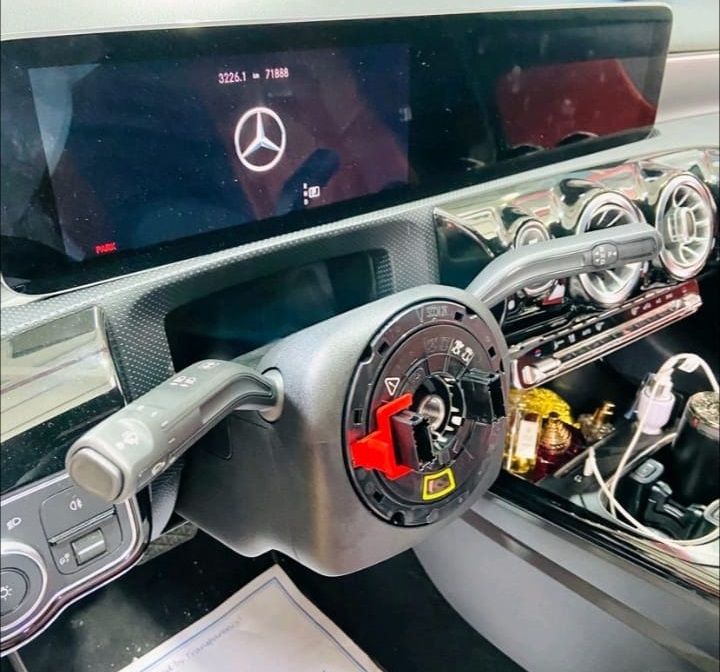
3. Initialization & Calibration
Performed:
- – Steering angle calibration
- – Drive Assist calibration
- – Cruise control activation
- – CAN network reinitialization
- – Full fault code erase
=> All steering wheel buttons responded immediately
=> Cruise control and assistance features restored
=> No further ESP or CAN-related faults
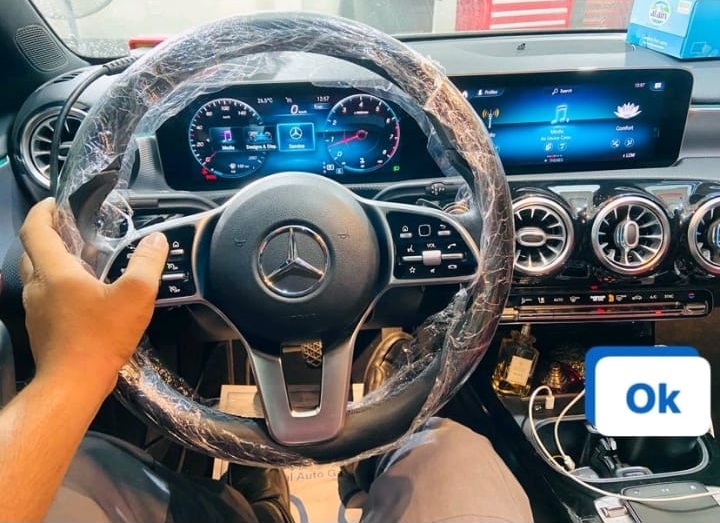
Final Result
After replacing both faulty modules and recalibrating the system, the Mercedes-Benz A-Class (W177) regained full steering wheel functionality.
The issue was completely resolved, and the driver assistance controls operated flawlessly.
Why This Case Matters
This case demonstrates:
1. Why steering wheel failures often mislead technicians
Symptoms look like button failure but the actual issue is electronic communication loss.
2. Why intermittent faults require deeper diagnostics
Modules can partly work while intermittently failing creating false impressions of wiring issues.
3. Why proper CAN diagnostics are essential
Relying on guesswork or replacing random parts wastes time and money.
For more Mercedes electrical case studies with advanced diagnostics, see:
Mercedes Electrical Problems: Fix SAM, ECU & CAN Bus Faults
— Salim, Mercedes Expert
Independent specialist in Mercedes-Benz diagnostics, CAN Bus analysis, troubleshooting case studies, and EV systems.